 16 Oct 2026
 8 min read
The summit-night schedule on Kilimanjaro is built around an early rest, a late-evening meal and a slow climb through the night. The exact timing depends on your route, camp location, conditions and personal pace, so treat any sample schedule as a guide—not a promise. Knowing what happens at each stage can help you prepare for the climb and understand why guides may change the plan.
Rest and eat before the summit-night start
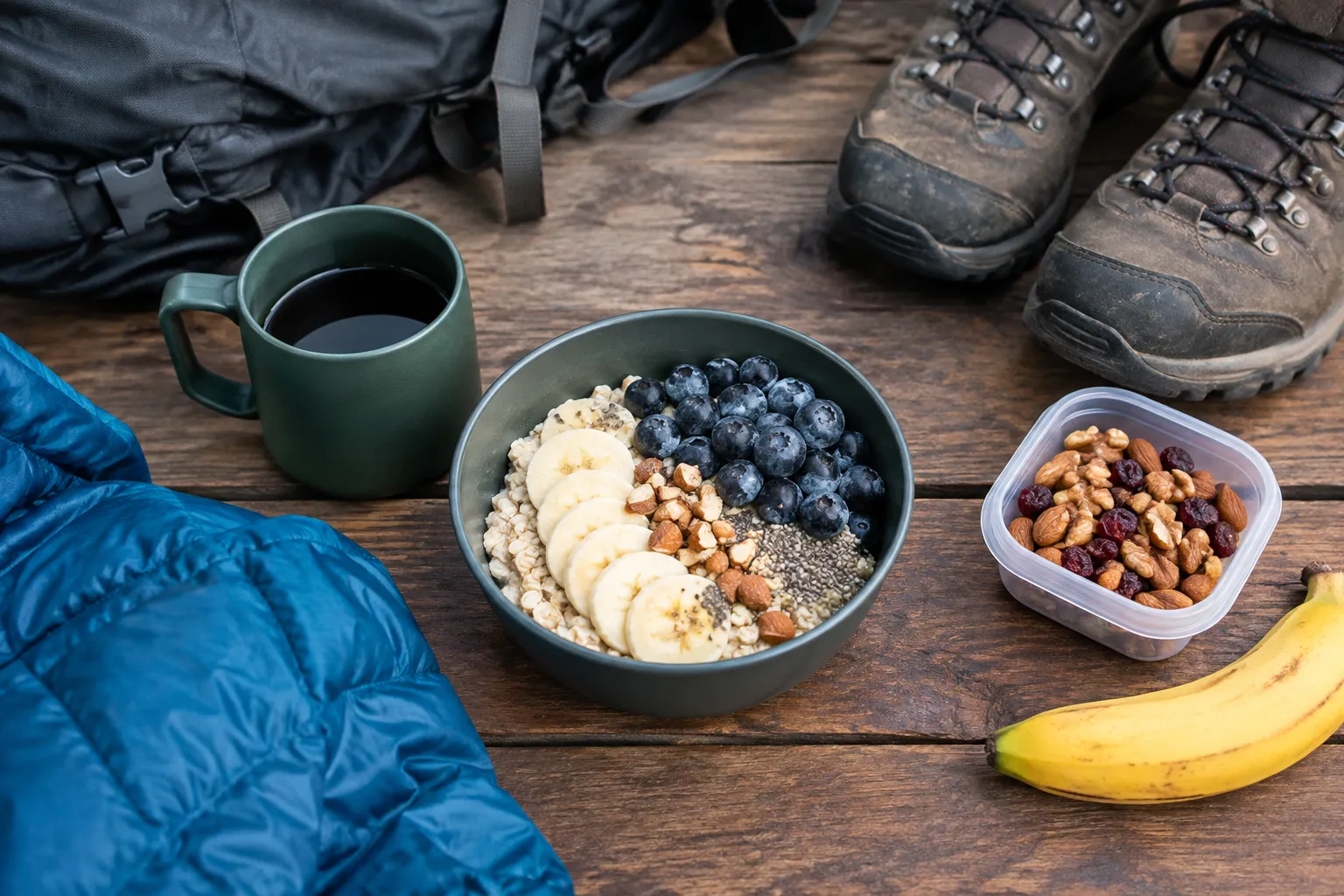
Summit night often begins around midnight, but your preparation starts earlier. After reaching the high camp, keep the afternoon quiet: organize essentials, stay warm and rest rather than spending energy on unnecessary activity. You may not sleep deeply or for long, and that is common before a demanding night.
Eat the meal provided at camp at the time set by your crew, usually in the evening before departure. Choose familiar, manageable food and drink steadily through the afternoon and evening. Avoid waiting until you feel very thirsty to drink, but do not force large amounts at once.
Before you settle down, listen to the guide’s briefing. Confirm the planned departure time, what to carry, how the group will move and how to communicate if you feel unwell. Ask where you should keep your headlamp, warm layers and snacks so you can reach them without unpacking in the dark.
A useful pre-sleep check:
- Set out the clothes you will wear and keep extra layers close.
- Fill and secure your water containers as instructed.
- Put snacks and any personal essentials in an accessible pocket.
- Set an alarm, then rest even if sleep does not come easily.
The whole Kilimanjaro climb takes several days, and summit night is only one part of the itinerary. If you are comparing total hiking days and nights, see our guide to Kilimanjaro climb length. Neither the length of the hike nor a full night’s sleep determines in advance how you will feel at altitude.
Pack your layers and check your headlamp
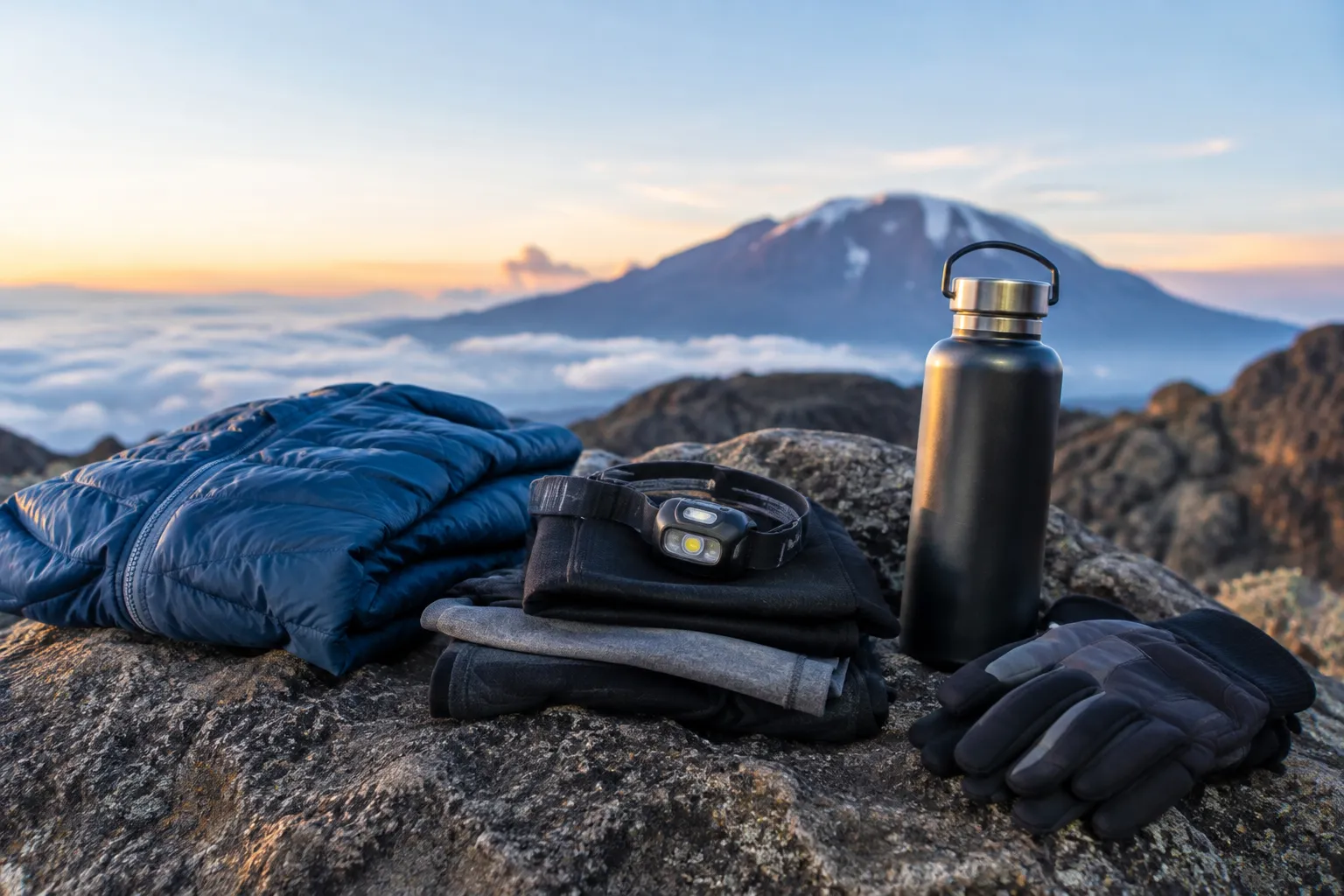
Before leaving the tent or hut, dress in adjustable layers. You will be moving slowly in the dark and may feel cold, particularly during pauses. Your outer layers should help protect you from the conditions, while layers underneath let you adjust as your body warms up or cools down.
Keep the items you may need during the climb in your daypack, not packed away with equipment being carried separately. Check your gloves, warm hat, water, snacks and any personal medication you normally carry. Follow your guide’s advice about what to bring for the expected conditions.
Test your headlamp before departure. Check that it is firmly fitted, switched on as expected and has enough power for the night. Carry spare batteries or another power option that suits your lamp, and make sure you can reach it without emptying your bag. A phone light is not a good substitute for a working headlamp on a long, uneven trail.
Pitfalls to avoid: wearing every layer from the start without a way to adjust, leaving snacks buried at the bottom of your pack, or discovering a flat headlamp after the group has set off. A final check in camp is easier than fixing these problems on the trail.
Follow a steady summit-night schedule
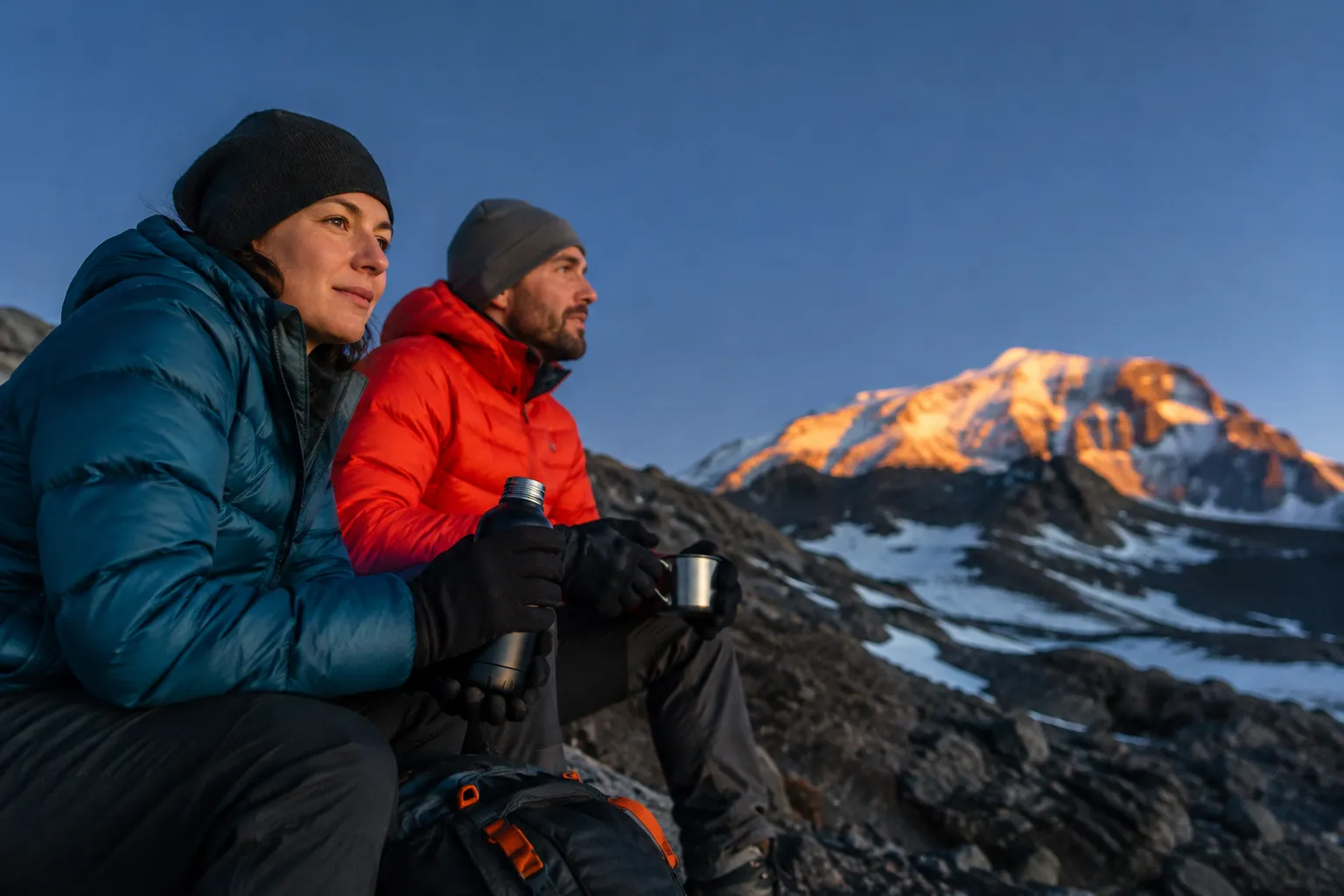
Many summit attempts begin around midnight, though departure time varies with the route, camp and guide’s plan. Climbers generally move for several hours toward the crater rim, often reaching it near sunrise. The summit approach and descent add more time, so expect a long stretch of slow walking rather than a short final push.
This is the part of the trip that prompts questions such as “how long does it take to climb Mount Kilimanjaro?” or “how long is the Kilimanjaro hike?” The answer depends on the itinerary and route. Summit night itself is only one measure: the full climb includes approach days, acclimatization and the descent. Our route-by-route duration guide explains how itineraries differ.
Start slowly and keep the group together
Follow the guide’s pace from the first steps. A slow, consistent rhythm helps you conserve effort during a climb that may last through the night. Keep close enough to the group to hear instructions, and tell a guide promptly if you feel unusually unwell, weak, dizzy or short of breath.
Guides may check in with climbers as the group progresses. Answer clearly rather than brushing off symptoms because you want to keep going. A steady pace is not a race, and moving faster than you can comfortably sustain can make the night harder.
Sip water and take small snacks
Drink regularly in manageable sips, following your guide’s advice and your own needs. Cold and altitude can reduce your appetite or make drinking feel less appealing, so keep water and easy-to-eat snacks within reach. Small amounts at intervals are often more practical than trying to eat or drink a lot at once.
If water becomes difficult to access or you cannot keep food down, tell your guide. Do not wait until you feel exhausted to mention a problem. Your guide can help you decide what to do next based on how you are feeling and the conditions.
Understand when to turn around
A summit attempt is not a guarantee of reaching the top. Guides assess climbers individually, and symptoms, weather, pace and remaining energy can all affect the decision to continue. Turning back may be the safest choice even when other members of the group are able to go on.
Tell your guide honestly how you feel. Do not hide symptoms to avoid disappointing your group or to keep up with someone else. Route acclimatization and regular health checks are important parts of planning, but they do not remove altitude risk or guarantee a particular outcome. You can read more about acclimatization days in a Kilimanjaro itinerary.
Reach the summit, then descend with care
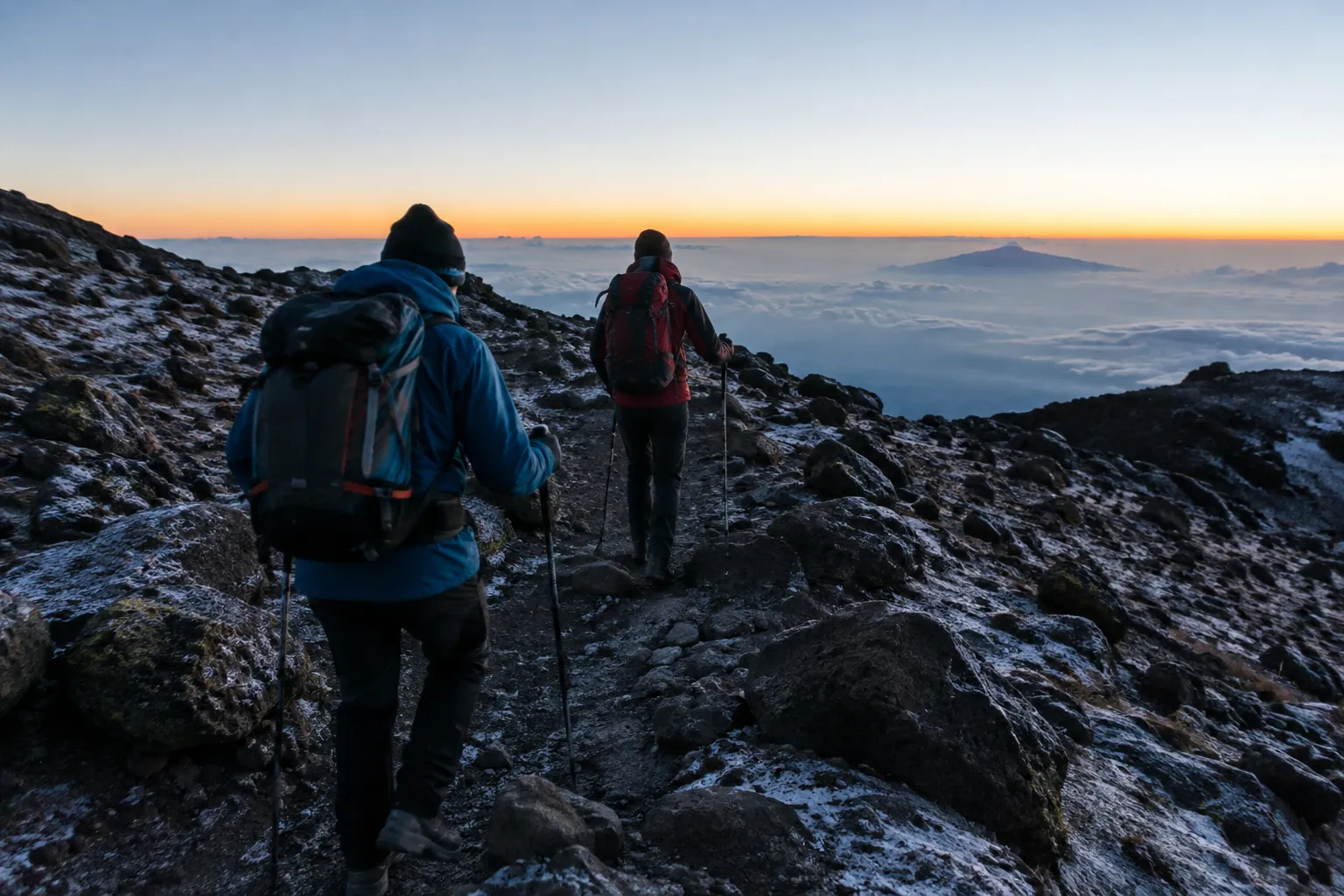
Near the crater rim, the pace and timing may change with conditions and how the group is doing. If you reach the summit, follow your guide’s instructions about where to stop and how long to remain there. Take photos or enjoy the sunrise if conditions allow, but keep the stop brief enough to stay warm and continue safely.
The descent can feel demanding after hours of climbing, even though you are heading downhill. Move carefully on loose or uneven ground, keep your layers accessible and follow the guide’s pace and route instructions. Avoid rushing just because the summit is behind you.
The summit-night schedule is not finished when you reach the top. Allow for several more hours of descent, with timing affected by the route, terrain, weather and group. Your guide will direct the next steps and may adjust the plan if a climber needs support. A broader overview of summit-night sleep, pacing and support can help you understand how these pieces fit together.
Plan your summit night with your climb team
Before choosing an expedition, ask how the route and itinerary shape the summit attempt. A useful discussion covers the high camp or hut, likely departure window, expected time on the trail, descent plan and how guides check on climbers. Ask what the team does if one person needs to turn around while others continue.
For a first climb from sea level, include arrival timing in your planning. Build in time to reach Tanzania, organize your gear and rest before the trek; do not assume that a long flight followed by a brief stop will leave you feeling ready. Training helps prepare your body for sustained walking, but summit-night decisions still depend on your condition at altitude.
When comparing guided climbs, look beyond the headline price. Check what is included, what costs extra, how tipping is handled and whether the operator is a KPAP Partner Company. Ask direct questions about porter welfare, guide qualifications, health monitoring and support on the route. These practical details help you assess whether the schedule and service suit your needs.
Summit Night FAQs
Why do people summit Kilimanjaro at night?
Starting at night lets climbers approach the crater rim around sunrise, when many summit schedules aim to reach it. The timing is planned by the guide and can change with route, weather and group conditions.
Is 50 too old to climb Kilimanjaro?
No, age 50 alone does not rule out a Kilimanjaro climb; fitness, health and preparation matter more. Discuss your own medical circumstances with a qualified clinician before planning a high-altitude trek.
Where do you sleep when you climb Kilimanjaro?
Most climbers sleep at designated camps along their route, in tents or huts depending on the route and itinerary. On summit night, rest at high camp before setting out, then return to camp or continue down as planned.
What time do climbers usually leave high camp for the summit?
Many summit groups leave high camp around midnight, though the guide sets the actual time for the route and conditions. Confirm your departure plan during the briefing rather than relying on a fixed hour.
How cold can it feel during the Kilimanjaro summit hike?
Summit night can feel very cold, especially while walking slowly or stopping in the dark. Wear adjustable warm layers and ask your guide what to prepare for on your route and dates.
What should I carry in my daypack for summit night?
Carry accessible warm layers, a working headlamp with spare power, water, easy-to-eat snacks and personal essentials. Follow your guide’s briefing for route-specific items and keep frequently needed things easy to reach.
How much water should I bring on the summit hike?
Carry enough water for the planned section of the hike, following your guide’s advice and your own needs. Keep it accessible and sip regularly; cold conditions can make it easy to forget to drink.
How long is the descent after reaching the summit?
The descent takes several hours, with the exact time depending on the route, terrain, weather and group pace. Follow your guide’s instructions and allow for a long, careful walk after the summit.
Recommended next steps
Before booking, compare itineraries by route, total days, acclimatization plan and summit-night arrangements—not just the expected departure time. Ask how the operator handles health checks, porter welfare, tipping and included costs, then make sure your arrival plan leaves room to rest before the trek.
The question “how long to hike Kilimanjaro?” is best answered by looking at the full itinerary, not just the night of the summit attempt. Once you understand the trip length and the likely summit-night rhythm, you can plan your training, travel and budget with more realistic expectations.
Sedrick Silayo is a Web Developer and Digital Marketing Expert at Eco-Africa Climbing, with over 10 years of experience in Tanzania’s adventure travel industry. He specializes in Kilimanjaro trekking and Northern Tanzania safaris, sharing practical expertise on trip planning, mountain preparation, safety, KPAP standards, and safari experiences.