 26 Nov 2026
 7 min read
The Big Five animals in Africa are the lion, leopard, elephant, rhinoceros, and African buffalo. The name refers to animals historically considered difficult to hunt on foot, not a ranking of Africa’s wildlife. In Tanzania, Serengeti, Ngorongoro Crater, and Tarangire offer different settings for looking for them, but sightings are never guaranteed.
What the Big Five name means
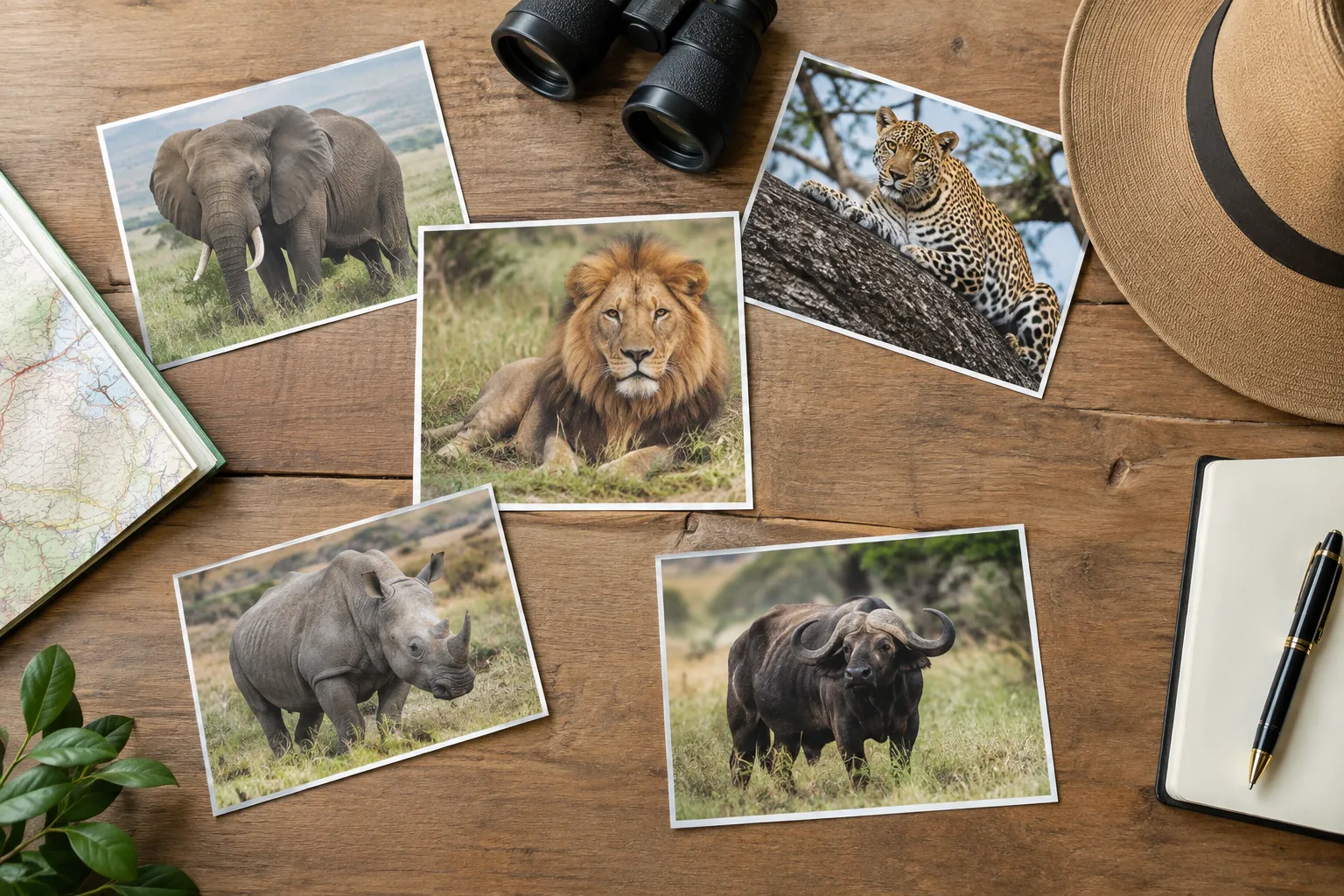
The Big Five are the lion, leopard, elephant, rhinoceros, and African buffalo—a traditional group named for the challenges hunters faced tracking them on foot.
The term comes from hunting history, not from a judgment that these are Africa’s biggest or most important animals. Today, travelers commonly use “Big Five” to describe a safari wildlife checklist. Finding all five is one possible goal on a Tanzania safari, but the name does not make sightings predictable.
A safari big five search usually starts with the same five animals, while a safari itself can include much more. Giraffes, zebras, wildebeest, and many other animals may be part of a Serengeti National Park Tanzania safari, even though they are not in this traditional group.
How to recognize Africa’s five iconic animals
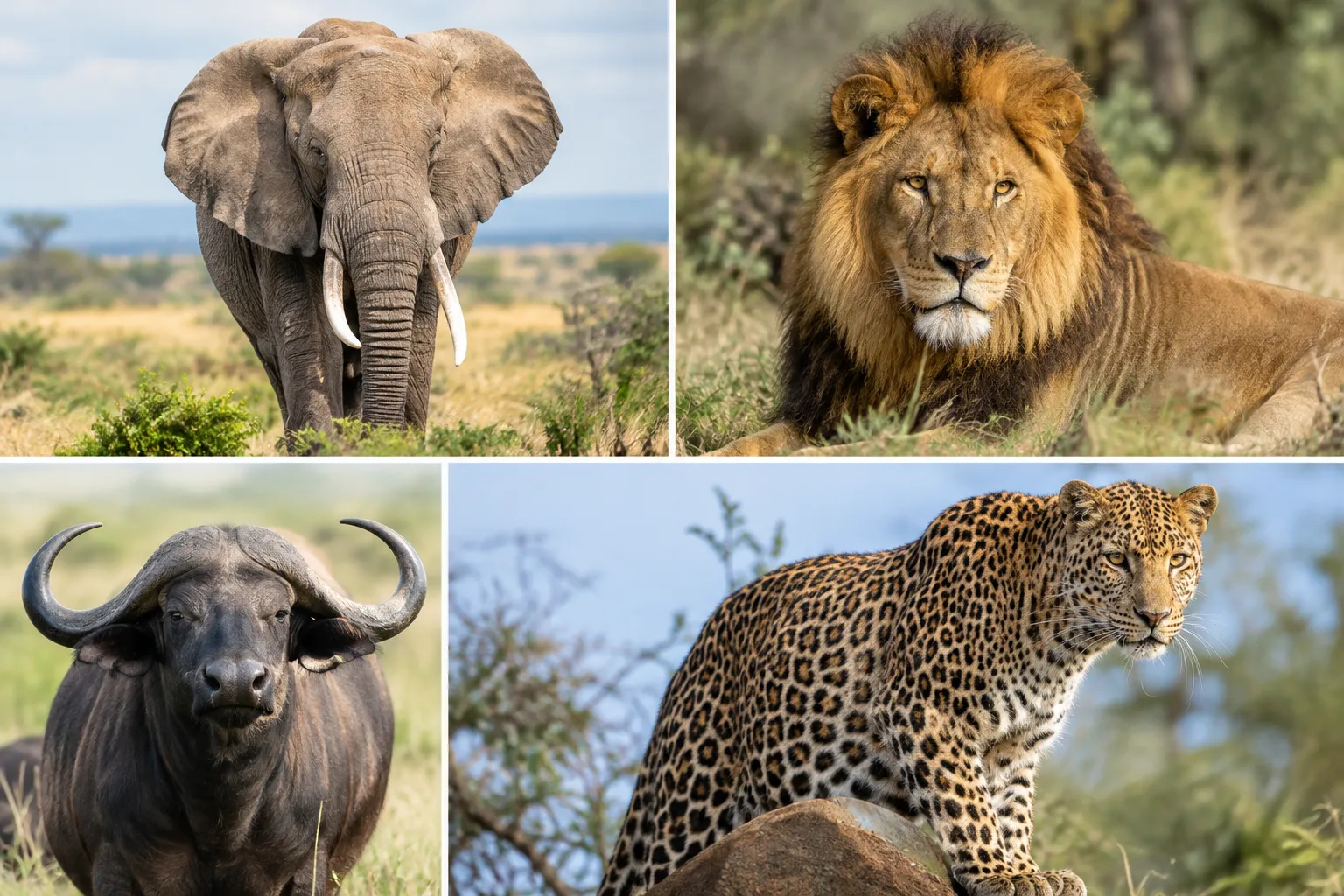
Look for each animal’s distinctive shape, markings, and behavior, while giving your guide time to scan different habitats and explain what you are seeing.
Lion
Lions are large cats, and adult males are recognizable by their manes. They often rest in groups, while females may be seen with other members of a pride. On a game drive, check open grassland and the edges of thicker cover; lions can be difficult to spot when they are resting in shade.
Leopard
Leopards have coats marked with dark rosettes and are often solitary. Their spotted pattern can blend into vegetation and dappled light, so a leopard may be easy to miss even when it is nearby. Scan tree branches and shaded areas as well as the ground, and avoid assuming that a still patch of spotted color is a clear view.
Elephant
Elephants are the largest animals in the Big Five group, with a trunk, broad ears, and a large body. They may be seen in family groups, and their size can make them easier to identify than a leopard hidden in cover. Watch from a respectful distance and let your guide choose a suitable viewing position.
Rhinoceros
A rhino’s heavy build and one or two horns make it distinctive. Even so, rhinos can be especially challenging to spot: they may be less visible than animals in open grassland, and their presence in a park does not mean a particular drive will produce a sighting. In Ngorongoro Crater, a rhino sighting is uncertain, so treat it as a possibility rather than a promised part of the day.
African buffalo
African buffalo have a solid build, curved horns, and often travel in herds. A group may be visible across open ground or near water, but the animals’ dark coloring can blend into shadow. Look at the whole landscape, not only at individual animals: a large herd can be easier to notice when it moves.
Why giraffes are not among the Big Five
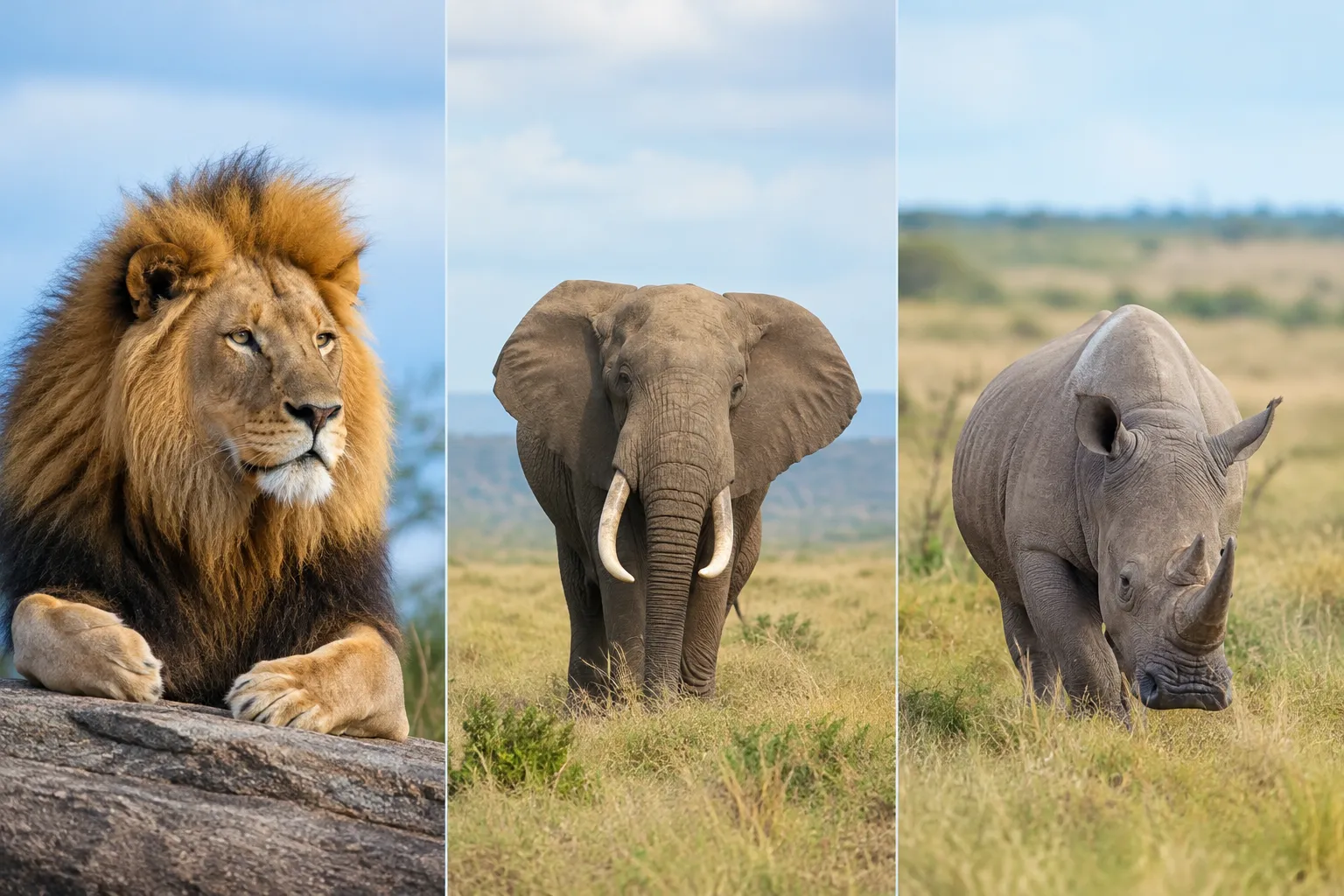
Giraffes are not part of the Big Five because the name describes a specific historical group, not a list of Africa’s largest or most striking animals.
Their height makes giraffes unmistakable on safari, but size was not the basis for this label. The same distinction applies to other memorable wildlife, including zebras and wildebeest: they can be central to a safari experience without belonging to the Big Five.
Where to look for the Big Five in Tanzania
Serengeti, Ngorongoro Crater, and Tarangire each offer different landscapes and wildlife-viewing possibilities, but no park or itinerary can guarantee all five sightings.
Park choice shapes the kind of drive you take, the scenery around you, and the animals you may encounter. A Serengeti visit involves long distances that can affect how much time is spent driving between areas; a crater visit concentrates the day in a different setting. A realistic plan weighs those tradeoffs instead of treating every park as interchangeable.
Serengeti National Park
The Serengeti’s broad savannahs and varied wildlife-viewing areas make it a place to search for several Big Five animals while also watching for other wildlife. Its scale is part of the experience, but it also means distances can affect game drives. Ask how much time an itinerary allows for driving between areas, not only how many nights it lists in the park.
A Serengeti National Park Tanzania safari may suit travelers who want wide-open landscapes and time to explore different areas. The right plan still depends on how many days are available and what else the trip needs to include.
Ngorongoro Crater
Ngorongoro Crater’s concentrated wildlife can make it a useful place to look for several Big Five animals in one area. A crater visit does not guarantee all five, and a rhino sighting remains uncertain; plan the day for the overall wildlife experience rather than a checklist alone.
The crater also creates a different kind of outing from the Serengeti’s longer distances. If you are comparing park combinations, consider how much of the trip you want to spend on crater viewing versus longer drives through other landscapes.
Tarangire National Park
Tarangire is a distinct setting to consider as part of a broader Big Five safari, with elephants among the wildlife travelers may hope to see. It can add variety to a route that also includes the Serengeti or Ngorongoro, but it should not be treated as a guarantee of any particular animal.
Compare Tarangire with the other parks by asking what kind of landscape and pace you want, and how it fits the available days. That decision can matter more to the overall trip than simply adding another park name to the itinerary.
Plan a private safari around your priorities
A private safari can shape park choices, timing, and game-drive pace around your available days and wildlife interests, while keeping sightings uncertain.
Start with the experience you want, then decide which parks fit. A traveler prioritizing broad savannah landscapes might favor time in the Serengeti; someone hoping to see several animals in a concentrated setting may consider Ngorongoro; Tarangire can add another landscape and an opportunity to look for elephants. These are planning considerations, not promises about what you will see.
A simple planning example is to compare two outlines before requesting a quote: one that gives more time to the Serengeti, and one that combines a Serengeti visit with Ngorongoro and Tarangire. For each, check the driving time between parks, nights in each location, and how much time remains for game drives. A wider park list can mean less time in each place, so choose based on your priorities rather than the number of destinations.
Ask for the full trip cost in writing. Check what is included and what may be separate, including park fees, tips, international and local flights, and safari gear. If a trip also includes a Kilimanjaro climb, compare the safari and climb as separate parts of the plan: each has different timing and demands, and a climb should not be squeezed into a safari schedule without considering rest and travel time.
Eco Africa Climbing offers private Tanzania safari options as well as guided Kilimanjaro climbs. If you are considering both, map the safari days and climbing days separately first, then ask how the combination can fit your overall travel schedule.
Big Five FAQs
These answers clarify what the Big Five label means, what a Ngorongoro visit can offer, and how broadly to think about African wildlife.
Can you see the Big 5 in Ngorongoro?
You may see several Big Five animals in Ngorongoro Crater, but seeing all five is not assured. In particular, a rhino sighting is uncertain, so plan for the full wildlife experience rather than a guaranteed checklist.
Why are all the big animals in Africa?
The Big Five name refers to five particular African animals, not to all large animals or to a claim that every large animal lives only in Africa. The group’s name comes from historical hunting difficulty.
How many animals do we have in Africa?
Africa has many thousands of animal species, including mammals, birds, reptiles, amphibians, and other groups. The Big Five are only five mammals within that much larger variety.
Recommended next steps
To choose a realistic Big Five safari, match your wildlife priorities to the parks, time available, and total trip plan rather than expecting guaranteed sightings.
- List the animals and landscapes you most want to see, and mark the Big Five as a hope rather than a guaranteed checklist.
- Choose whether a longer Serengeti stay, a Ngorongoro visit, Tarangire, or a combination best fits your available days.
- Compare proposed itineraries by nights in each park, driving between areas, and time set aside for game drives.
- Check which fees, tips, flights, and gear are included in the quoted trip cost and which are separate.
- If you also want to climb Kilimanjaro, plan the climb and safari as distinct parts of the journey, with enough time for each.