
 23 Oct 2026
 7 min read
Mount Kilimanjaro is a volcano, but its broad slopes, three distinct cones, and high summit make it much more than a single volcanic peak. If you are asking, “Is Mount Kilimanjaro volcanic?” because you are considering a climb, understanding its geology and location can also help you picture the terrain and plan your arrival.
Is Mount Kilimanjaro volcanic or extinct?
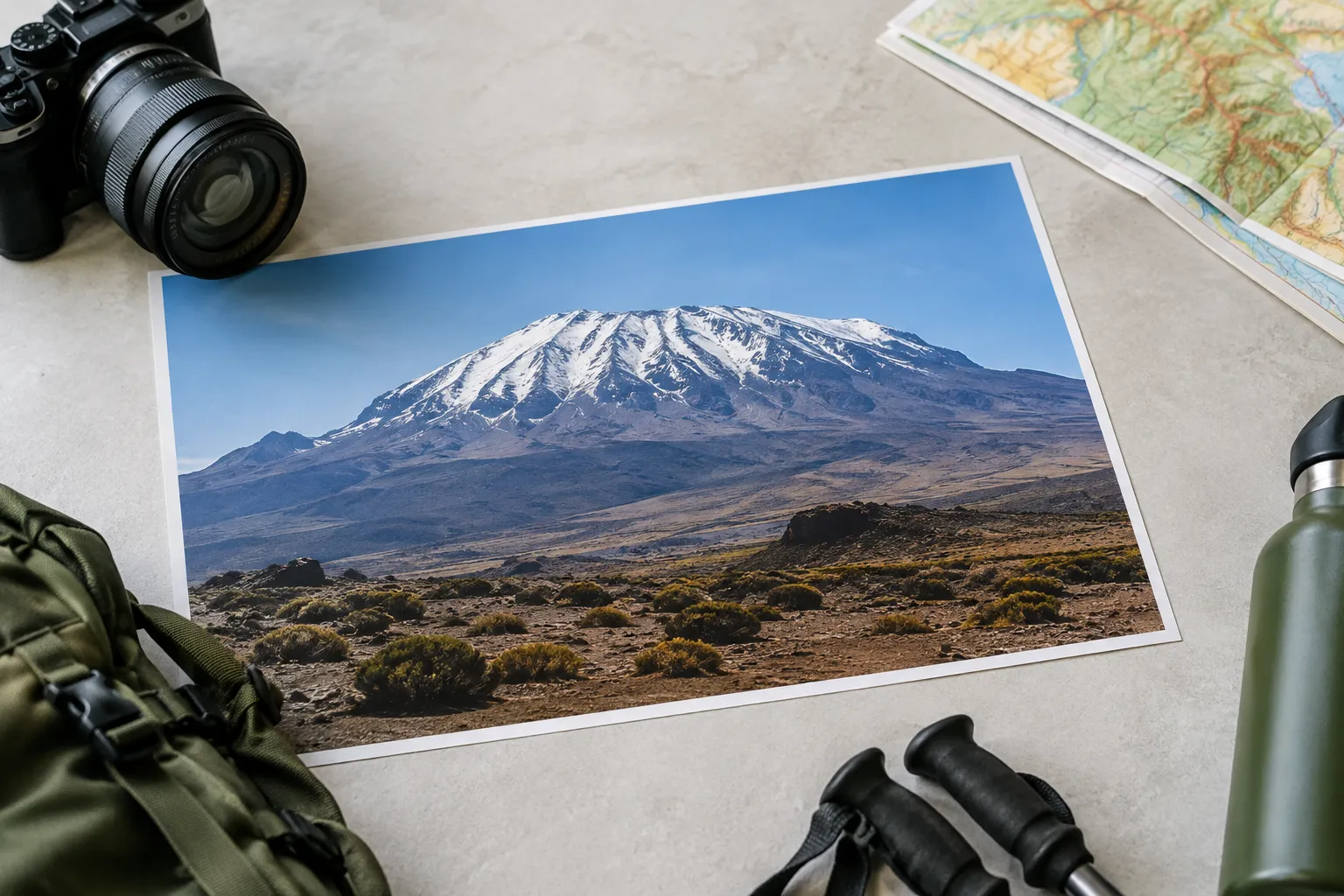
Kilimanjaro is a volcanic mountain in northeastern Tanzania, close to the Kenyan border. It consists of three volcanic cones: Kibo, Mawenzi, and Shira. Kibo is the highest and contains the summit area; Mawenzi and Shira have different, more eroded forms.
The mountain is part of the landscape of East Africa, but it is not a separate destination from Tanzania. People searching for Mount Kilimanjaro in Tanzania or Kilimanjaro Mountain in Africa are looking at the same mountain.
What dormant means for Kilimanjaro
A dormant volcano is one that is not currently erupting but could be capable of erupting again. An extinct volcano is generally understood to be one that is not expected to erupt again, while an active volcano is erupting or showing signs of current activity.
Kibo is commonly described as dormant, rather than extinct. That label speaks to its geological status; it does not mean an eruption is expected during a typical climb. For travelers, the practical point is to follow current park and guide information, rather than treat the word “volcano” alone as a warning.
Could Kibo erupt again?
Kibo’s volcanic history means future activity cannot be ruled out, but that is different from an immediate hazard. Climbers should make decisions based on current conditions and official guidance, not on speculation about a possible future eruption.
Kilimanjaro climbing tours take place on established routes across the mountain’s slopes. The main planning considerations for a trek are the route, gradual ascent, changing conditions, and the support and safety practices of the guiding team.
How Kilimanjaro’s three volcanic peaks formed
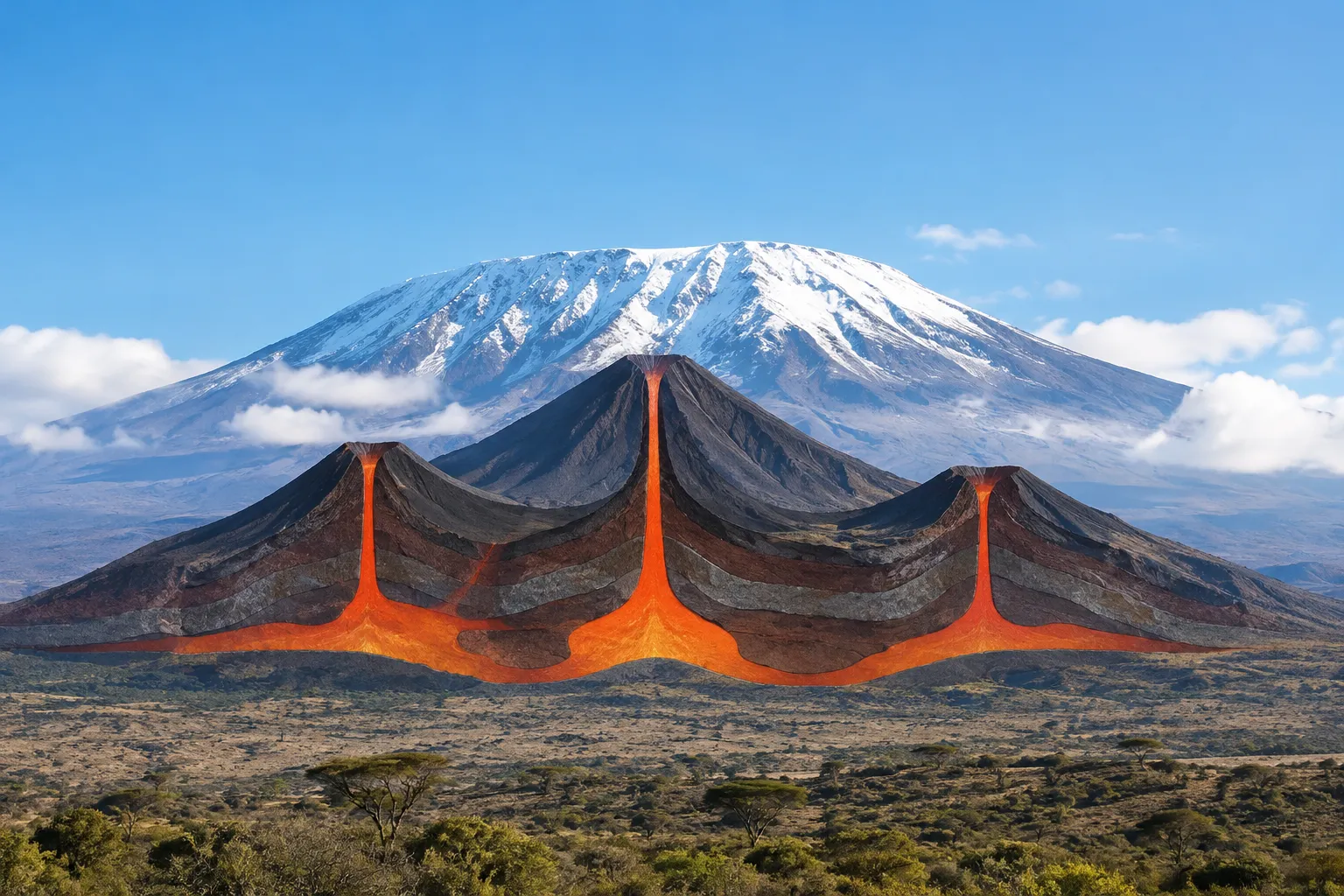
Kilimanjaro’s three cones formed through volcanic activity over a long geological history. Erosion and other processes have since shaped their slopes and ridges, leaving three connected but visually distinct high points.
The peaks do not have identical climbing terrain. Most summit-bound routes aim for Kibo, while Mawenzi and Shira contribute to the mountain’s wide, varied profile.
Kibo and the summit crater
Kibo is Kilimanjaro’s highest cone and the location of the mountain’s summit. Its crater is a visible reminder of its volcanic origin. The summit area is high, exposed terrain, unlike the forested lower slopes.
A climb to the summit is a trek at altitude, not a technical ascent of the crater walls. Routes approach Kibo from different parts of the mountain, so the landscape and the time spent ascending can vary by itinerary.
Mawenzi and Shira’s distinct forms
Mawenzi is jagged and rugged, with steep-looking peaks that contrast with Kibo’s broader summit area. It is not the usual summit destination on standard Kilimanjaro trekking routes.
Shira is an older, more eroded volcanic cone. Its remains form a high plateau on the mountain’s western side. These differences help explain why a route can pass through open moorland or plateau terrain before the main summit climb.
How volcanic origins shaped Kilimanjaro’s landscape
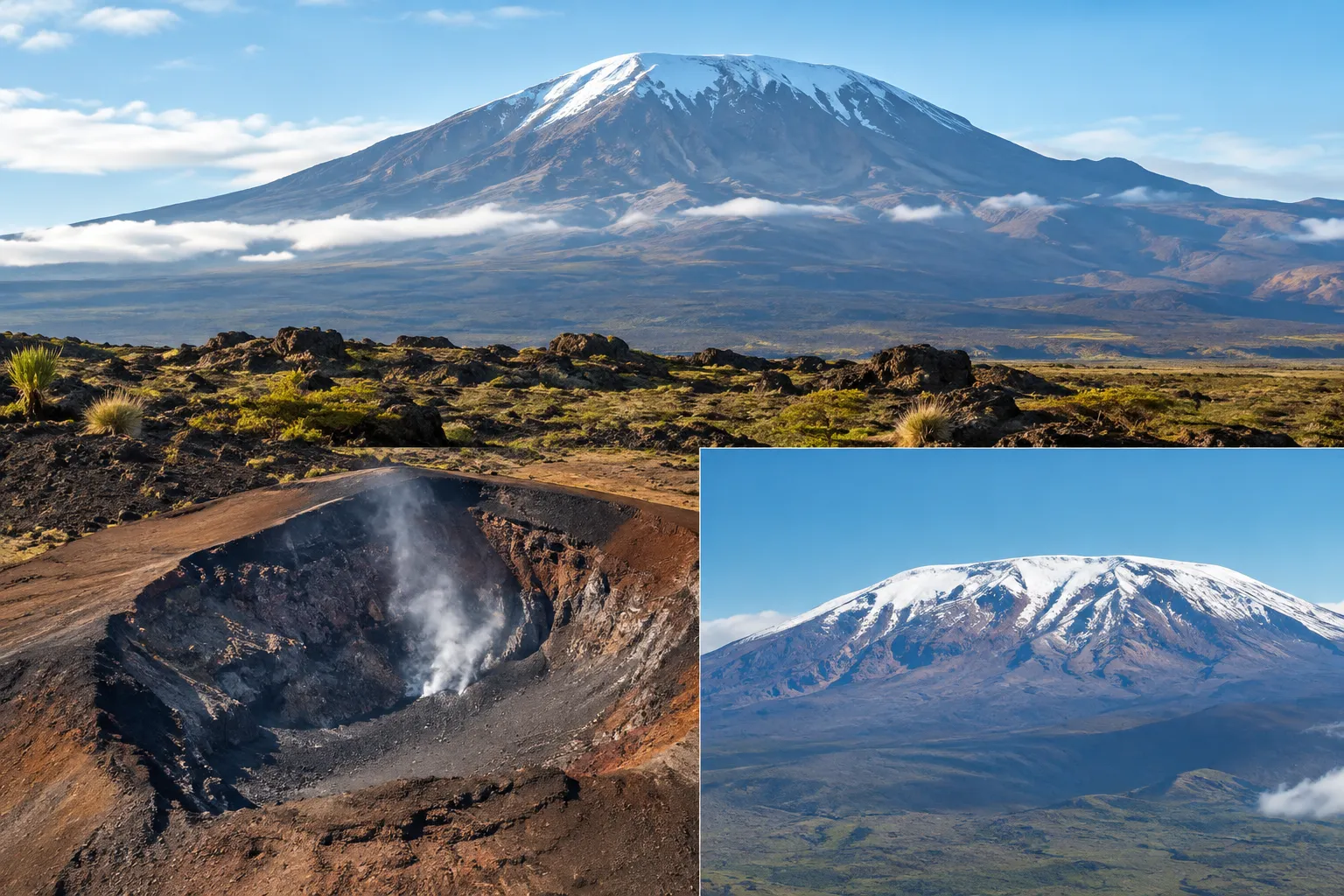
Volcanic activity built the mountain, while erosion and changing climate helped sculpt it. As a result, a climb can pass through several ecological zones, from cultivated land and forest on the lower slopes to heath, moorland, alpine desert, and the colder high-altitude summit area.
Expect the scenery and conditions to change as you gain elevation. Lower sections can be green and shaded; higher sections become more open and rocky. Ice and snow may be visible near the top, but conditions vary. The landscape is part of the appeal, and it is also a reminder to prepare for a trek that moves through different environments.
Where Kilimanjaro sits in northeastern Tanzania
Kilimanjaro is in northeastern Tanzania, near the border with Kenya. It is part of Tanzania, even though the mountain lies close to the international boundary and is visible from areas on both sides of it.
For trip planning, this geographic orientation matters because the mountain, its nearby towns, and the airport are different points on the journey. A map can help you see how they relate, but a climbing itinerary should also explain the transfer to the trek’s starting point.
Nearby towns and the mountain’s access points
Moshi is a common base for Kilimanjaro climbs, while Arusha is another regional town used by travelers exploring northern Tanzania. Neither town is the mountain itself. They are places from which travelers may arrange onward travel, depending on their itinerary.
Climbing routes begin at different trailheads around the mountain. Your operator’s itinerary should specify where you meet, how you reach the trailhead, and what transport is included. Confirm those details before booking so you can plan your baggage and arrival timing.
Finding Kilimanjaro on a map
To find Kilimanjaro on a map, look in northeastern Tanzania, just south of the Kenyan border. Moshi is near the mountain’s southern side, and Kilimanjaro International Airport serves the region between the Moshi and Arusha areas.
This is a useful geographic frame when searching for the Mount Kilimanjaro location on a map: the mountain is in Tanzania, while the nearby towns and airport are separate points used to access it. The airport is not at the mountain or at a trailhead.
What Kilimanjaro’s location means for climb planning
Many international travelers arrive through Kilimanjaro International Airport and continue by road to their accommodation or meeting point. Build transfer time into your plan, and check whether your international flights and onward transport leave enough room for delays and baggage connections.
It is also sensible to arrive before the climb rather than schedule a tight airport-to-trailhead connection. That buffer gives you time to rest, sleep, check your gear, and attend any pre-climb briefing. If you are crossing time zones, sleep before the climb is part of practical preparation, not a detail to leave until the last minute.
Acclimatization depends on the climb’s itinerary and ascent profile, not simply on arriving in Tanzania early. Compare route durations and daily elevation changes with your guide, and ask what health monitoring and support are provided on the mountain. No route or operator can guarantee an individual response to altitude.
For route options and trip context, see Mount Kilimanjaro climbing tours and Kilimanjaro routes. If you are also considering time in northern Tanzania, the same site describes Tanzania wildlife safaris.
Kilimanjaro Volcano and Climbing FAQs
What is a volcanic mountain called?
A volcanic mountain is commonly called a volcano: a landform built from volcanic materials and shaped by eruptions over time. Kilimanjaro is a volcanic mountain with three cones.
Is Kilimanjaro harder to climb than Everest?
Kilimanjaro is a nontechnical trekking climb for most standard routes, while climbing Everest is a high-altitude mountaineering expedition requiring technical skills and specialized preparation. They are very different undertakings, and altitude still makes Kilimanjaro physically demanding.
In which country is Mount Kilimanjaro located?
Mount Kilimanjaro is in Tanzania, in the northeastern part of the country near Kenya’s southern border. Its nearby towns and airport are access points, not part of the mountain.
Where do you sleep when you climb Kilimanjaro?
On most Kilimanjaro routes, climbers sleep at designated camps in tents; the Marangu Route uses mountain huts. The accommodation depends on the route and should be confirmed in your itinerary.
How high is Kilimanjaro’s highest peak?
Kilimanjaro’s highest point, Uhuru Peak on Kibo, is 5,895 meters (19,341 feet) above sea level. It is the highest point in Africa.
How long does it usually take to climb Kilimanjaro?
A Kilimanjaro climb commonly takes about five to nine days on the mountain, depending on the route and itinerary. Longer schedules can allow more time for gradual ascent and acclimatization.
Can beginners climb Mount Kilimanjaro?
Beginners can attempt Kilimanjaro without prior technical climbing experience, but the trek is strenuous and altitude affects people differently. Choose a suitable itinerary, train for long walking days, and discuss your health and preparation with a qualified professional.
What volcanic features can climbers see on the mountain?
Climbers can see volcanic terrain such as broad ridges, rocky ground, the Shira Plateau, and Kibo’s crater area. What you see depends on the route, weather, and how far your itinerary goes.
Plan a Kilimanjaro climb with its terrain in mind
Kilimanjaro’s volcanic peaks and changing landscapes are part of what makes the trek distinctive. They also make route choice and ascent timing worth comparing carefully. Consider the number of days, trail conditions, arrival rest, acclimatization profile, and what is included in the trip.
When assessing an operator, ask for clear details about transport, accommodation, meals, park and government fees, gear expectations, and tipping guidance. Check how the company addresses porter welfare and whether it is listed as a KPAP Partner Company. These practical details help you compare the full cost and support behind a climb, not only the headline price.
For an overview of the company and its guided climbing options, visit Eco Africa Climbing.
Sedrick Silayo is a Web Developer and Digital Marketing Expert at Eco-Africa Climbing, with over 10 years of experience in Tanzania’s adventure travel industry. He specializes in Kilimanjaro trekking and Northern Tanzania safaris, sharing practical expertise on trip planning, mountain preparation, safety, KPAP standards, and safari experiences.