Kilimanjaro Training for Beginner Women: Where to Start
If you are new to hiking or structured exercise, Kilimanjaro training for beginner women should start with one simple principle: build slowly.
You do not need to become an athlete overnight, and you do not need years of mountain experience before attempting Kilimanjaro.
What you do need is enough time to improve your walking endurance, leg strength, confidence, and ability to recover between long trekking days.
Can a Beginner Woman Climb Kilimanjaro?
Yes, many first-time trekkers can prepare successfully for Kilimanjaro.
However, “beginner” can mean very different things.
You may be:
- Completely new to exercise.
- Generally active but new to hiking.
- A gym user with no mountain experience.
- A runner who has never done a multi-day trek.
- A first-time solo female adventure traveler.
Your starting point determines how quickly you should progress.
What Does Kilimanjaro Require Physically?
Kilimanjaro requires more endurance than speed.
You need to become comfortable with:
- Walking for several hours.
- Uphill movement.
- Downhill movement.
- Using hiking boots.
- Carrying a daypack.
- Walking on consecutive days.
- Moving steadily when tired.
You Do Not Need to Be Fast
One of the biggest misconceptions beginners have is that they need to become fast.
They do not.
Kilimanjaro is normally climbed slowly and steadily.
A woman who can maintain a comfortable pace for several hours may be better prepared than someone who can exercise very hard for a short period.
How Early Should a Beginner Start Training?
If you currently do very little exercise, starting several months before your trip is better than waiting until the final weeks.
The more gradual the progression, the more time your:
- Muscles.
- Joints.
- Feet.
- Cardiovascular system.
have to adapt.
Start With Walking
Walking should be the foundation of beginner Kilimanjaro training.
If you are starting from a low fitness level, begin with regular short walks.
For example:
- 30 minutes three times per week.
- Comfortable pace.
- Flat terrain at first if necessary.
Build Frequency Before Intensity
A useful beginner goal is consistency.
Walking four times per week at a moderate level is often more useful than one very hard session followed by several days of inactivity.
Increase Walking Time Gradually
Once 30-minute walks feel comfortable, begin increasing one or two sessions.
You might progress to:
- 45 minutes.
- 60 minutes.
- 90 minutes.
- Longer weekend walks.
Your First Long Walk
Do not worry about distance at first.
Focus on time on your feet.
A first longer session could simply be a 90-minute steady walk.
When Should You Start Hiking?
As soon as you have a reasonable walking base, begin adding outdoor hikes where possible.
Start with easier trails before progressing to steeper and longer routes.
Why Hiking Is Important for Beginners
Hiking teaches skills that a treadmill cannot fully reproduce.
These include:
- Foot placement.
- Balance.
- Walking on rocks and uneven ground.
- Managing uphill and downhill sections.
- Using your daypack outdoors.
What If There Are No Hiking Trails Near You?
You can still prepare.
Use:
- Long city walks.
- Stairs.
- Treadmill incline.
- Step machines.
- Strength training.
Add Hills Slowly
If you are new to hills, do not begin with the steepest route available.
Start with moderate hills and learn to control your breathing while walking uphill.
Do Not Race Uphill
Walk at a pace you can maintain.
This is good preparation for the slow, steady “pole pole” style used on Kilimanjaro.
Introduce Stair Training
Stairs are very useful for beginners because they provide a controlled way to practice climbing.
Start with short sessions such as:
- 10 minutes.
- 15 minutes.
- 20 minutes.
Increase only when your legs and knees are adapting well.
Strength Training for Beginner Women
You do not need complicated gym exercises.
Basic movements are enough to start.
Useful exercises include:
- Chair squats.
- Bodyweight squats.
- Step-ups.
- Glute bridges.
- Calf raises.
- Supported lunges.
- Planks.
Start With Good Technique
Do not rush to add heavy weights.
Learn how to perform basic movements with control first.
How Often Should Beginners Strength Train?
For many beginners, two short strength sessions per week can be enough to start.
You can increase volume later if recovery remains good.
A Simple Beginner Week
| Day | Training |
|---|---|
| Monday | Rest |
| Tuesday | 30–45 minute walk |
| Wednesday | Basic strength session |
| Thursday | 30-minute walk or easy cardio |
| Friday | Rest or mobility |
| Saturday | Longer walk or easy hike |
| Sunday | Short recovery walk or light strength |
Progression Is More Important Than Perfection
Your training does not need to look perfect every week.
Travel, work, family responsibilities, illness, and periods can all affect your schedule.
What matters is building a consistent trend over time.
Start Training in Your Hiking Boots
Do not wait until Tanzania to discover whether your boots are comfortable.
Once you begin longer walks, start using the boots you expect to wear on Kilimanjaro.
Build Boot Time Gradually
New boots may feel fine for 20 minutes and uncomfortable after three hours.
Longer training walks help reveal:
- Pressure points.
- Heel rubbing.
- Toe problems.
- Sock issues.
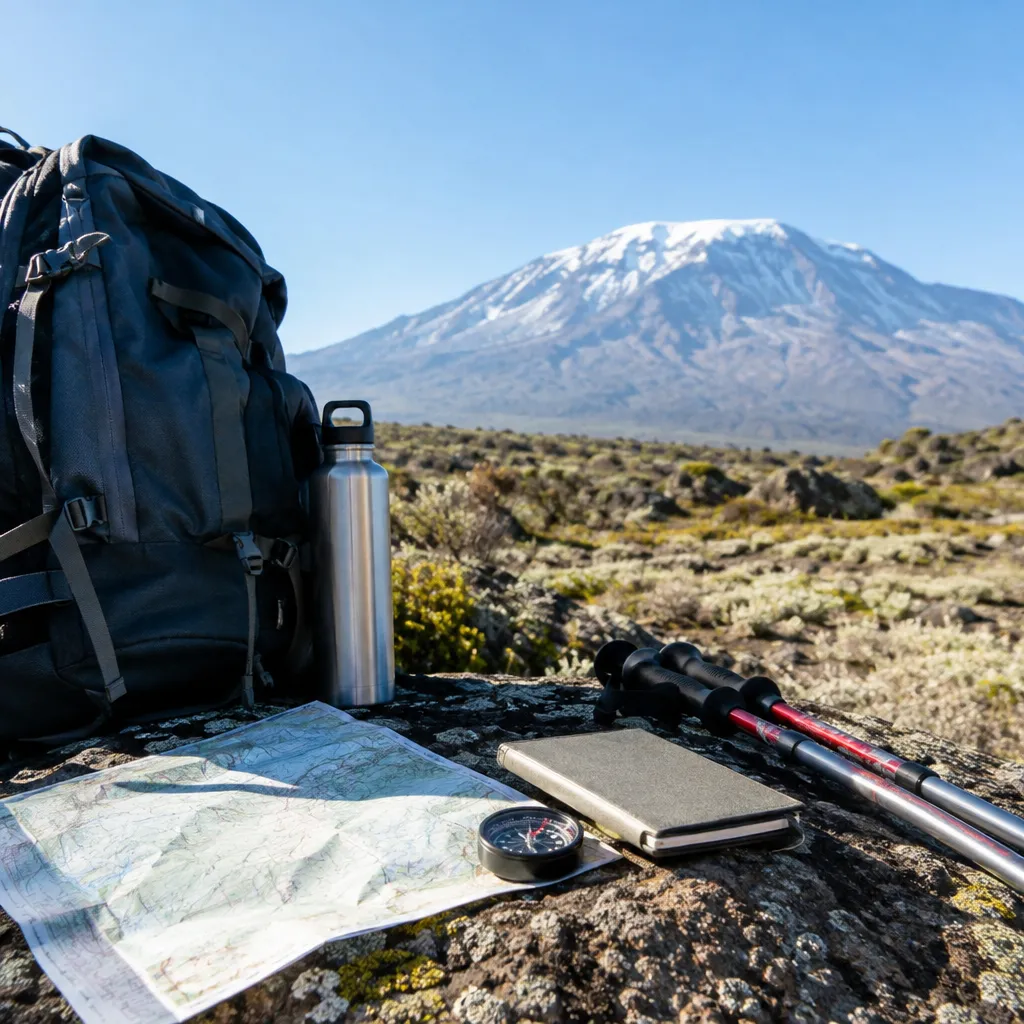
Practice With Your Daypack
Beginners should gradually become comfortable carrying a daypack.
Start light.
Add the things you would normally carry on a trekking day, such as:
- Water.
- Extra clothing.
- Snacks.
- Personal essentials.
Do Not Train With Excessive Weight
You do not need an extremely heavy training pack.
Use a realistic load so your shoulders and back can adapt without unnecessary stress.
Should Beginners Use Trekking Poles?
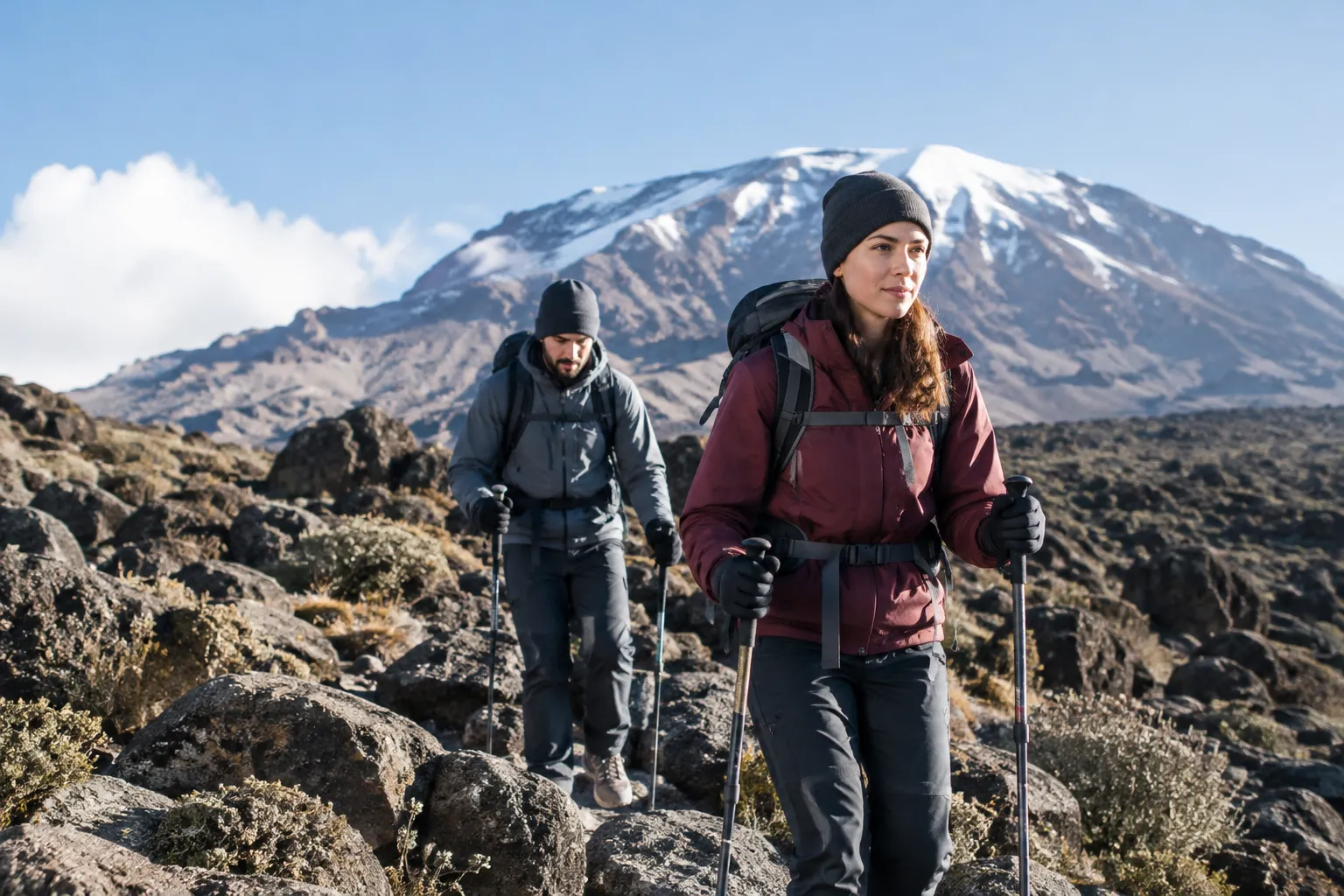
Trekking poles can be helpful, especially on uphill and downhill terrain.
If you plan to use them on Kilimanjaro, practice beforehand.
Learn Pole Technique Before the Mountain
Do not wait until the first trekking day to learn how the straps, length adjustment, and movement pattern work.
Build Cardio Fitness Without Running
Beginners often assume they need to start running.
You do not.
Good alternatives include:
- Brisk walking.
- Cycling.
- Swimming.
- Elliptical training.
- Stairs.
Running Is Optional
If you enjoy running and tolerate it well, it can be useful.
If you dislike it or your joints do not tolerate it, do not force it.
Build Toward Long Hiking Days
As your training progresses, gradually extend your weekend hike.
You may build from:
- 90 minutes.
- 2 hours.
- 3 hours.
- 4 hours or more later in training.
Long Hikes Teach More Than Fitness
They help you learn:
- How much water you drink.
- Which snacks work.
- How your boots feel.
- Where your body becomes tired.
- How your mood changes after several hours.
Add Back-to-Back Hiking Later
Once you are comfortable with longer walks, begin training on consecutive days.
For example:
- Saturday: 2 to 3 hour hike.
- Sunday: 60 to 90 minute walk.
Why Beginners Need Recovery Days
Your body improves during recovery.
Training every day without rest can increase the risk of:
- Persistent soreness.
- Joint problems.
- Fatigue.
- Loss of motivation.
Rest Is Not Laziness
A rest day is part of a good training plan.
You do not need to feel guilty for recovering.
Sleep Is Important
Training adaptation is harder when you are consistently sleep-deprived.
Make sleep part of your Kilimanjaro preparation.
Eat Enough to Support Training
Do not combine increasing exercise volume with aggressive calorie restriction.
Your body needs energy to train and recover.
Hydration During Beginner Training
Use training walks to build the habit of drinking regularly.
Carry water during longer sessions rather than waiting until you return home.
Practice Eating While Hiking
Bring small snacks during longer sessions.
This helps you learn what foods are comfortable for your stomach while exercising.
What If You Get Very Tired?
Some fatigue is normal as training increases.
But persistent extreme fatigue can be a sign that your training volume is too high or another issue needs attention.
Learn the Difference Between Effort and Pain
Training should sometimes feel challenging.
However, sharp, persistent, or worsening pain should not be ignored.
Knee Pain in Beginner Training
Knee discomfort can appear when walking or stair volume increases too quickly.
Reduce the load and seek appropriate professional advice if pain persists.
Foot Pain and Blisters
Beginners should address foot problems early.
Check:
- Boot fit.
- Sock choice.
- Lacing.
- Walking volume.
Do Not Compare Yourself With Experienced Hikers
Someone who has been hiking for ten years may comfortably complete a training session that would be inappropriate for a beginner.
Train from your own starting point.
Progress Is Not Always Linear
Some weeks will feel easier than others.
That does not necessarily mean you are losing fitness.
Training During Your Period
Some women experience cramps, fatigue, or lower energy during menstruation.
Adjust individual sessions if necessary while maintaining overall consistency.
Heavy Periods and Unusual Fatigue
If you have heavy menstrual bleeding, known anemia, iron deficiency, or unexplained fatigue, seek appropriate medical advice before high-altitude trekking.
Beginner Women Over 40
You can start hiking preparation after 40 even if you have never climbed a major mountain.
Build slowly and include strength work and recovery.
Beginner Women Over 50
Women over 50 can also develop strong trekking fitness.
Individual health, training history, joints, and recovery matter more than comparing yourself with younger climbers.
Beginner Women Over 60
Women over 60 who are new to trekking should allow plenty of time for gradual preparation.
Relevant medical concerns should be discussed with an appropriate healthcare professional.
Training During Perimenopause
Changes in sleep, recovery, temperature regulation, or energy can affect some women during perimenopause.
A flexible training plan can help you remain consistent without forcing every session.
Do Beginners Need Altitude Training?
Most women do not have access to true altitude training before Tanzania.
Focus on building strong general trekking fitness.
Your Kilimanjaro itinerary and slow mountain pace then become part of the acclimatization process.
Fitness Does Not Guarantee Altitude Tolerance
Even after excellent training, you can still experience altitude symptoms.
Once on the mountain:
- Walk slowly.
- Eat regularly.
- Drink regularly.
- Report symptoms honestly.
- Follow your guide’s instructions.
Do Beginners Need Technical Climbing Training?
The standard Machame Route is primarily a trekking route.
You do not need traditional technical mountaineering experience for the normal route.
What About Barranco Wall?
Barranco Wall can look intimidating to first-time climbers.
It involves controlled scrambling rather than technical rock climbing.
Strength, balance, and outdoor hiking confidence can help.
Prepare for Summit Night Gradually
You do not prepare for summit night by doing one brutal workout.
You prepare through months of:
- Walking.
- Long hikes.
- Strength training.
- Stairs.
- Consecutive-day training.
Mental Confidence Grows During Training
Every longer walk you complete teaches you something.
Gradually, “Can I really do Kilimanjaro?” can become “I know I can walk for hours and keep going.”
Keep a Simple Training Record
You can track:
- Walking duration.
- Hiking duration.
- Stair sessions.
- Strength sessions.
- How your body felt.
- Any foot or joint problems.
Do Not Obsess Over Numbers
Tracking can be useful, but your training is not a competition.
The goal is readiness, not the biggest weekly number.
Your Final Training Phase
Later in your preparation, you should ideally be comfortable with:
- Several hours of walking.
- Regular hills or stairs.
- Your hiking boots.
- Your daypack.
- Back-to-back walking days.
Do Not Panic Train at the End
If you miss some sessions, do not try to compensate with extreme workouts immediately before travel.
You are better arriving slightly undertrained than injured and exhausted.
Taper Before the Climb
Reduce training volume before departure so your body has time to recover.
Keep moving lightly, but avoid your hardest workouts during the final days.
Use the Pre-Climb Days in Moshi
The WomenClimbKili climb-only itinerary includes two hotel nights in Moshi before the trek.
Use this time to:
- Recover from travel.
- Sleep.
- Eat normally.
- Hydrate.
- Attend your briefing.
- Complete your gear inspection.
Why the 7-Day Machame Route Works Well for Preparation
Scheduled WomenClimbKili groups use the 7-day Machame Route.
The trek gives you multiple hiking days and an itinerary designed around gradual progression toward the summit.
You can view the full route on our Women-Only Machame Route Kilimanjaro Package .
Can Solo Beginner Women Join?
Yes.
You do not need to bring your own climbing partner.
Solo female travelers can reserve one place in a scheduled WomenClimbKili departure and meet the group in Moshi.
How Large Is the Group?
Scheduled WomenClimbKili departures are limited to a maximum of 12 women.
Frequently Asked Questions
Can a complete beginner climb Kilimanjaro?
A beginner can prepare successfully, but adequate training, time, health, and realistic expectations are important.
How should a beginner start training?
Start with regular walking, then gradually add longer walks, hills, stairs, basic strength training, hiking, and back-to-back days.
Do beginners need a gym?
No. Walking, stairs, hiking, bodyweight strength exercises, and resistance bands can all provide useful preparation.
Do I need to run?
No. Running is optional. Walking and hiking are more specific to Kilimanjaro.
How long should beginners train?
The ideal preparation period depends on your starting fitness. Women beginning from a low activity level should give themselves several months where possible.
Do I need previous mountain experience?
Previous mountain experience is helpful but not essential for every climber on the standard Machame Route.
Can I train if I live somewhere flat?
Yes. Use long walks, stairs, incline treadmills, strength training, and outdoor hiking whenever you get the opportunity.
Does getting very fit guarantee the summit?
No. Fitness is important, but altitude response, health, weather, and other factors also affect a Kilimanjaro climb.
Every Strong Climber Started Somewhere
Being a beginner does not mean you cannot climb Kilimanjaro.
It simply means your preparation should start from where you are now.
Begin with walking. Add hills and stairs. Strengthen your legs. Spend more time on your feet. Learn your boots and daypack. Then gradually introduce longer and consecutive hiking days.
You do not need to transform yourself into an elite athlete.
You need to become a stronger, more experienced, and more confident version of the woman who started training.
Explore our WomenClimbKili scheduled departures or view the complete 7-Day Women-Only Machame Route Package .
Share:

Social Media
Most Popular
What does a typical Kilimanjaro summit night schedule look like?
Machame Route Pacing for Women | How Slow Should You Walk?
Machame Route Terrain for Women | Trail & Walking Conditions Guide
Machame Route Camps for Women | What to Expect Each Night
Book Your Sustainable Tour
Related Posts
What does a typical Kilimanjaro summit night schedule look like?
The summit-night schedule on Kilimanjaro is built around an early rest, a late-evening meal and a slow climb through the night.
Machame Route Pacing for Women | How Slow Should You Walk?
Machame Route Pacing for Women: How Slow Should You Walk? Understanding Machame Route pacing for women can be just as important as building fitness before
Machame Route Terrain for Women | Trail & Walking Conditions Guide
Machame Route Terrain for Women: What the Trail Is Really Like Understanding the Machame Route terrain for women can help you train more intelligently and
Machame Route Camps for Women | What to Expect Each Night
Machame Route Camps for Women: What to Expect Each Night Understanding the Machame Route camps for women can make the idea of spending several nights