What Happens If You Get Sick on Kilimanjaro? A Women’s Safety Guide
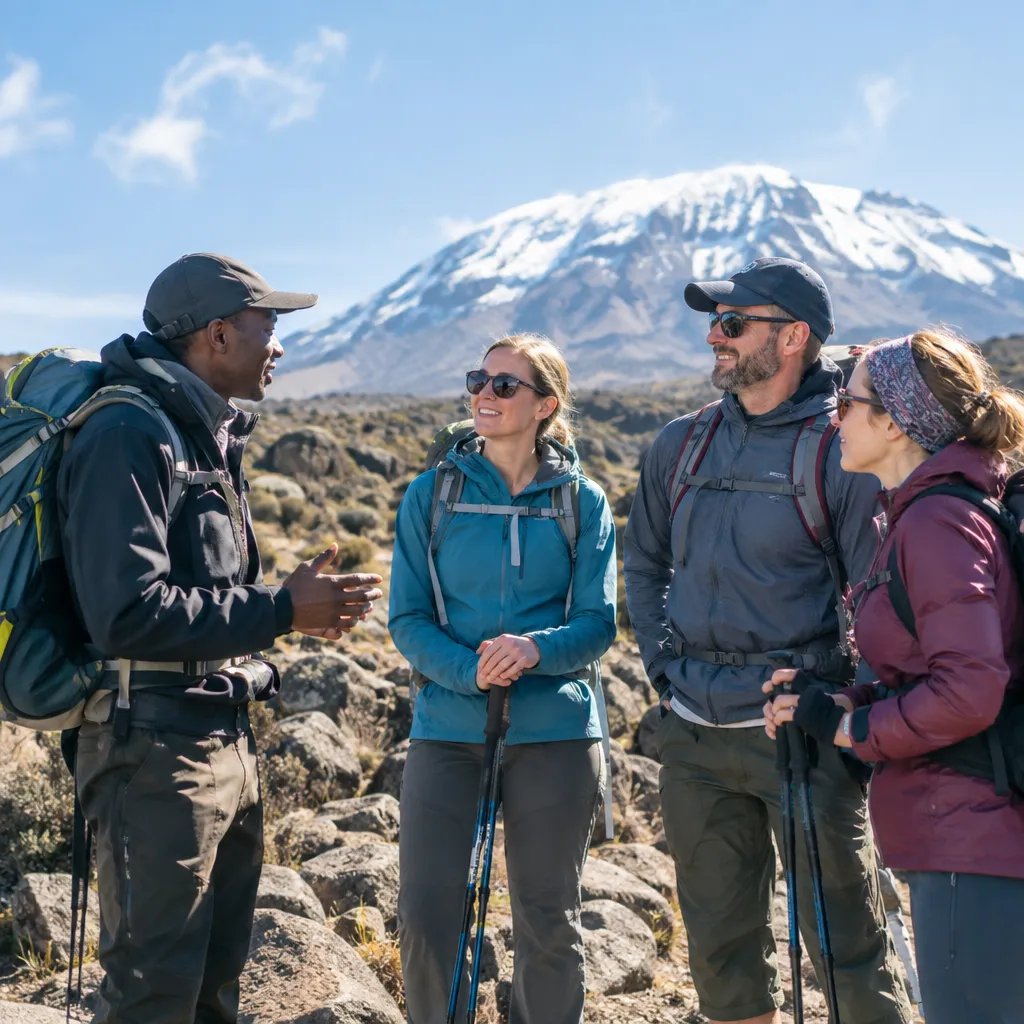
One of the most important questions to ask before a high-altitude trek is what happens if you get sick on Kilimanjaro. Most climbers prepare for the summit, weather, and fitness challenge, but it is equally important to understand what happens if you develop altitude symptoms, stomach problems, exhaustion, injury, or another health concern during the expedition.
Kilimanjaro is a high-altitude mountain, so no responsible operator should treat illness as something to ignore.
Your guide team monitors your condition throughout the trek, and if continuing upward becomes unsafe, the priority becomes treatment, descent, and evacuation where necessary.
Can People Get Sick on Kilimanjaro?
Yes.
Kilimanjaro involves several days of physical activity, changing temperatures, mountain camping, and increasing altitude.
Potential health problems can include:
- Altitude-related symptoms.
- Headaches.
- Nausea.
- Fatigue.
- Digestive problems.
- Dehydration.
- Cold-related discomfort.
- Blisters or minor injuries.
- Existing medical conditions becoming problematic.
Some issues are minor and manageable, while others require descent.
Altitude Is One of the Main Health Concerns
Uhuru Peak stands at 5,895 metres above sea level.
As climbers move higher, the reduced availability of oxygen places additional stress on the body.
Altitude can affect anyone regardless of gender, age, fitness level, or previous athletic experience.
What Are Common Altitude Symptoms?
Some climbers may experience:
- Headache.
- Nausea.
- Reduced appetite.
- Dizziness.
- Unusual fatigue.
- Difficulty sleeping.
These symptoms should be reported honestly to your guide.
Why You Should Never Hide Symptoms
Some climbers worry that if they admit they feel unwell, they will automatically be told to descend.
That fear can lead people to hide useful medical information.
Your guide cannot make a responsible assessment if you are not honest about how you feel.
Reporting symptoms early gives the mountain team a better opportunity to monitor how your condition is changing.
What Health Monitoring Is Used?
Our Kilimanjaro mountain team carries a pulse oximeter for daily health monitoring.
The guides also observe your general condition, including:
- How you are walking.
- How you are communicating.
- Your energy level.
- Your reported symptoms.
- Changes from the previous day.
A single device reading should never replace the overall assessment of the climber.
What Medical Equipment Is Carried?
Our mountain safety equipment includes:
- Emergency oxygen.
- A first-aid kit.
- A pulse oximeter.
These are important safety resources, but the most important response to serious altitude illness is often descent.
What Happens If You Develop Mild Symptoms?
The response depends on the specific symptoms, your overall condition, altitude, and how your condition changes.
Your guide may:
- Monitor you more closely.
- Ask detailed questions about your symptoms.
- Encourage rest.
- Review your hydration and food intake.
- Reassess whether it is appropriate to continue.
Never assume that mild symptoms should simply be ignored.
What Happens If Symptoms Get Worse?
If your condition worsens or the guide believes continuing upward is unsafe, the correct action may be to stop ascending and descend.
Descending to a lower elevation reduces altitude exposure and can be critical when altitude-related illness becomes serious.
Does Descent Mean the Trip Has Failed?
No.
Choosing safety over the summit is the correct decision when health is at risk.
A mountain summit is never more important than a climber’s wellbeing.
Can Emergency Oxygen Be Used?
Yes. Emergency oxygen is carried for situations in which the mountain team determines that it is needed.
However, oxygen should not be viewed as a way to hide severe symptoms and continue toward the summit regardless of your condition.
If descent is required, oxygen may support the emergency response while the climber is being moved to a safer altitude.
What Is Emergency Evacuation on Kilimanjaro?
Emergency evacuation means moving a climber off the mountain when illness or injury makes it unsafe to continue normally.
The evacuation method depends on:
- Your location on the mountain.
- Your medical condition.
- Weather.
- Trail access.
- Available emergency resources.
Can Helicopter Evacuation Be Used?
Helicopter evacuation may be available on Kilimanjaro when conditions and circumstances allow.
However, climbers should not assume that a helicopter will always be able to reach them immediately.
Weather, altitude, location, and operational conditions can affect evacuation options.
Why Travel Insurance Matters
Suitable travel insurance is especially important for a high-altitude mountain trip.
Your policy should cover:
- High-altitude trekking to Kilimanjaro’s elevation.
- Emergency medical treatment.
- Emergency evacuation.
Do not assume that every standard travel policy covers trekking to 5,895 metres.
Check the Altitude Limit on Your Insurance
Insurance policies often include altitude limits.
Read the policy wording carefully before purchasing.
You need coverage suitable for trekking up to approximately 6,000 metres so that Kilimanjaro’s summit elevation is included.
What If You Have a Pre-Existing Medical Condition?
If you have an existing medical condition, take regular medication, or have concerns about high-altitude exercise, discuss the trip with an appropriate healthcare professional.
You should also disclose relevant medical information through the required medical information process.
Hiding important health information can make an emergency harder to manage.
What If You Become Sick With a Stomach Problem?
Digestive problems can affect energy and hydration during a trek.
If you experience vomiting, diarrhea, significant stomach pain, or difficulty eating and drinking, tell your guide.
Losing fluids while trekking at altitude can become more serious if it is not managed appropriately.
Do Not Assume Every Symptom Is Altitude Sickness
Headache, fatigue, nausea, or weakness can have multiple possible causes.
That is another reason your guide needs the full picture rather than one isolated symptom.
What If You Are Extremely Tired?
Fatigue is normal during a multi-day trek, but extreme or unusual fatigue should be reported.
Your guide needs to know whether your condition is simply normal tiredness or part of a larger health problem.
What If You Get a Headache?
Headaches can occur at altitude.
Tell your guide rather than simply taking medication and hiding the symptom.
How the headache develops alongside other symptoms matters when assessing your condition.
What If You Feel Dizzy?
Dizziness should be reported.
Do not keep walking quietly if you feel unstable or unusually light-headed.
Your guide can assess whether you need rest, further monitoring, or another course of action.
What If You Cannot Eat?
Reduced appetite can happen at higher elevations.
However, several days of hiking require energy.
Tell your guide if you are unable to eat properly, particularly if it continues or is accompanied by other symptoms.
What If You Cannot Drink Enough?
Hydration is important during high-altitude trekking.
If nausea or another illness makes it difficult to drink, tell your guide.
Do not wait until you are significantly dehydrated before mentioning the problem.
What If You Have a Blister?
A small blister can become a major problem when you still have several hiking days remaining.
Deal with foot problems early.
Tell your guide if pain begins affecting how you walk.
Prevent Foot Problems Before Tanzania
One of the best ways to reduce blister problems is to train in the same boots and socks you plan to use on Kilimanjaro.
Do not make summit week the first time you wear your hiking boots for several hours.
What If You Injure Your Knee or Ankle?
Tell your guide immediately if an injury affects your ability to walk normally.
Continuing to push through a significant injury can make the problem worse.
The guide team will assess what is practical and safe based on your condition and location.
Why Descending Can Be Hard on the Knees
Kilimanjaro involves substantial downhill walking after the summit.
Strong legs, trekking poles, and downhill training can help prepare your knees for this part of the trip.
What If You Get Very Cold?
Cold becomes more significant at higher elevations and during summit night.
Tell your guide if you cannot stay warm despite wearing appropriate layers.
Cold should not be treated as a test of toughness.
Good Clothing Helps Prevent Cold Problems
Your mountain clothing system should include:
- Base layers.
- Warm mid-layers.
- An insulated jacket.
- Waterproof and wind-resistant outer layers.
- Warm gloves.
- A warm hat.
- Suitable socks.
What If You Have Your Period and Feel Unwell?
Menstruation can cause fatigue, cramps, headaches, or other symptoms for some women.
However, do not automatically assume that every symptom is period-related.
Altitude and other medical issues can produce similar symptoms.
Tell your guide how you feel so the overall situation can be considered.
What About Women Over 40, 50 or 60?
Older women are not automatically more likely to become ill simply because of age.
Individual health and medical history matter more.
Women with relevant medical conditions should discuss high-altitude trekking with an appropriate healthcare professional before travel.
What If You Take Daily Medication?
Bring enough medication for your entire Tanzania trip.
Keep important doses somewhere accessible.
If medication requires special storage, discuss this with your healthcare professional before traveling.
Should Your Guide Know About Your Medication?
Relevant medical information should be disclosed before the trek where appropriate.
This can become important if you experience a medical problem on the mountain.
What Happens If One Person Descends Early?
The rest of the group does not automatically need to abandon the climb because one participant requires descent.
The guide team manages the situation based on safety, crew arrangements, and the needs of the climber who is descending.
Will Someone Accompany You Down?
A climber who needs to descend for health or safety reasons is managed by the mountain team rather than being expected to find her own way off the mountain.
What Happens After You Reach Lower Altitude?
The next steps depend on your condition.
You may need rest, additional medical evaluation, transport, or further treatment depending on what caused the illness.
Will You Get a Refund for Unused Mountain Days?
Kilimanjaro National Park fees and mountain operations are arranged for the confirmed itinerary.
Descending early does not automatically create a refund for unused mountain days.
Travel insurance may be relevant for some costs depending on the reason for descent and the terms of your policy.
What About Hotel Accommodation After Early Descent?
If you return to Moshi earlier than the planned itinerary, additional hotel accommodation created by an early descent may not be included in the standard mountain package.
This is another practical reason to understand your travel insurance and emergency budget before departure.
Why the 7-Day Machame Route Matters
WomenClimbKili scheduled departures use the 7-day Machame Route.
The seven-day itinerary allows more acclimatization time than shorter Machame programs.
It includes an important acclimatization section around Lava Tower before descending to Barranco Camp.
You can view the full itinerary on our Women-Only Machame Route Kilimanjaro Package .
Does a Longer Route Guarantee You Will Not Get Sick?
No.
No route can guarantee that every climber will acclimatize successfully.
A sensible route length provides more time for adaptation, but individual altitude response still varies.
What Can You Do to Reduce Avoidable Problems?
You cannot control every health issue, but you can improve your preparation.
Before Kilimanjaro:
- Train consistently.
- Break in your hiking boots.
- Bring suitable clothing.
- Arrange appropriate travel insurance.
- Disclose relevant medical information.
- Bring enough prescription medication.
- Arrive rested.
During the Mountain Trek
Once the climb begins:
- Walk slowly.
- Drink regularly.
- Eat as well as you can.
- Rest at camp.
- Protect yourself from cold and rain.
- Take care of your feet.
- Report symptoms honestly.
- Follow guide instructions.
Why “Pole Pole” Is a Safety Principle
The Swahili expression “pole pole” means “slowly, slowly.”
It is not simply a slogan.
Walking slowly helps conserve energy and gives the body more time to adapt as elevation increases.
Can Solo Female Travelers Get the Same Medical Support?
Yes.
Traveling to Tanzania alone does not mean managing mountain illness alone.
Once you join the expedition, you are part of the climbing group and supported by the professional mountain team.
What Is the Maximum Group Size?
WomenClimbKili scheduled departures are limited to a maximum of 12 women.
What If You Are Nervous About Getting Sick Before Booking?
Being concerned about altitude and emergencies is reasonable.
Instead of trying to convince yourself that nothing can go wrong, prepare properly for what should happen if something does.
That includes knowing your health, choosing an appropriate itinerary, having suitable insurance, and climbing with a professional guide team.
Frequently Asked Questions
What happens if I get sick on Kilimanjaro?
Tell your guide immediately. Your condition will be monitored and the mountain team will decide whether you can continue, need additional support, or should descend.
What happens if I get altitude sickness?
The response depends on your symptoms and condition. If continuing upward becomes unsafe, descent may be necessary.
Is emergency oxygen available?
Yes. Emergency oxygen is carried as part of our mountain safety equipment.
Do guides check oxygen levels?
A pulse oximeter is used as part of daily health monitoring alongside observation of symptoms and general condition.
Can I be evacuated from Kilimanjaro?
Yes. Emergency evacuation can be arranged when necessary, with the method depending on your condition, location, weather, and available resources.
Can a helicopter evacuate me?
Helicopter evacuation may be available depending on operational conditions, weather, location, and the medical situation.
Do I need special travel insurance?
Your insurance should specifically cover high-altitude trekking to Kilimanjaro’s elevation and emergency evacuation.
Can I continue climbing if I feel sick?
That depends on your symptoms and guide assessment. If continuing is unsafe, you should descend.
Your Health Comes Before the Summit
The goal of a Kilimanjaro expedition is to reach the summit safely, not to reach it at any cost.
If you feel unwell, tell your guide early. If you need to descend, descend. If emergency support is required, the mountain team will respond according to the situation.
Good preparation does not mean pretending that illness cannot happen. It means understanding the risks and having a clear plan for managing them responsibly.
Explore our WomenClimbKili scheduled departures or view the complete 7-Day Women-Only Machame Route Package .
Share:
Social Media
Most Popular
Kilimanjaro Cold Weather Preparation for Women | Stay Warm
Kilimanjaro Medical Preparation for Women | Health Checklist
Kilimanjaro Hydration & Nutrition for Women | Practical Guide
Kilimanjaro Travel Insurance for Women | What Coverage You Need
Book Your Sustainable Tour
Related Posts
Kilimanjaro Cold Weather Preparation for Women | Stay Warm
Kilimanjaro Cold Weather Preparation for Women: How to Stay Warm Good Kilimanjaro cold weather preparation for women is essential because temperatures change dramatically as you
Kilimanjaro Medical Preparation for Women | Health Checklist
Kilimanjaro Medical Preparation for Women: A Pre-Climb Health Checklist Good Kilimanjaro medical preparation for women starts long before you arrive in Tanzania. Kilimanjaro is a
Kilimanjaro Hydration & Nutrition for Women | Practical Guide
Kilimanjaro Hydration and Nutrition for Women: A Practical Guide Good Kilimanjaro hydration and nutrition for women can make a major difference to how you feel
Kilimanjaro Travel Insurance for Women | What Coverage You Need
Kilimanjaro Travel Insurance for Women: What Coverage Do You Need? Choosing suitable Kilimanjaro travel insurance for women is an important part of preparing for a