Kilimanjaro Summit Night for Women: What to Expect
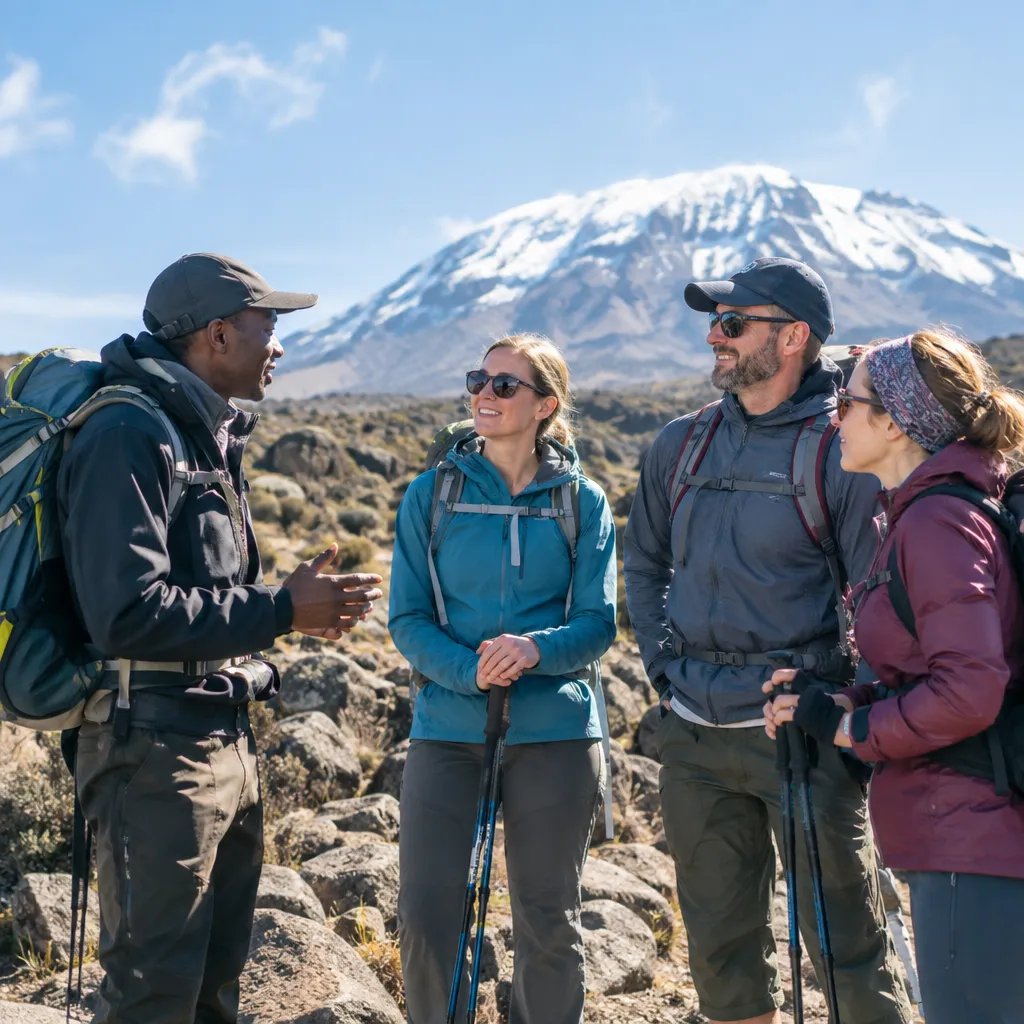
For many climbers, Kilimanjaro summit night for women is the part of the trip they think about most before arriving in Tanzania.
It is usually the coldest, highest, and most physically demanding section of the entire climb. You begin during the night, walk for several hours at high altitude, reach Stella Point, and continue toward Uhuru Peak if conditions and your health allow.
Summit night is challenging, but understanding what happens can make it feel less intimidating.
Why Is It Called Summit Night?
The final ascent begins during the night rather than in the morning.
Climbers leave Barafu Camp in darkness and begin ascending toward the crater rim.
Because the summit attempt starts before sunrise, it is commonly called summit night.
Where Does Summit Night Begin?
On the 7-day Machame Route, the summit attempt begins from Barafu Camp.
The group prepares in the evening, tries to rest, and then gets ready for the final ascent during the night.
What Happens Before You Start?
Before leaving camp, climbers prepare carefully because summit night is not the time to discover that something important is missing.
You will typically check:
- Your clothing layers.
- Warm gloves.
- Hat and head protection.
- Headlamp.
- Water.
- Snacks.
- Trekking poles.
- Personal medication.
Why Does the Climb Start So Early?
Starting during the night allows climbers to reach the crater rim around sunrise or early morning depending on pace and conditions.
It also gives the group enough time to continue toward Uhuru Peak and then descend safely during the same day.
How Cold Is Summit Night?
Summit night can be very cold.
Temperature is influenced by season, altitude, wind, and weather conditions.
Even during generally favorable climbing months, women should prepare for freezing conditions at high elevation.
What Should Women Wear on Summit Night?
A layering system is essential.
Your summit clothing may include:
- Warm base layers.
- Insulating mid-layers.
- An insulated jacket.
- Waterproof or wind-resistant outer layers.
- Warm hiking trousers or layered leg protection.
- Warm gloves.
- A warm hat.
- Warm hiking socks.
- Suitable hiking boots.
The exact combination depends on your gear and the conditions.
Why Layering Is Better Than One Heavy Item
Several layers allow you to adjust your clothing as your body temperature changes.
You may feel very cold when standing still, but warmer once you start climbing.
Layering gives you more control than relying on one single heavy garment.
Warm Hands Matter
Cold hands can make summit night unnecessarily uncomfortable.
Bring gloves suitable for cold mountain conditions and make sure you can still manage important items such as trekking poles and zippers.
Protect Your Head and Face
A warm hat is essential for summit night.
Depending on conditions, additional face and neck protection can also improve comfort when wind and cold increase.
What Is the Walking Pace Like?
Summit night is slow.
Very slow.
Your guide will usually control the pace carefully.
You may feel as though you could walk faster, especially early in the night, but conserving energy is important.
Remember “Pole Pole”
The Swahili phrase “pole pole” means “slowly, slowly.”
This principle becomes especially important on summit night.
Moving steadily helps conserve energy and reduces unnecessary physical stress.
Why Summit Night Feels Harder Than Normal Hiking
Several factors come together:
- High altitude.
- Cold temperatures.
- Darkness.
- Fatigue.
- Limited sleep.
- Several previous trekking days.
- A long ascent.
Even women who trained well can find summit night demanding.
How Altitude Feels Near the Summit
At very high elevation, movement can feel much harder than it would at lower altitude.
You may notice that simple actions require more effort.
This is one reason summit night should not be treated like a normal fast hike.
What Is Stella Point?
Stella Point is located on the crater rim and is one of the major milestones on the Machame summit route.
Reaching Stella Point means you have completed a major part of the final ascent.
From there, climbers continue around the crater rim toward Uhuru Peak if they are able to continue safely.
Is Stella Point the Summit?
Stella Point is an important summit point on the crater rim, but Uhuru Peak is the highest point on Mount Kilimanjaro.
The final section from Stella Point to Uhuru Peak still requires additional effort at very high altitude.
What Is Uhuru Peak?
Uhuru Peak is the highest point on Mount Kilimanjaro and stands at 5,895 metres above sea level.
For climbers who are medically able to continue, reaching Uhuru Peak is the final goal of the ascent.
What If You Reach Stella Point but Cannot Continue?
Your safety remains more important than reaching the highest point.
If you are not in suitable condition to continue, your guide may recommend or require descent.
Reaching Stella Point is still a major achievement.
What If You Need to Turn Around Earlier?
Turning around can be disappointing, but it can also be the correct decision.
Altitude illness, extreme fatigue, or another health concern may make descent necessary.
A summit should never be valued more highly than your health.
How Do Guides Decide Whether You Can Continue?
Guides monitor more than just your walking speed.
They pay attention to:
- Your symptoms.
- Your coordination.
- Your communication.
- Your energy level.
- Your general condition.
You should always communicate honestly about how you feel.
What Safety Equipment Is Carried?
Our mountain team carries:
- Emergency oxygen.
- A first-aid kit.
- A pulse oximeter for health monitoring.
These tools support the mountain safety process, but they do not replace responsible decisions about descent when necessary.
Should You Take Painkillers and Ignore a Headache?
Do not use medication simply to hide symptoms from your guide.
A headache at altitude may be important information.
Tell your guide how you feel and follow appropriate medical advice.
How Should You Prepare Mentally?
Thinking about the entire summit climb at once can feel overwhelming.
Instead, focus on:
- The next few steps.
- Your breathing.
- Your guide’s pace.
- The next short break.
- Staying warm.
- Eating or drinking when appropriate.
Summit night is completed one section at a time.
Do Not Count Every Minute
Constantly checking how long you have been walking can make the night feel longer.
It is often easier to stay focused on your pace and immediate surroundings.
How Important Is Training?
Training cannot eliminate altitude, but it can make the physical side of summit night more manageable.
Useful preparation includes:
- Long hikes.
- Hill training.
- Stair climbing.
- Cardiovascular training.
- Leg strength.
- Core strength.
- Back-to-back hiking days.
Train for Long Days, Not Speed
A fast 5-kilometre run does not directly reproduce summit night.
You need endurance and the ability to keep moving for long periods.
Include longer walks and hikes in your preparation.
Why Back-to-Back Hiking Helps
Summit night does not happen when your legs are completely fresh.
You have already spent several days trekking.
Training on consecutive days can help you understand how your body feels when exercising before it has fully recovered from the previous day.
Should You Train at Night?
You do not need to do all your training in darkness.
However, taking an occasional walk with your headlamp can help you become comfortable moving when visibility is limited.
Practice Using Your Headlamp
Your headlamp is essential on summit night.
Do not wait until Barafu Camp to learn how it works.
Know how to:
- Turn it on and off.
- Change brightness.
- Replace or recharge its power source.
- Use it while wearing gloves.
Eating Before Summit Night
Your body needs energy for the final ascent.
Even if altitude reduces your appetite, try to eat appropriately before the climb and follow guidance from the mountain team.
Carry Snacks You Can Eat Easily
Cold, altitude, and fatigue can reduce appetite.
Bring familiar snacks that you know you can tolerate during physical activity.
Do not experiment with completely unfamiliar foods for the first time on summit night.
Drinking Water on Summit Night
Hydration remains important.
Make sure your drinking system is practical in cold conditions and easy to access while wearing layers.
What About Toilet Needs?
This is a practical concern for many women.
Use the toilet before leaving camp and communicate with your guide if you need a toilet break during the ascent.
Wear clothing layers that are practical enough to manage when necessary.
What If You Have Your Period on Summit Night?
Menstruation does not automatically stop you from participating in the summit attempt.
Keep the menstrual products you need accessible rather than buried deep inside your luggage.
You should also carry a secure way to store used products until they can be disposed of properly.
Can Women Over 40, 50 or 60 Handle Summit Night?
Age alone cannot answer that question.
Health, fitness, medical circumstances, preparation, acclimatization, and individual altitude response are more important.
Women with relevant medical concerns should discuss high-altitude trekking with an appropriate healthcare professional before the trip.
Can a First-Time Climber Handle Summit Night?
Yes, many first-time high-altitude climbers attempt Kilimanjaro.
Technical mountaineering experience is not normally required on the standard Machame Route.
However, good physical preparation and realistic expectations are important.
Why the Days Before Summit Matter
Summit night preparation begins long before Barafu Camp.
During the earlier trekking days:
- Walk slowly.
- Eat regularly.
- Stay hydrated.
- Rest when you reach camp.
- Report symptoms honestly.
- Protect your feet.
- Keep your equipment organized.
Saving energy throughout the route can make a major difference.
Why We Use the 7-Day Machame Route
WomenClimbKili scheduled departures use the 7-day Machame Route.
The itinerary provides more time for acclimatization than shorter Machame programs before summit night.
It also includes the Lava Tower acclimatization section before descending to Barranco.
What Happens After Reaching Uhuru Peak?
Reaching the summit is not the end of the day.
After taking time at the summit as conditions allow, the group must descend.
The descent can be tiring because you have already spent many hours climbing.
Stay focused and continue following guide instructions.
The Descent Is Part of Summit Day
Many climbers prepare mentally for the ascent but forget that significant descent still remains afterward.
Your legs may feel tired, and loose terrain can require careful movement.
Trekking poles can be useful for stability during the descent.
What If You Feel Emotional at the Summit?
A strong emotional reaction is completely understandable.
For many women, reaching the top represents months of training, international travel, physical effort, and personal commitment.
Take in the moment, but remember that weather, cold, altitude, and safety may limit how long you can remain at the summit.
Why Group Support Can Matter on Summit Night
Although each person experiences altitude individually, knowing that other women are facing the same difficult night can provide emotional support.
Encouragement can help, but nobody should feel pressured to continue if her health suggests she should descend.
Can Solo Female Travelers Join the Summit Group?
Yes.
Solo female travelers can reserve one place in a scheduled WomenClimbKili departure and attempt the summit as part of the group.
You do not need to bring your own climbing partner.
How Large Is the Group?
WomenClimbKili scheduled departures are limited to a maximum of 12 women.
Travel Insurance for Summit Day
Your travel insurance should cover high-altitude trekking to Kilimanjaro’s elevation and emergency evacuation.
Check the altitude limit carefully before purchasing your policy.
Frequently Asked Questions
Is Kilimanjaro summit night difficult?
Yes. Summit night is generally the most demanding part of the climb because of altitude, cold, darkness, fatigue, and the length of the day.
Do women need special training for summit night?
Women should prepare with endurance hiking, hill training, strength work, and consecutive hiking days. The basic physical demands are similar for all climbers.
Is summit night technical climbing?
The standard Machame summit route is a trekking route and does not normally require technical mountaineering skills for clients.
Can beginners summit Kilimanjaro?
First-time mountain climbers can attempt Kilimanjaro when properly prepared, but no individual summit can be guaranteed.
What happens if I feel sick?
Tell your guide immediately. Your condition will be assessed, and descent may be necessary if continuing becomes unsafe.
Do I have to continue from Stella Point to Uhuru Peak?
No. Continuing depends on your condition and the assessment of the mountain team. Safety comes before reaching the highest point.
What route does WomenClimbKili use?
Scheduled WomenClimbKili departures use the 7-day Machame Route.
Summit Night Is One Step at a Time
Summit night can look enormous when you imagine it months before your trip.
On the mountain, the approach is much simpler: dress properly, follow your guide, walk slowly, communicate honestly, and keep moving one step at a time.
You do not need to be the fastest woman on the mountain. You need patience, preparation, and respect for altitude.
Explore our WomenClimbKili scheduled departures or view the complete 7-Day Women-Only Machame Route Package .
Share:
Social Media
Most Popular
Kilimanjaro Cold Weather Preparation for Women | Stay Warm
Kilimanjaro Medical Preparation for Women | Health Checklist
Kilimanjaro Hydration & Nutrition for Women | Practical Guide
Kilimanjaro Travel Insurance for Women | What Coverage You Need
Book Your Sustainable Tour
Related Posts
Kilimanjaro Cold Weather Preparation for Women | Stay Warm
Kilimanjaro Cold Weather Preparation for Women: How to Stay Warm Good Kilimanjaro cold weather preparation for women is essential because temperatures change dramatically as you
Kilimanjaro Medical Preparation for Women | Health Checklist
Kilimanjaro Medical Preparation for Women: A Pre-Climb Health Checklist Good Kilimanjaro medical preparation for women starts long before you arrive in Tanzania. Kilimanjaro is a
Kilimanjaro Hydration & Nutrition for Women | Practical Guide
Kilimanjaro Hydration and Nutrition for Women: A Practical Guide Good Kilimanjaro hydration and nutrition for women can make a major difference to how you feel
Kilimanjaro Travel Insurance for Women | What Coverage You Need
Kilimanjaro Travel Insurance for Women: What Coverage Do You Need? Choosing suitable Kilimanjaro travel insurance for women is an important part of preparing for a