
 27 Oct 2026
 8 min read
Choosing among the main Kilimanjaro routes is less about finding one universally best trail and more about matching the itinerary to your available days, comfort with camping, preferred scenery, and time for acclimatization. These kilimanjaro routes compared for first-time climbers show the trade-offs to weigh before you plan flights, gear, and time to rest before the climb.
For a broader introduction to the mountain and its setting, see our Mount Kilimanjaro location guide. The Kilimanjaro route map can also help you picture how the five approaches differ.
Kilimanjaro routes compared at a glance
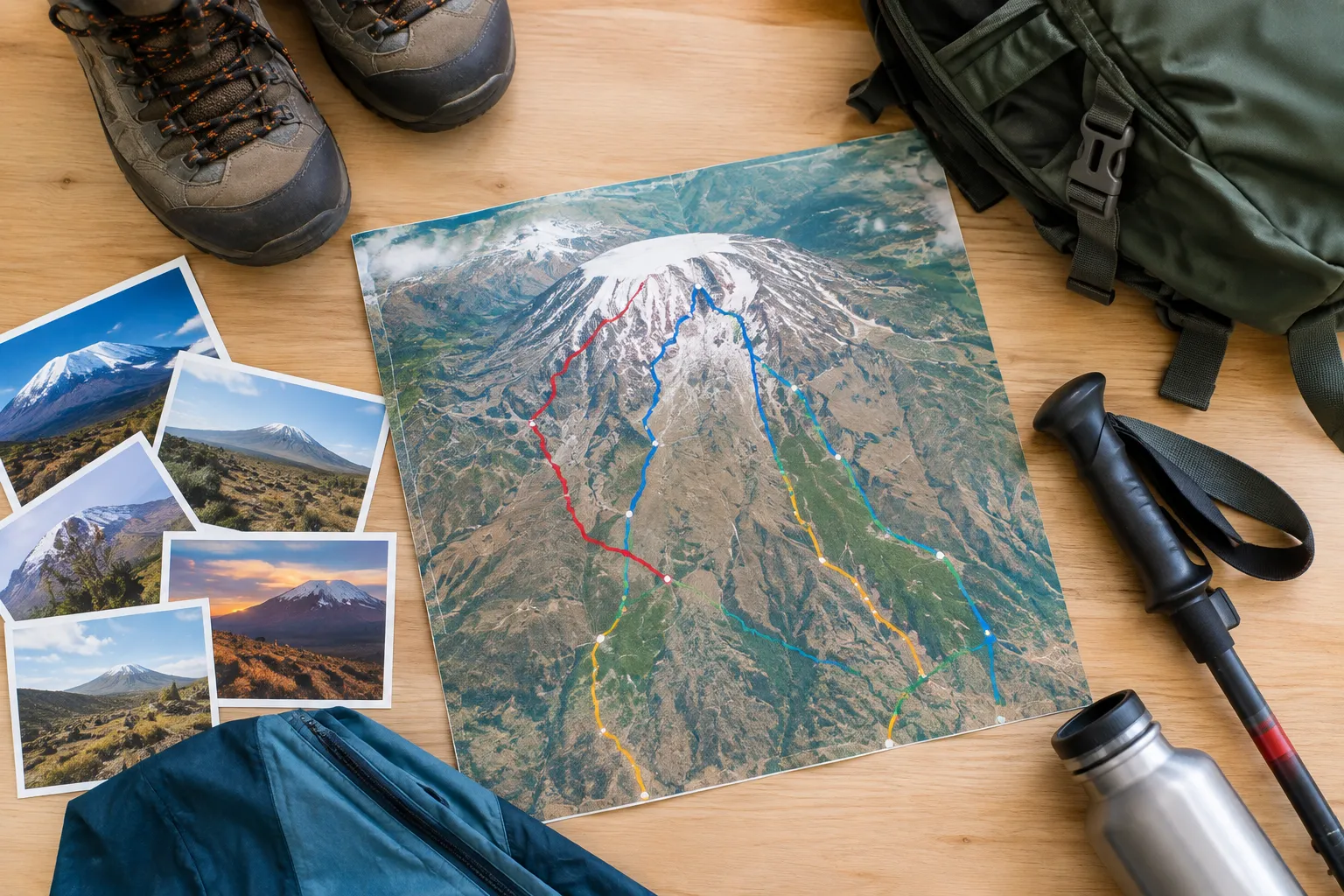
The duration ranges below describe common itineraries, not a guarantee of a particular schedule. Operators may offer different versions of a route, so compare the actual day-by-day plan, not just the route name.
| Route | Scenery and trail feel | Camping style | Traffic and acclimatization profile | Typical duration |
|---|---|---|---|---|
| Lemosho Route | Varied western approach with a quieter-feeling start | Camping | Gradual start; joins busier trails higher up | About 7–8 days |
| Machame Route | Varied scenery and more demanding trail days | Camping | Popular route; itinerary length affects acclimatization time | About 6–7 days |
| Northern Circuit | Broad, extended loop with a quieter feel on parts of the route | Camping | Longer itinerary allows more time on the mountain | About 8–9 days |
| Rongai Route | Northern approach, often described as drier and quieter | Camping | Different approach from the south; acclimatization depends on itinerary | About 6–7 days |
| Marangu Route | Direct, established trail | Shared mountain huts | Popular trail; shorter itineraries allow less time to adjust | About 5–6 days |
These ranges are a starting point for comparing itineraries, not a measure of safety or summit likelihood. A longer schedule can provide more time to adapt, but individual responses to altitude vary.
What each route feels like on the mountain
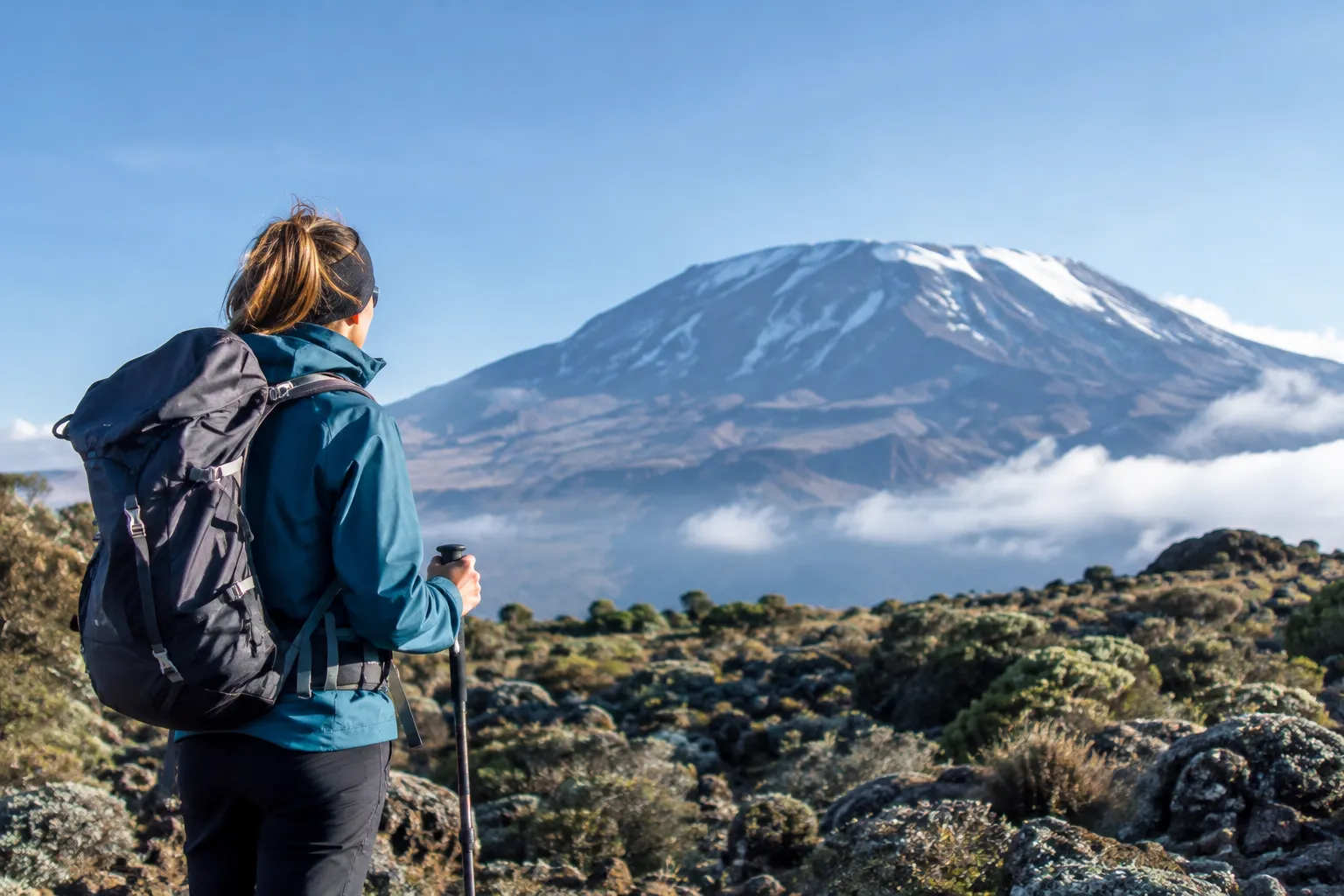
Route names alone do not tell you how strenuous a climb will feel. Ask for the daily plan, including walking hours, elevation changes, sleeping elevations, and any acclimatization day. Then compare the practical experience: how you’ll sleep, how much time you’ll have, and whether the trail character suits you.
Lemosho: a scenic, gradual western approach
The Lemosho Route begins on the mountain’s western side and is known for a varied approach. Its early section can feel more remote than the busier trail corridors it connects with later. As the climb continues, the landscape changes, and the route eventually shares parts of the mountain with other approaches.
Lemosho is a camping route. That means nights are spent in tents rather than mountain huts, so ask what sleeping equipment is included and what you need to bring or rent. The extra days often available on Lemosho can make it appealing to climbers who want a more gradual itinerary, but additional days can also add to the total trip cost. Compare the full itinerary and inclusions, rather than choosing by the route name alone.
Machame: varied scenery with a busier trail
The Machame Route is a popular camping approach with varied terrain. Its changing scenery appeals to many climbers, but some days involve more demanding walking than a simple trail description might suggest. Expect a trek with ups and downs, not a steady, easy climb.
Because the route is popular, you may encounter more other climbers in certain areas or at camps. Popularity does not make a route unsuitable, but it matters if solitude is a priority. Compare the number of days offered: a longer Machame itinerary gives you more time on the mountain than a shorter version, while requiring more time away and potentially a larger overall budget.
Northern Circuit: a longer, quieter loop
The Northern Circuit takes a longer loop around the mountain and is often chosen by climbers who have the time for an extended itinerary. The route offers a broad range of mountain scenery and can feel quieter on sections away from the more commonly used corridors.
It is a camping route, and its longer duration is its clearest trade-off: more days on the mountain mean more time away from home and additional trip-planning costs. If you are comparing it with shorter options, check what each extra day involves and how the sleeping elevations progress. A long itinerary is not a promise of a particular outcome, but time is an important part of an acclimatization plan.
Rongai: a drier, quieter northern approach
The Rongai Route approaches from the north and has a different feel from the southern routes. It is often associated with drier conditions and a quieter trail experience, though weather and the number of other groups can vary. It is a camping route.
Its profile and itinerary differ from routes that spend more time on other sides of the mountain. Do not assume that a quieter approach automatically means easier acclimatization. Ask how many days the itinerary uses, where you sleep each night, and whether the schedule includes time to adjust to altitude. Rongai may suit climbers who value its northern approach, but route preference should be weighed against the itinerary itself.
Marangu: hut accommodation on a direct route
Marangu is distinct because climbers stay in mountain huts rather than tents. If you strongly prefer a roof and a shared hut setting, that may be an important advantage. The route follows an out-and-back pattern, so the ascent and descent use the same general trail rather than forming a loop.
Marangu is sometimes selected for shorter itineraries, but fewer days can mean less time to acclimatize. Compare the offered schedule carefully instead of treating hut accommodation as a substitute for a well-planned ascent. Shared facilities and sleeping arrangements are part of the experience, so ask what to expect at the huts and what personal gear is still required.
How time on the mountain affects acclimatization
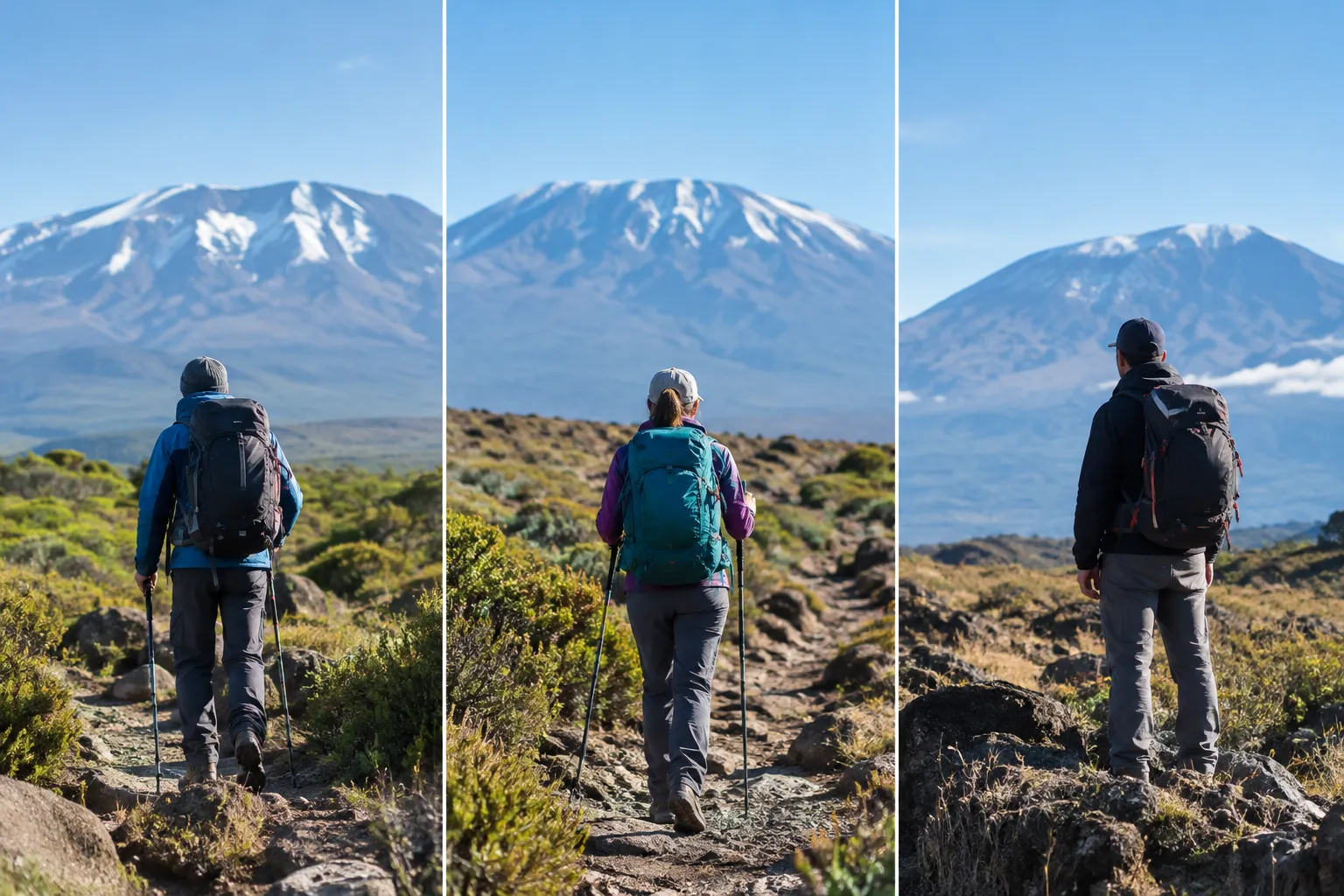
At altitude, your body needs time to adjust to lower oxygen availability. Route duration and the sequence of sleeping elevations affect how much time an itinerary allows for that process. A route that looks shorter on a calendar may leave less room for acclimatization, while a longer route requires more days, money, and time away.
When comparing plans, look beyond the total number of days:
- Check the sleeping elevation for each night and how it changes over the itinerary.
- Ask whether the plan includes an acclimatization day and what the group does that day.
- Compare walking distances and elevation changes, not just the route’s total duration.
- Confirm how the guide team monitors climbers’ health and responds if someone feels unwell.
- Ask what happens if a climber needs to descend or stop the climb.
No route or itinerary can guarantee that a person will adapt well or reach the summit. A qualified medical professional can advise whether high-altitude trekking is appropriate for your individual health situation.
Your arrival schedule matters, too. Allow time to reach the starting area, organize equipment, and sleep before the climb rather than planning a tight flight connection immediately before the trek. For travel logistics and route context, our Mount Kilimanjaro map and access guide is a useful companion.
Choose the route that fits your priorities
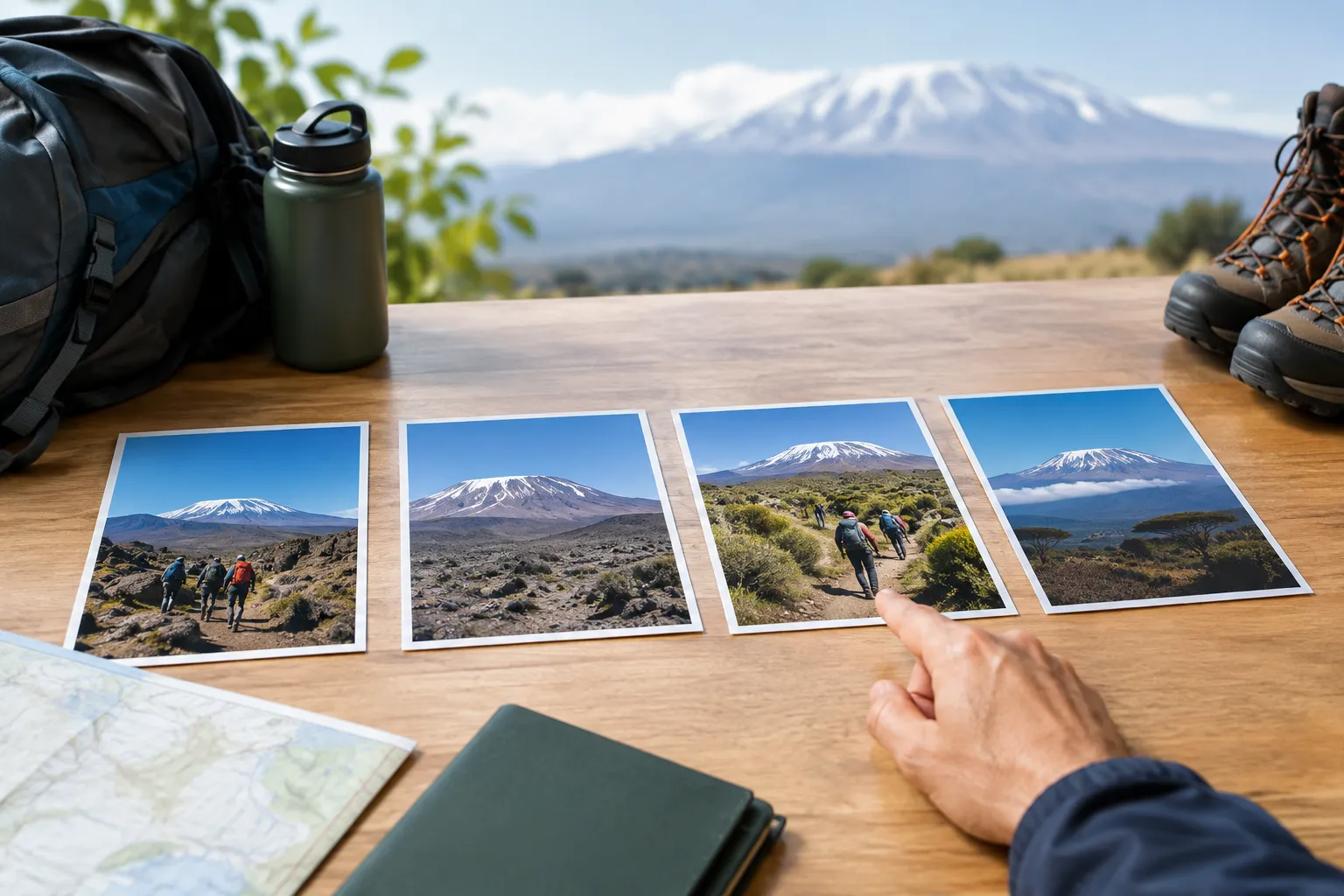
Start with your available time, then narrow the choice by comfort and trail preference. A route that sounds appealing in general may not be the right fit if its duration or camping style does not work for you.
Use these questions to shortlist options:
- How many days can you set aside for the climb, including arrival rest and travel buffers?
- Do you prefer camping, or does hut accommodation make Marangu more appealing?
- Would you rather have a longer loop, a northern approach, or a route with a more direct trail pattern?
- How important is a quieter-feeling trail compared with a popular route and its established itinerary options?
- Does the itinerary give you enough time for the acclimatization plan you want?
- What is included in the quoted climb cost, and what will be separate?
For a first-time climber with enough days and a preference for a gradual itinerary, Lemosho or the Northern Circuit may be worth comparing. If your time is more limited, look closely at the exact number of days offered on Machame, Rongai, or Marangu rather than assuming that a shorter plan is the best value. If sleeping in huts is a priority, Marangu stands apart; if camping is acceptable, compare the other four by route profile and schedule.
The total trip budget is broader than the climb price. Check whether the quote includes airport transfers, pre-climb accommodation, meals, park and other required fees, equipment, and any post-climb lodging. Flights, personal gear, tips, and optional safari plans may affect your overall budget. Ask the operator for a written list of inclusions and exclusions, and clarify deposit and cancellation terms before booking.
Also ask how the company supports its crew. Eco Africa Climbing is a KPAP Partner Company; readers can check KPAP’s current partner information and ask the operator how porter welfare is handled on the specific climb. Clarify the guide team’s qualifications, health-monitoring practices, and the tipping process. These practical answers are more useful than a general statement about responsible tourism.
If you are traveling solo or in a small group, ask whether the departure is confirmed or dependent on reaching a minimum group size, what the group arrangements are, and whether a private climb is an option. Women traveling alone may also want to ask about group composition, communication with the team, and what support is available during the trek. Do not treat group size alone as proof of safety; understand the guiding and support plan.
Kilimanjaro Route FAQs
How hard is climbing Mount Kilimanjaro?
Climbing Mount Kilimanjaro is a strenuous, multi-day trek at high altitude, even though it does not require technical climbing on standard routes. Fitness helps, but acclimatization, pacing, weather, and individual response to altitude also matter.
What are 10 things I wish I knew before climbing Kilimanjaro?
Plan for altitude, train with hikes and a loaded daypack, allow arrival rest, check every itinerary day, and budget for flights, gear, tips, and fees. Also confirm sleeping arrangements, baggage limits, health monitoring, route duration, and what happens if you need to descend.
Recommended next steps
Write down your date window, maximum time away, preferred sleeping style, and approximate total budget. Then compare complete itineraries—not just route names—against the number of days, sleeping elevations, camping or hut arrangements, inclusions, and support plan.
If you are still deciding, review Kilimanjaro climb route options and preparation alongside the route comparison. A clear itinerary and direct answers about costs, porter welfare, guiding, and altitude support make it easier to choose a climb that fits your priorities.
Sedrick Silayo is a Web Developer and Digital Marketing Expert at Eco-Africa Climbing, with over 10 years of experience in Tanzania’s adventure travel industry. He specializes in Kilimanjaro trekking and Northern Tanzania safaris, sharing practical expertise on trip planning, mountain preparation, safety, KPAP standards, and safari experiences.