Kilimanjaro Clothing Layers for Women: What to Wear From Rainforest to Summit
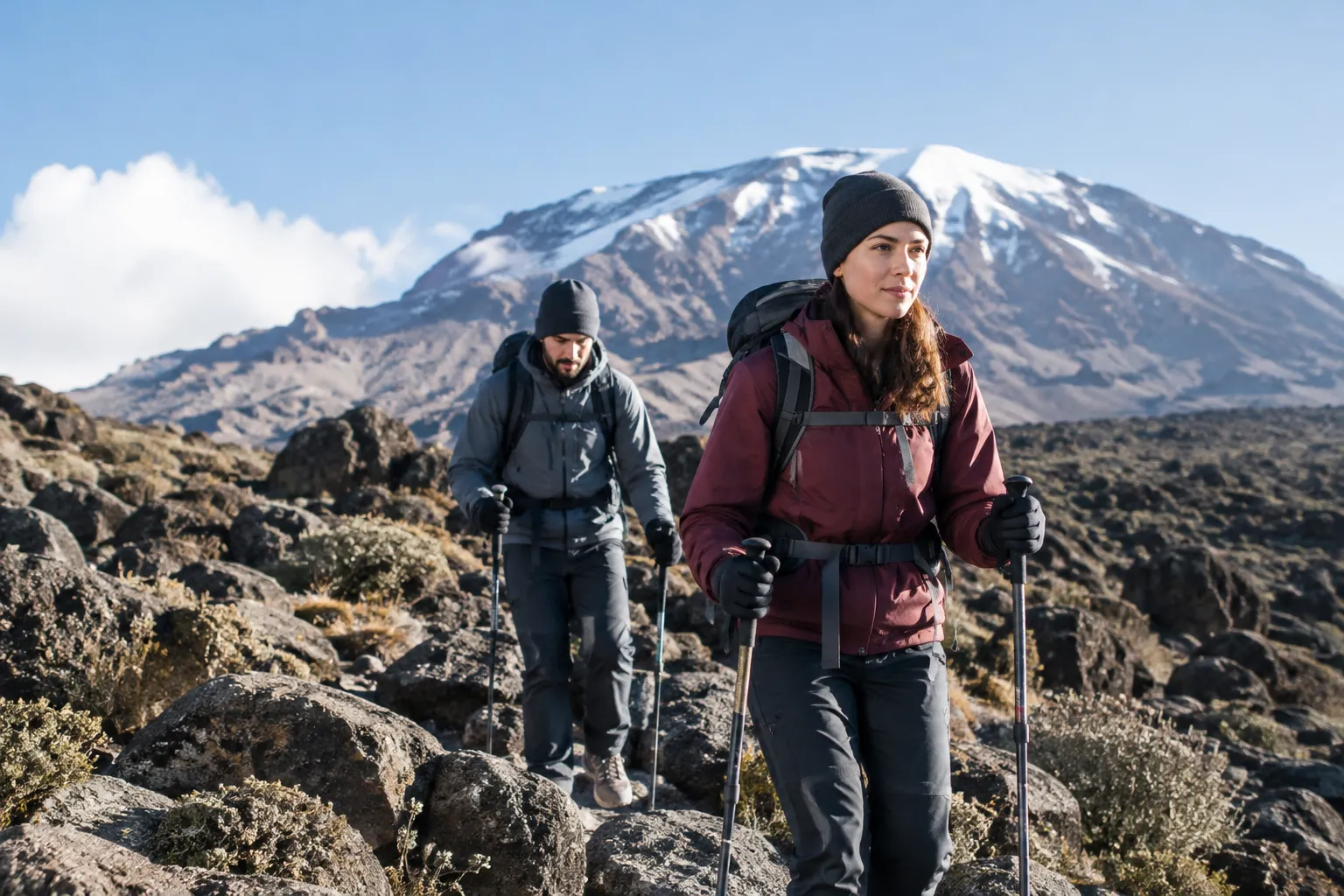
Choosing the right Kilimanjaro clothing layers for women is not about packing one extremely warm outfit.
The mountain changes dramatically as you climb.
You may begin in warmer lower-altitude conditions, walk through rain or cloud, experience wind at higher elevations, and eventually face very cold conditions during the summit attempt.
The best approach is therefore a flexible layering system that allows you to add and remove clothing throughout the day.
Why Layering Is Better Than One Heavy Jacket
One thick jacket gives you limited control.
Several layers allow you to adapt as your body temperature and weather change.
A good system lets you:
- Remove insulation while climbing uphill.
- Add warmth during rest stops.
- Protect yourself from wind.
- Stay more comfortable in rain.
- Add several layers for summit night.
The Basic Kilimanjaro Layering System
A practical system usually contains:
- Base layer.
- Mid-layer.
- Insulating layer.
- Waterproof and windproof outer layer.
You will not necessarily wear every layer at the same time.
Layer 1: Base Layer
Your base layer sits directly against your skin.
Its main purpose is to help manage moisture while providing some warmth.
Base layers are useful for:
- Cool trekking mornings.
- Higher camps.
- Summit night.
- Sleeping in colder conditions.
What Material Should a Base Layer Be?
Choose a quick-drying fabric designed for active use.
Common options include:
- Synthetic technical fabrics.
- Merino wool.
- Blended technical materials.
Why Cotton Is Usually a Poor Base Layer Choice
Cotton can hold moisture and take longer to dry.
Wet clothing can become uncomfortable in cold or windy conditions.
Technical fabrics are generally more practical for trekking.
Base Layer Tops
A long-sleeved thermal or technical top can be useful during cold trekking days and summit night.
Many women also carry lighter technical tops for warmer sections of the route.
Base Layer Bottoms
Thermal leggings can be worn underneath trekking trousers when temperatures drop.
They become particularly useful at higher elevation and around summit night.
Do You Need More Than One Base Layer?
Having more than one can be useful so you have a dry option available during the trek.
Your summit-night base layer should ideally be dry and comfortable.
Layer 2: Mid-Layer
The mid-layer provides additional warmth while still allowing movement.
Common choices include:
- Fleece jackets.
- Light insulated tops.
- Technical mid-layers.
Why Fleece Works Well
Fleece is popular because it is:
- Warm for its weight.
- Easy to layer.
- Quick drying.
- Comfortable during active trekking.
Light Fleece vs Heavy Fleece
A lighter fleece can be useful during active hiking, while a warmer mid-layer can provide extra comfort at camp or higher elevation.
Your system should allow combinations rather than relying on one single item.
Layer 3: Insulating Jacket
An insulating jacket provides substantial warmth when temperatures become colder.
This may be a down or synthetic insulated jacket depending on your preference and equipment.
Down vs Synthetic Insulation
Both can work well.
Down is known for excellent warmth relative to weight, while synthetic insulation can perform differently in damp conditions.
Whichever you choose, keep it protected from rain and moisture.
When Will You Use an Insulated Jacket?
It can be useful:
- At colder camps.
- During evening rest periods.
- Before or during summit night.
- During cold stops.
Layer 4: Waterproof and Windproof Shell
Your outer shell protects against rain and wind.
A good waterproof jacket should fit comfortably over your other layers.
Why Fit Over Layers Matters
A waterproof jacket that fits perfectly over a T-shirt may become too tight when worn over:
- A thermal layer.
- A fleece.
- An insulating jacket.
Test the full system before Tanzania.
Waterproof Trousers
Waterproof over-trousers can protect your hiking trousers from rain and wind.
They should be easy enough to put on when weather changes.
Practice Putting Rain Trousers On
Do not wait until you are standing in rain on the mountain to discover that your waterproof trousers are difficult to put on over hiking boots.
Women’s Hiking Trousers
Your main trekking trousers should be comfortable for repeated walking.
Look for:
- Freedom of movement.
- Quick-drying fabric.
- Comfort around the waist.
- Useful pockets if you prefer them.
- Enough room for thermal leggings underneath.
Avoid Very Restrictive Trousers
You need to climb steps, bend your knees, and move over uneven ground.
Your clothing should allow full movement.
Leggings on Kilimanjaro
Some women find technical leggings comfortable for certain trekking conditions.
However, consider:
- Weather protection.
- Durability.
- Wind exposure.
- Personal comfort.
Shorts on Lower Sections
Depending on weather and personal preference, some climbers may use shorts or lighter clothing on warmer lower sections.
However, always keep warmer and rain layers accessible because conditions can change.
Sports Bras for Kilimanjaro
Choose sports bras that you already know are comfortable for long-duration activity.
Avoid bringing a completely new style that has never been tested during long walks.
Why Sports Bra Comfort Matters
A small point of rubbing can become very uncomfortable after several hours under backpack straps and multiple clothing layers.
Bring More Than One Option
Having a spare allows you to change if one becomes damp or uncomfortable.
Underwear for Kilimanjaro
Choose comfortable, quick-drying underwear that you have already used during hiking or exercise.
Comfort and moisture management are more important than style.
Avoid Unfamiliar Underwear on Long Hiking Days
Training walks are a good opportunity to discover which underwear causes rubbing and which remains comfortable.
Clothing for Lower Elevations
Lower sections can feel warmer and more humid.
You may begin with:
- Light technical top.
- Trekking trousers.
- Rain jacket accessible in your daypack.
Do Not Start Overdressed
If you begin an uphill hike wearing too many layers, you may sweat heavily.
It is often better to begin slightly cool and add layers when necessary.
Clothing for Mid-Mountain Conditions
As elevation increases, conditions can become cooler and windier.
This is where your fleece, thermal layers, and wind protection become increasingly useful.
Clothing for Higher Camps
At higher elevation, you may wear several layers at the same time, particularly during mornings and evenings.
Your system should allow you to stay warm while still moving comfortably.
What Should Women Wear on Summit Night?
Summit night usually requires your warmest combination of clothing.
A typical layering approach may include:
- Thermal base layer.
- Warm mid-layer.
- Insulating jacket.
- Windproof or waterproof outer shell.
- Thermal bottoms.
- Trekking trousers.
- Waterproof or windproof over-trousers where needed.
Do Not Copy Someone Else’s Exact Summit Layers
People experience cold differently.
Test your layering system during cold training conditions where possible.
Avoid an Overly Tight Summit Outfit
If every layer is extremely tight, movement becomes uncomfortable.
Make sure your full system allows:
- Walking.
- Bending.
- Using trekking poles.
- Reaching backpack pockets.
Women’s Gloves for Kilimanjaro
Your hands can become very cold at higher elevations.
A layered glove system can be useful.
For example:
- Thin liner gloves.
- Warmer insulated gloves or mittens.
Mittens vs Gloves
Mittens can provide strong warmth, while gloves offer more finger dexterity.
Some climbers prefer carrying both types or using a layered system.
Test Gloves With Trekking Poles
You should be able to grip and adjust your poles while wearing your chosen gloves.
Warm Hat
A warm beanie or similar hat is useful at higher camps and during the summit attempt.
Sun Hat
A sun hat or cap is useful during daylight trekking.
Do not rely on your warm summit hat for every stage of the mountain.
Neck Gaiter or Buff
A neck gaiter can be useful for:
- Wind protection.
- Cold protection.
- Dust.
- Sun exposure.
Face Protection on Summit Night
Cold wind can make exposed skin uncomfortable.
Your neck gaiter or similar layer can provide useful face coverage while still allowing comfortable breathing.
Socks Are Part of Your Clothing System
Your sock system needs to work with your hiking boots.
Bring hiking socks that:
- Fit properly.
- Manage moisture.
- Do not bunch.
- Do not make your boots painfully tight.
Dry Socks Are Valuable
Protect some socks from moisture so you have dry pairs available when needed.
Sleeping Clothes
Having dry clothing specifically for sleeping can improve comfort.
A simple sleeping setup might include:
- Dry thermal top.
- Dry thermal bottoms.
- Dry socks.
Why Keep Sleeping Clothes Dry?
Changing out of damp hiking clothing before entering your sleeping bag can make a big difference to nighttime comfort.
Camp Clothing
After trekking, your body can cool quickly once you stop moving.
Keep a warm layer accessible for camp.
Do Not Wait Until You Feel Extremely Cold
Adding a warm layer soon after reaching camp can help maintain comfort as your activity level drops.
Organize Clothing by Purpose
A practical packing system can separate:
- Daily trekking clothes.
- Summit clothing.
- Sleeping clothing.
- Spare dry clothing.
Protect Summit Clothing From Moisture
Your warm summit layers are some of the most important items in your mountain bag.
Keep them protected from rain and accidental water exposure.
Use Waterproof Inner Bags
Organizing important clothing inside waterproof or water-resistant inner bags can help keep critical layers dry.
Do Not Rely Only on a Backpack Rain Cover
A pack cover can help with rain, but critical items can still benefit from additional internal protection.
How Many Shirts Do You Need?
You do not need a brand-new outfit for every trekking day.
Choose a practical number of quick-drying tops that can be rotated during the trek.
Avoid Overpacking Clothing
Every unnecessary clothing item adds weight and creates more gear to organize.
Pack enough to stay dry and comfortable without duplicating everything excessively.
What About Laundry?
A mountain trek is not a normal hotel stay.
Plan your clothing so you are not dependent on washing and fully drying large amounts of gear during the climb.
Choose Quick-Drying Fabrics
Quick-drying materials are useful because mountain conditions do not always make drying wet clothing easy.
Do You Need Expensive Outdoor Brands?
No.
Function matters more than a logo.
Focus on:
- Fit.
- Warmth.
- Water protection.
- Breathability.
- Durability.
- Layer compatibility.
Mixing Brands Is Fine
Your base layer, fleece, jacket, trousers, and gloves do not need to come from the same manufacturer.
They simply need to work together.
Test Every Layer Before Tanzania
Before travel, put on your complete cold-weather system.
Ask:
- Can I move comfortably?
- Can I bend my knees?
- Can I zip the outer shell?
- Can I reach my backpack?
- Can I use trekking poles?
Test Rain Gear During Training
If safe conditions allow, use some training walks to test your waterproof jacket and trousers.
Find out whether they are comfortable before the mountain.
Do Not Discover Clothing Problems at Barranco Camp
Problems such as:
- A jacket that is too small.
- Trousers that restrict movement.
- Gloves that do not work with poles.
- A hood that blocks vision.
are easier to fix at home.
Layering for Barranco Wall
Barranco Wall requires movement and flexibility.
Avoid wearing so many restrictive layers that scrambling becomes awkward.
Keep weather protection accessible and adjust clothing according to the conditions.
Layering for Karanga and Higher Elevations
As you move higher, you may notice colder mornings, evenings, and rest periods.
This is where a flexible layering system becomes increasingly important.
Layering for Barafu
Before summit night, organize your warmest clothing carefully.
Do not leave the decision about what to wear until you are tired and preparing in the dark.
Prepare Summit Clothing Before Resting
Have your key clothing items organized so they are easy to find when it is time to prepare for the summit attempt.
Periods and Clothing Choice
If you expect to menstruate during the trek, choose clothing that allows you to manage hygiene comfortably.
Consider:
- Easy-to-remove trouser layers.
- Comfortable underwear.
- Dark-colored clothing if that gives you more confidence.
- Easy access to personal hygiene supplies.
Do Not Make Toilet Breaks Unnecessarily Complicated
Several difficult-to-remove layers can become inconvenient during trail or nighttime toilet breaks.
Practice your clothing system before the climb.
Perimenopause and Layering
Some women experience changes in temperature comfort during perimenopause.
A flexible layering system is useful because clothing can be added or removed quickly as needed.
Women Over 40, 50 and 60
The same layering principles apply regardless of age.
Choose clothing based on:
- Personal comfort.
- Weather protection.
- Mobility.
- Warmth.
- Individual sensitivity to cold.
Do You Need Different Sizes for Outer Layers?
Your outer layers need enough space to fit over your inner layers.
This does not necessarily mean buying everything oversized.
Test the complete system together.
Common Clothing Mistake: Packing Only for the Summit
Kilimanjaro is more than summit night.
You need clothing for:
- Warmer lower trekking.
- Rain.
- Wind.
- Cool camps.
- Cold summit conditions.
Common Clothing Mistake: Too Much Cotton
Cotton can remain wet for longer and may become uncomfortable in cold conditions.
Technical quick-drying clothing is usually more practical for mountain trekking.
Common Clothing Mistake: No Dry Backup
Do not allow every warm layer to become wet at the same time.
Protect important dry clothing.
Common Clothing Mistake: Overpacking
You need a functional clothing system, not your entire wardrobe.
Choose versatile layers that can be combined in different ways.
Common Clothing Mistake: Never Testing the Full System
Your layers may each fit individually but fail when worn together.
Test everything before travel.
A Simple Women’s Kilimanjaro Clothing System
| Layer | Purpose |
|---|---|
| Technical T-shirt / light top | Warmer lower trekking conditions |
| Thermal base layer | Cold-weather foundation |
| Fleece / mid-layer | Additional warmth |
| Insulated jacket | Cold camps and summit conditions |
| Waterproof shell | Rain and wind protection |
| Trekking trousers | Main hiking layer |
| Thermal leggings | Extra leg warmth |
| Waterproof trousers | Rain and wind protection |
Why the 7-Day Machame Route Requires Flexible Clothing
WomenClimbKili scheduled departures use the 7-day Machame Route.
Across the trek, you move through changing elevations and weather conditions before the final summit attempt.
That makes a flexible clothing system more practical than relying on one heavy outfit.
View the complete itinerary on our Women-Only Machame Route Kilimanjaro Package .
Frequently Asked Questions
How many layers should women wear on Kilimanjaro?
There is no fixed number for every day. Use a flexible system of base, mid, insulating, and outer layers and adjust according to weather and activity.
What should women wear on summit night?
Summit night typically requires thermal base layers, warm mid-layers, insulation, and wind or waterproof outer protection, plus appropriate gloves, headwear, socks, and trekking trousers.
Can I wear leggings on Kilimanjaro?
Technical leggings can be useful depending on conditions and personal preference, but consider wind protection, durability, and whether additional layers will fit comfortably over them.
Do I need waterproof trousers?
Waterproof over-trousers are useful for rain and wind protection and should form part of a complete wet-weather system.
Can I wear cotton clothes?
Technical quick-drying fabrics are generally more practical for trekking because cotton can hold moisture and remain wet for longer.
Do I need an insulated jacket?
A warm insulating layer is important for colder mountain conditions and the summit phase.
How should I pack summit clothing?
Keep your summit layers organized, dry, and protected from moisture so they are ready when you reach the higher camps.
Should I test my clothing before Kilimanjaro?
Yes. Wear your full layering system during training so you know that all pieces fit together and allow comfortable movement.
The Best Kilimanjaro Clothing System Is Flexible
You do not need one outfit for the rainforest and another completely separate wardrobe for the summit.
You need versatile layers that can be combined as temperatures and conditions change.
Start with moisture-managing base layers, add fleece or another mid-layer, carry proper insulation for cold conditions, and protect everything with reliable rain and wind layers.
Test the full system before Tanzania. Make sure you can move, use your daypack, handle trekking poles, and manage toilet breaks comfortably while wearing your layers.
When your clothing system works properly, you can spend less time worrying about what to wear and more time enjoying the journey toward Uhuru Peak.
Explore our WomenClimbKili scheduled departures or view the complete 7-Day Women-Only Machame Route Package .
Share:

Social Media
Most Popular
Machame Route Pacing for Women | How Slow Should You Walk?
Machame Route Terrain for Women | Trail & Walking Conditions Guide
Machame Route Camps for Women | What to Expect Each Night
Kilimanjaro Descent for Women | What to Expect After Summit
Book Your Sustainable Tour
Related Posts
Machame Route Pacing for Women | How Slow Should You Walk?
Machame Route Pacing for Women: How Slow Should You Walk? Understanding Machame Route pacing for women can be just as important as building fitness before
Machame Route Terrain for Women | Trail & Walking Conditions Guide
Machame Route Terrain for Women: What the Trail Is Really Like Understanding the Machame Route terrain for women can help you train more intelligently and
Machame Route Camps for Women | What to Expect Each Night
Machame Route Camps for Women: What to Expect Each Night Understanding the Machame Route camps for women can make the idea of spending several nights
Kilimanjaro Descent for Women | What to Expect After Summit
Kilimanjaro Descent for Women: What to Expect After the Summit The Kilimanjaro descent for women is one of the most underestimated parts of the entire