Kilimanjaro for First-Time Female Climbers: A Beginner Guide
If you have never climbed a major mountain before, planning Kilimanjaro for first-time female climbers can feel exciting and intimidating at the same time.
You may be wondering whether you need previous climbing experience, how fit you should be, what altitude feels like, what equipment you need, and whether you can join the trip alone.
The good news is that Mount Kilimanjaro is a trekking mountain rather than a technical climbing expedition on the standard Machame Route. You do not normally need rock-climbing or mountaineering skills, but proper preparation is still extremely important.
Can Kilimanjaro Be Your First Major Mountain?
Yes. Kilimanjaro can be a first major mountain for a physically prepared traveler.
Many climbers arrive in Tanzania without previous high-altitude mountaineering experience.
However, “non-technical” does not mean easy.
The main challenges include:
- High altitude.
- Several consecutive trekking days.
- Cold temperatures.
- Changing weather.
- Long hiking hours.
- Summit night fatigue.
Do Women Need Previous Climbing Experience?
No technical mountaineering experience is normally required for the standard Machame Route.
You do not need experience with ropes, ice axes, or technical rock climbing.
Previous hiking experience is helpful, but it is not necessary to have climbed another major mountain before Kilimanjaro.
What Skills Do Beginners Actually Need?
The most useful skills are simple:
- Walking comfortably for several hours.
- Following a slow and steady pace.
- Managing clothing layers.
- Using trekking poles.
- Drinking and eating regularly while hiking.
- Listening to your guide.
- Recognizing when something does not feel right.
These skills can all be developed during your training before Tanzania.
How Fit Should a First-Time Female Climber Be?
You do not need elite athletic fitness.
You should aim to build enough endurance to walk for several hours on consecutive days.
Your preparation should focus on:
- Cardiovascular endurance.
- Leg strength.
- Core stability.
- Balance.
- Hill walking.
- Recovery between hiking days.
How Long Should Beginners Train?
Many climbers benefit from at least 8 to 12 weeks of focused preparation.
If you currently do very little exercise, starting several months earlier may be more appropriate.
The aim is gradual improvement rather than trying to become fit in a very short period.
Best Training for a First Kilimanjaro Climb
Your training does not need to be complicated.
A useful program can include:
- Regular walking.
- Outdoor hiking.
- Hill or stair sessions.
- Cardiovascular exercise.
- Leg strength exercises.
- Core exercises.
- Back-to-back hiking days.
Hiking should become one of the most important parts of your preparation because it is the activity you will actually perform on Kilimanjaro.
Train With Your Daypack
Do not wait until Tanzania to discover what it feels like to hike with your daypack.
Use it during training hikes so you become comfortable with:
- The shoulder straps.
- The waist belt.
- Water placement.
- Snacks.
- Rain gear.
- Extra clothing layers.
Small comfort problems can become frustrating after several hours of hiking.
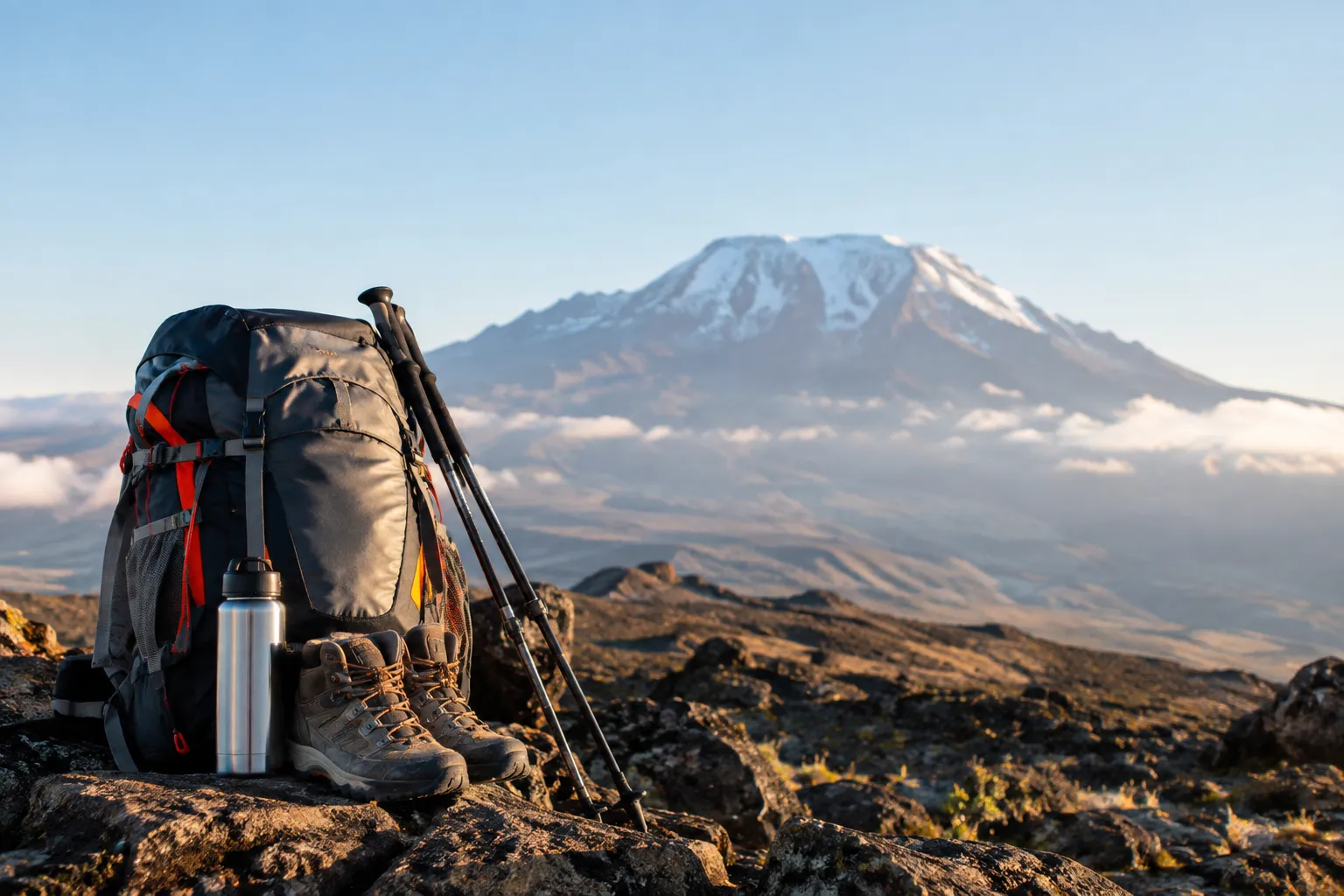
Break In Your Hiking Boots Before Tanzania
New hiking boots should not make their first long journey on Kilimanjaro.
Wear them during training so you understand how they feel on:
- Long walks.
- Uphill terrain.
- Downhill terrain.
- Wet conditions.
This also gives you time to identify pressure points or blister problems before the trip.
Why the 7-Day Machame Route Works Well for Beginners
WomenClimbKili scheduled groups use the 7-day Machame Route.
The seven-day itinerary provides more acclimatization time than shorter Machame programs.
For first-time high-altitude climbers, having additional time on the mountain can be valuable.
The route also includes varied landscapes and an important acclimatization day around Lava Tower before descending to Barranco Camp.
See the complete itinerary on our Women-Only Machame Route Kilimanjaro Package .
What Is Altitude Like for a Beginner?
Altitude is often the biggest unknown for first-time climbers.
As you move higher, there is less available oxygen, and your body must adapt.
You may notice that activities that feel easy at lower elevation become more tiring.
Fitness helps with the physical work of hiking, but it does not make anyone immune to altitude sickness.
Common Altitude Symptoms
Some climbers may experience symptoms such as:
- Headache.
- Reduced appetite.
- Fatigue.
- Difficulty sleeping.
- Light dizziness.
Symptoms should always be reported honestly to your guide.
Trying to hide how you feel because you want to continue upward can increase risk.
Why Walking Slowly Matters
On Kilimanjaro you will often hear the Swahili phrase “pole pole”, meaning “slowly, slowly.”
First-time climbers sometimes assume that being faster means being stronger.
At altitude, speed is not the goal.
Walking slowly helps conserve energy and gives the body more time to adapt.
What Happens During a Typical Day?
A normal mountain day usually follows a simple routine.
You wake up at camp, prepare your gear, have breakfast, and begin hiking with your group.
There are breaks during the day, and the group eventually reaches the next camp where you rest, eat, and prepare for the following day.
This routine becomes familiar after the first few days.
What Is Camp Life Like?
WomenClimbKili groups camp on the mountain.
The mountain setup includes:
- Two-person sleeping tents.
- A dining tent.
- A private toilet tent.
- Foam sleeping mattresses.
Camping may feel unfamiliar at first if you have never done a multi-day trek, but most climbers quickly adapt to the daily routine.
What Should First-Time Female Climbers Pack?
Kilimanjaro requires clothing for very different conditions.
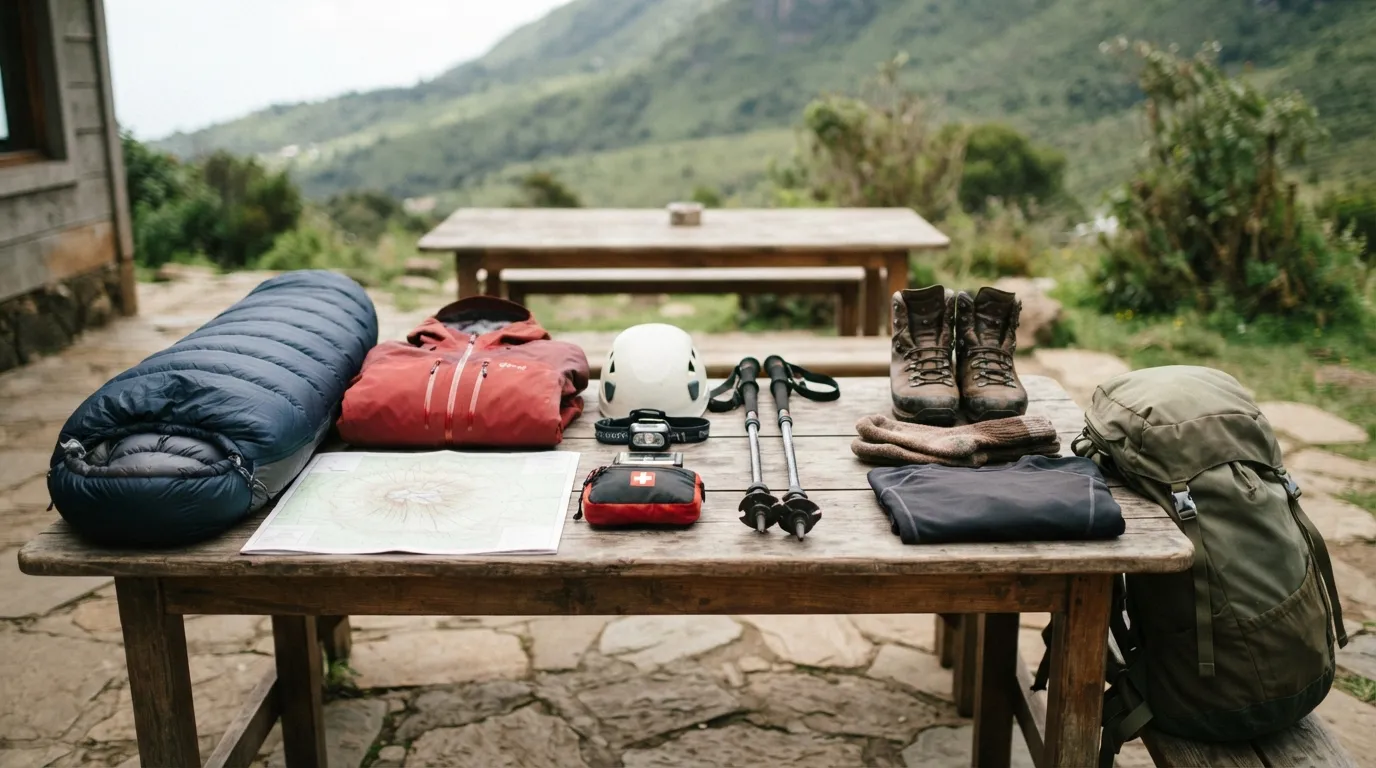
Important equipment includes:
- Hiking boots.
- Hiking socks.
- Base layers.
- Warm mid-layers.
- Insulated jacket.
- Waterproof jacket.
- Waterproof trousers.
- Warm gloves.
- Warm hat.
- Sun hat.
- Headlamp.
- Trekking poles.
- Cold-weather sleeping bag.
- Personal hygiene products.
- Sun protection.
Do Not Overpack
Beginners often feel safer packing everything they can think of.
However, good packing is about bringing the right equipment rather than simply bringing more equipment.
Follow the recommended gear list and ask questions before traveling if you are unsure about an item.
Women’s Hygiene on Kilimanjaro
Multi-day trekking means you will not have the same bathroom routine you have at home.
Women should bring personal hygiene supplies including:
- Wet wipes.
- Hand sanitizer.
- Toilet paper.
- Menstrual products.
- Sealable waste bags.
- Personal toiletries.
Our group setup includes a private toilet tent.
What If Your Period Starts on the Mountain?
A period does not automatically prevent you from continuing your trek.
Bring enough menstrual products for the entire trip even if your normal schedule suggests you will not need them.
Travel, exercise, stress, and changes in routine can sometimes affect timing.
Pack a practical system for storing used products until they can be disposed of properly.
What Is the Barranco Wall?
The Barranco Wall is one of the most photographed sections of the Machame Route.
It can look intimidating in photographs, especially for someone who has never climbed before.
The section involves scrambling and careful movement rather than technical rock climbing.
Guides assist climbers and control the pace.
What Is Summit Night Like for a Beginner?
Summit night is generally the toughest part of the entire climb.
You leave camp during the night and begin a slow ascent toward Stella Point and Uhuru Peak.
The combination of altitude, cold, darkness, fatigue, and several previous trekking days makes this stage demanding.
Many first-time climbers discover that summit night is as much a mental challenge as a physical one.
How Do Guides Support Beginners?
Your mountain guides control the pace, observe how the group is doing, and provide instructions throughout the climb.
Our mountain safety equipment includes:
- Emergency oxygen.
- A first-aid kit.
- A pulse oximeter for daily health monitoring.
It is important to communicate honestly with the guides about headaches, nausea, unusual fatigue, dizziness, or other concerns.
What If You Cannot Reach the Summit?
A summit should never be treated as more important than your health.
If your guide determines that continuing upward is unsafe, descent may be necessary.
Not reaching Uhuru Peak does not erase everything you have achieved during the expedition.
Completing several days on Kilimanjaro can still be a major personal accomplishment.
Can a First-Time Female Climber Join Alone?
Yes.
You do not need to find a friend who wants to climb with you.
Solo female travelers can reserve one place on a scheduled WomenClimbKili departure and meet the other participants in Moshi before the trek.
Why a Women-Only Group Can Help First-Time Climbers
A women-only group can be appealing if you feel nervous about joining your first major mountain expedition alone.
You share the experience with other women and may discover that several participants have similar concerns.
During the trek you hike, eat, rest, and prepare for summit night together.
What Is the Maximum Group Size?
WomenClimbKili scheduled departures are limited to a maximum of 12 women.
This keeps the group relatively small and allows participants to get to know each other during the climb.
What Happens Before the Climb?
Before beginning Kilimanjaro, participants attend a pre-climb briefing and gear inspection.
This gives first-time climbers an opportunity to:
- Meet the guides.
- Meet the group.
- Review the itinerary.
- Discuss mountain safety.
- Ask questions.
- Check important gear.
Travel Insurance for First-Time Climbers
Suitable travel insurance is important for Kilimanjaro.
Your policy should cover trekking to Kilimanjaro’s altitude and emergency evacuation.
Do not assume that every standard travel insurance policy automatically includes high-altitude trekking.
How Much Does the Women-Only Package Cost?
The climb-only WomenClimbKili package costs US $2,950 per lady.
The total climb-only trip lasts 11 days:
- 2 hotel nights before Kilimanjaro.
- 7 days trekking the Machame Route.
- 2 hotel nights after the climb.
A US $300 deposit per lady reserves the climb-only package.
Can First-Time Climbers Add Safari?
Yes.
Women can continue with a 4-day safari after the mountain visiting:
- Serengeti National Park.
- Ngorongoro Crater.
- Tarangire National Park.
The complete Kilimanjaro and safari package costs US $5,350 per lady.
When Can Beginners Join?
WomenClimbKili scheduled departures are available during selected periods including:
- March for International Women’s Day.
- July.
- August.
- September.
- December for the New Year climb.
View exact dates on our WomenClimbKili departure page .
What If You Prefer a Private First Climb?
A private Kilimanjaro climb can also be arranged if the scheduled group dates do not suit you.
There is no minimum group size for the private option, so one woman can request her own departure dates.
Frequently Asked Questions
Can a beginner woman climb Kilimanjaro?
Yes. Previous technical mountaineering experience is not normally required, but good physical preparation is important.
Can Kilimanjaro be my first mountain?
Yes. Kilimanjaro is the first major mountain for many climbers, although you should train properly and understand the challenges of altitude.
Do I need technical climbing equipment?
The standard Machame Route does not normally require technical climbing equipment such as ropes or ice axes for clients.
Can I join if I have never camped before?
Yes. Previous camping experience can help but is not required. You should be prepared for several nights in mountain tents and a simpler daily routine than at home.
Can I travel alone?
Yes. Solo female travelers can reserve an individual place on a scheduled WomenClimbKili departure.
Which route does the group use?
Scheduled WomenClimbKili groups use the 7-day Machame Route.
Can I add safari?
Yes. A 4-day safari to Serengeti, Ngorongoro Crater, and Tarangire can be added after your Kilimanjaro climb.
Your First Major Mountain Can Be Kilimanjaro
You do not need years of mountaineering experience before you are allowed to dream about Kilimanjaro.
What you do need is enough time to prepare properly.
Train consistently, test your equipment, learn about altitude, listen to your guides, and approach the mountain with patience rather than speed.
For many women, their first major mountain becomes much more than a physical challenge. It becomes proof that they were willing to begin.
Explore our upcoming WomenClimbKili departures or see the full 7-Day Women-Only Machame Route Package .
Share:
Social Media
Most Popular
Kilimanjaro for First-Time Female Climbers | Beginner Guide
Kilimanjaro for Women Over 60 | Safety, Fitness & Preparation

Kilimanjaro for Women Over 50 | Training, Safety & Tips
Kilimanjaro for Women Over 40 | Fitness, Safety & Preparation
Book Your Sustainable Tour
Related Posts
Kilimanjaro for First-Time Female Climbers | Beginner Guide
Kilimanjaro for First-Time Female Climbers: A Beginner Guide If you have never climbed a major mountain before, planning Kilimanjaro for first-time female climbers can feel
Kilimanjaro for Women Over 60 | Safety, Fitness & Preparation
Kilimanjaro for Women Over 60: Safety, Fitness and Preparation Planning Kilimanjaro for women over 60 often begins with an understandable question: is Mount Kilimanjaro still
Kilimanjaro for Women Over 50 | Training, Safety & Tips
Kilimanjaro for Women Over 50: Training, Safety and Preparation Planning Kilimanjaro for women over 50 often raises questions about fitness, altitude, recovery, safety, and whether
Kilimanjaro for Women Over 40 | Fitness, Safety & Preparation
Kilimanjaro for Women Over 40: Fitness, Safety and Preparation Thinking about Kilimanjaro for women over 40 often comes with one big question: am I too