Kilimanjaro for Women Over 60: Safety, Fitness and Preparation
Planning Kilimanjaro for women over 60 often begins with an understandable question: is Mount Kilimanjaro still a realistic goal at this stage of life?
For some healthy and physically prepared women, the answer can be yes. Age alone does not determine whether someone can climb Kilimanjaro. Your health, fitness, medical history, training, recovery, route choice, acclimatization, and individual response to altitude matter much more.
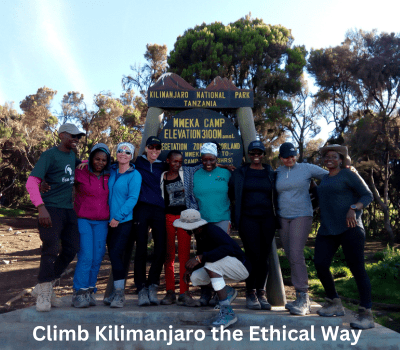
WomenClimbKili welcomes adult women from different age groups, including solo female travelers who want to join a women-only group on the 7-day Machame Route.
Can Women Over 60 Climb Kilimanjaro?
Yes, some women over 60 can successfully take on Kilimanjaro when they are medically suitable and prepare carefully.
Being 60, 65, or older does not automatically mean you are too old for the mountain.
Two women of the same age can have completely different levels of health, fitness, strength, hiking experience, and recovery ability.
That is why preparation should be based on the individual rather than the number on a passport.
What Matters More Than Age?
If you are considering Kilimanjaro after 60, focus on practical factors such as:
- Your cardiovascular health.
- Your current activity level.
- Your leg strength.
- Your joint health.
- Your balance and stability.
- Your ability to walk for several hours.
- Your recovery after long walks.
- Your medical history.
- Your ability to train consistently.
Why Some Women Over 60 Make Strong Climbers
Kilimanjaro does not reward speed.
It rewards patience, consistency, good pacing, and the ability to continue steadily over several days.
Women in their sixties may bring valuable qualities such as:
- Patience.
- Mental resilience.
- Good preparation habits.
- Realistic expectations.
- Strong motivation.
- Discipline.
These qualities can be very useful on a long high-altitude trek.
Altitude Is a Major Consideration
Uhuru Peak stands at 5,895 metres above sea level.
Altitude affects climbers differently and cannot be predicted simply by age or fitness.
A very fit younger person may struggle with altitude, while an older climber may acclimatize better.
This is why a sensible itinerary, slow pacing, hydration, nutrition, rest, and guide monitoring are important for every climber.
Why the 7-Day Machame Route Can Be a Better Choice
WomenClimbKili scheduled groups use the 7-day Machame Route.
The seven-day itinerary provides more acclimatization time than shorter Machame options.
The route includes an acclimatization day involving Lava Tower before descending to Barranco Camp.
More time does not guarantee that someone will avoid altitude sickness, but it gives the body additional opportunity to adapt.
You can view the full itinerary on our Women-Only Machame Route Kilimanjaro Package .
Should Women Over 60 Have a Medical Assessment?
If you are over 60, it is especially sensible to discuss a high-altitude trek with an appropriate medical professional before committing to the climb.
This is particularly important if you:
- Take regular medication.
- Have cardiovascular concerns.
- Have respiratory conditions.
- Have diabetes or other metabolic conditions.
- Have significant joint problems.
- Have recently undergone surgery.
- Have any condition that affects exercise tolerance.
Your own doctor or another qualified medical professional who knows your health history is best placed to advise you.
Be Honest About Medical Information
Do not hide relevant medical information because you are worried it may affect your booking.
Accurate health information helps your mountain team understand important considerations before and during the climb.
Safety should always take priority over reaching the summit.
How Fit Should a Woman Over 60 Be?
You do not need to be an elite athlete, but you should build enough endurance to walk for several hours on consecutive days.
Useful fitness qualities include:
- Cardiovascular endurance.
- Leg strength.
- Core stability.
- Balance.
- Comfort with hills.
- Ability to walk on uneven terrain.
- Good recovery after exercise.
Start Training Early
Women over 60 should avoid leaving preparation until the final few weeks.
If you already exercise regularly, a focused training period can build on your existing fitness.
If you have not been active recently, giving yourself several months to prepare gradually can be more appropriate.
Slow, consistent improvement is better than suddenly increasing training volume.
Best Types of Training for Women Over 60
A balanced preparation plan can include:
- Regular walking.
- Outdoor hiking.
- Hill walking.
- Stair training.
- Low-impact cardiovascular exercise.
- Strength training.
- Balance exercises.
- Mobility work.
- Back-to-back walking or hiking days.
Walking and Hiking Should Be the Foundation
Kilimanjaro is primarily a trekking challenge, so walking should be a major part of your preparation.
Gradually increase the duration of your walks and include hills when possible.
Longer hikes also give you an opportunity to test:
- Your hiking boots.
- Your socks.
- Your daypack.
- Your trekking poles.
- Your clothing system.
- Your hydration routine.
Strength Training Is Important After 60
Strength is useful for climbing uphill, maintaining stability, and handling long descents.
Depending on your ability and medical circumstances, useful exercises may include:
- Chair squats or squats.
- Step-ups.
- Lunges where appropriate.
- Calf raises.
- Glute bridges.
- Core exercises.
- Balance work.
If you are new to strength training, professional guidance can help you use correct technique and choose suitable exercises.
Balance Can Be Just as Important as Strength
Kilimanjaro trails can be uneven, rocky, muddy, or loose underfoot.
Good balance helps you move confidently and safely across changing terrain.
Simple balance work can therefore be useful during your preparation.
Prepare Your Knees for the Descent
Descending Kilimanjaro can be demanding on the knees and legs.
Many climbers focus heavily on uphill fitness but underestimate the descent.
Practice walking downhill during training whenever possible.
Trekking poles can also help with balance and stability.
Recovery Is Part of Training
Training hard every day is not necessary.
Your body needs recovery time to become stronger.
A sensible training program should include:
- Training days.
- Easier activity days.
- Rest days.
- Good sleep.
- A balanced diet.
- Time to recover after longer hikes.
The objective is to arrive in Tanzania healthy and strong rather than exhausted or injured.
Do You Need Previous Mountain Experience?
Technical mountaineering experience is not normally required for the standard Machame Route.
However, previous hiking experience can be very helpful.
It teaches you how your body reacts to long days of walking, changing weather, hills, camping, and fatigue.
What Is Summit Night Like?
Summit night is normally the most physically and mentally demanding part of the climb.
Climbers begin during the night and ascend slowly toward Stella Point and then Uhuru Peak.
The main challenges include:
- High altitude.
- Cold temperatures.
- Darkness.
- Fatigue.
- Limited sleep.
- Several previous trekking days.
The objective is not to move quickly. It is to maintain a controlled pace and conserve energy.
Do Not Compare Your Pace With Younger Climbers
One of the most important things on Kilimanjaro is to avoid turning the climb into a competition.
Your pace should be appropriate for your body and the altitude.
Guides frequently use the Swahili phrase “pole pole”, meaning “slowly, slowly.”
Walking slowly can help conserve energy and support acclimatization.
What Safety Support Is Available?
Our mountain team carries:
- Emergency oxygen.
- A first-aid kit.
- A pulse oximeter for daily health monitoring.
Guides monitor climbers throughout the trek and pay attention to how participants are responding to altitude and physical exertion.
If continuing upward becomes unsafe, descent may be necessary.
Travel Insurance Becomes Particularly Important
Every Kilimanjaro climber should have suitable travel insurance.
Your policy should cover high-altitude trekking to Kilimanjaro’s elevation and emergency evacuation.
Travelers over 60 should pay particular attention to:
- Age limits.
- Pre-existing medical condition exclusions.
- High-altitude limits.
- Emergency evacuation coverage.
- Medical treatment limits.
Read the actual policy wording rather than assuming a standard travel policy covers Kilimanjaro.
Why a Women-Only Group Can Work Well After 60
A major adventure can become harder to organize when friends or family members have different schedules, budgets, health circumstances, or travel interests.
A scheduled women-only group means you do not need to find your own climbing partner.
You can reserve one place, travel to Tanzania, and meet other women before the trek begins.
Can a Solo Woman Over 60 Join?
Yes.
Solo female travelers can reserve an individual place in a scheduled WomenClimbKili group.
You meet the other participants in Moshi before the mountain trek.
Will Everyone Be Over 60?
No.
WomenClimbKili groups are not separated by age.
Participants may include women from different age groups, countries, and backgrounds.
The shared goal is the Kilimanjaro adventure.
What Is the Maximum Group Size?
Scheduled WomenClimbKili departures are limited to a maximum of 12 women.
This keeps the group relatively small and gives participants the chance to get to know each other during the trip.
Pack Carefully for Comfort and Warmth
Equipment has a major effect on comfort during Kilimanjaro.
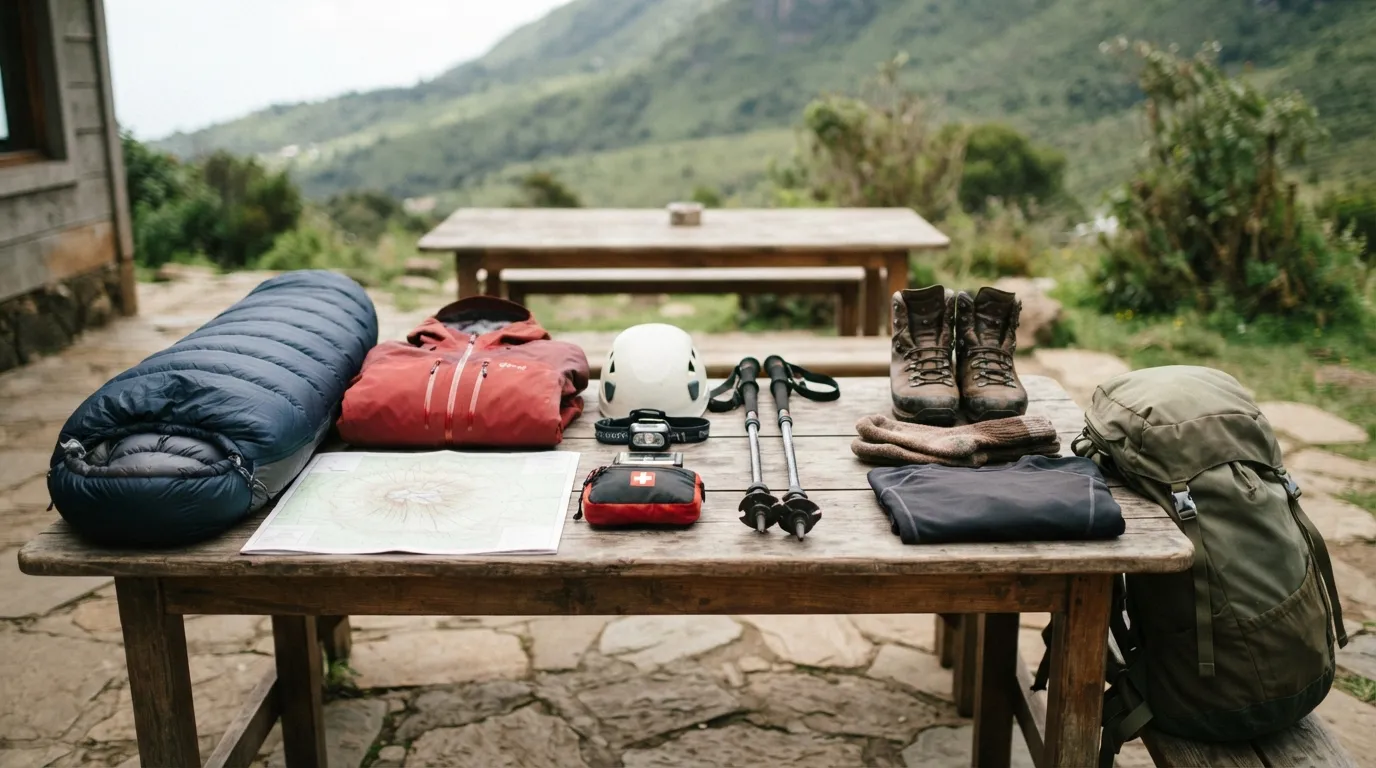
Important items include:
- Well-tested hiking boots.
- Comfortable hiking socks.
- Base layers.
- Warm mid-layers.
- An insulated jacket.
- Waterproof jacket and trousers.
- Warm gloves.
- A warm hat.
- Headlamp.
- Trekking poles.
- Cold-weather sleeping bag.
- Personal medication.
- Personal hygiene supplies.
- Sun protection.
Keep Essential Medication Accessible
If you take regular medication, make sure you bring enough for your entire Tanzania trip.
Keep essential medication accessible rather than placing everything deep inside luggage you cannot reach during the day.
Discuss storage requirements with your healthcare professional if any medication has special temperature or handling needs.
What About Toilets and Hygiene?
The WomenClimbKili mountain setup includes a private toilet tent.
Bring your own personal hygiene supplies, including:
- Wet wipes.
- Hand sanitizer.
- Toilet paper.
- Personal toiletries.
- Sealable waste bags.
- Any personal health or hygiene products you normally require.
How Much Does the Women-Only Kilimanjaro Package Cost?
The climb-only WomenClimbKili package costs US $2,950 per lady.
The program lasts 11 days and includes:
- 2 hotel nights before Kilimanjaro.
- 7 days trekking the Machame Route.
- 2 hotel nights after the climb.
A US $300 deposit per lady reserves the climb-only trip.
Can Women Over 60 Add a Safari?
Yes.
After Kilimanjaro, you can continue with a 4-day Tanzania safari visiting:
- Serengeti National Park.
- Ngorongoro Crater.
- Tarangire National Park.
The complete climb and safari package costs US $5,350 per lady.
For many travelers, safari provides a welcome change of pace after the physical challenge of the mountain.
When Are the Women-Only Departures?
WomenClimbKili offers scheduled departures during selected periods including:
- March for International Women’s Day.
- July.
- August.
- September.
- December for the New Year climb.
See the exact dates on our WomenClimbKili departure page .
What If You Prefer a Private Climb?
If you want different dates or prefer not to join a scheduled group, a private Kilimanjaro climb can also be arranged.
There is no minimum group size for the private option, so one woman can request a private trip.
Frequently Asked Questions
Is 60 too old to climb Kilimanjaro?
Not automatically. Suitability depends on your health, fitness, medical history, preparation, and individual circumstances rather than age alone.
Can a 65-year-old woman climb Kilimanjaro?
Some women of this age may be capable of climbing Kilimanjaro, but medical suitability and physical preparation should be assessed individually.
Should women over 60 get medical clearance?
Discussing a high-altitude trek with an appropriate medical professional is strongly advisable, especially if you have medical conditions or take regular medication.
Do I need technical climbing experience?
No technical mountaineering experience is normally required for the standard Machame Route.
Can I join alone?
Yes. Solo female travelers can reserve one place on a scheduled WomenClimbKili departure.
What route does the group use?
Scheduled WomenClimbKili groups use the 7-day Machame Route.
Can I add safari after the climb?
Yes. A 4-day safari to Serengeti, Ngorongoro Crater, and Tarangire can be added after Kilimanjaro.
Adventure Does Not Have an Automatic Age Limit
Turning 60 does not automatically close the door to ambitious travel goals.
What matters is whether Kilimanjaro is appropriate for you personally.
If the mountain is a goal you genuinely want to pursue, start by assessing your health, speaking with an appropriate medical professional, building your fitness gradually, and giving yourself enough time to prepare.
The objective is not to prove anything about age. It is to experience Kilimanjaro responsibly and safely.
Explore our upcoming WomenClimbKili departures or view the full 7-Day Women-Only Machame Route Package .
Share:
Social Media
Most Popular
Kilimanjaro for Women Over 60 | Safety, Fitness & Preparation

Kilimanjaro for Women Over 50 | Training, Safety & Tips
Kilimanjaro for Women Over 40 | Fitness, Safety & Preparation
Kilimanjaro Group Tour vs Private Climb for Women
Book Your Sustainable Tour
Related Posts
Kilimanjaro for Women Over 60 | Safety, Fitness & Preparation
Kilimanjaro for Women Over 60: Safety, Fitness and Preparation Planning Kilimanjaro for women over 60 often begins with an understandable question: is Mount Kilimanjaro still
Kilimanjaro for Women Over 50 | Training, Safety & Tips
Kilimanjaro for Women Over 50: Training, Safety and Preparation Planning Kilimanjaro for women over 50 often raises questions about fitness, altitude, recovery, safety, and whether
Kilimanjaro for Women Over 40 | Fitness, Safety & Preparation
Kilimanjaro for Women Over 40: Fitness, Safety and Preparation Thinking about Kilimanjaro for women over 40 often comes with one big question: am I too
Kilimanjaro Group Tour vs Private Climb for Women
Kilimanjaro Group Tour vs Private Climb for Women Choosing between a Kilimanjaro group tour vs private climb for women is an important decision when planning