 20 Nov 2026
 7 min read
Tanzania is in East Africa, on the continent’s eastern side along the Indian Ocean. For travelers, its location puts Mount Kilimanjaro and several well-known safari areas in the country’s north, while the coast and islands lie to the east.
Where Tanzania sits in East Africa
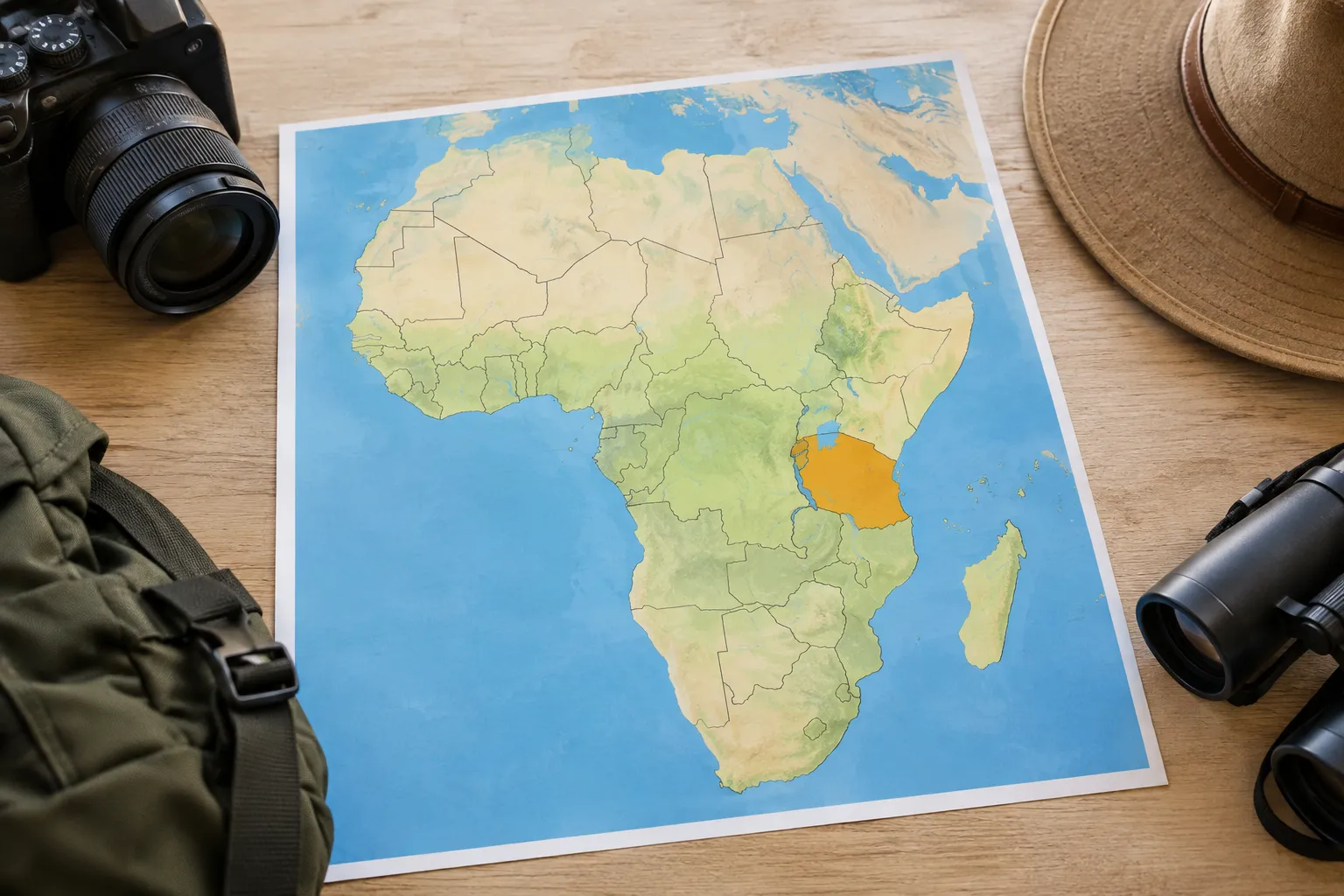
Tanzania is in the eastern part of Africa, south of the Equator and beside the Indian Ocean. This position places it within East Africa, with inland borders linking it to several neighboring countries.
The Equator passes north of Tanzania, so the country lies in the tropics. Its Indian Ocean coastline faces east; inland, the landscape extends west toward the African Great Lakes region. These landmarks help answer the common question, “Where is Tanzania in Africa?”: look to the continent’s eastern edge, below the Equator.
Tanzania is a country, not a region or island. It includes a large mainland area and the islands of Zanzibar, including Unguja and Pemba. Zanzibar sits off the mainland’s eastern coast, across the Indian Ocean. The mainland and islands are part of the same country, but they occupy different geographic positions.
A useful mental map is to picture Tanzania between Kenya and Mozambique, with the ocean to the east. The country’s northern end includes the area around Kilimanjaro, near the Kenyan border. That broad orientation is enough to understand why a Tanzania Africa travel plan can combine inland mountain or wildlife areas with time on the coast, while still requiring attention to distances between destinations.
For a map-based overview, Tanzania National Parks’ map shows Kilimanjaro National Park in relation to other parks and nearby areas. It can help you see where a northern itinerary sits within the country, rather than treating Tanzania as one compact destination.

Tanzania’s neighboring countries and borders
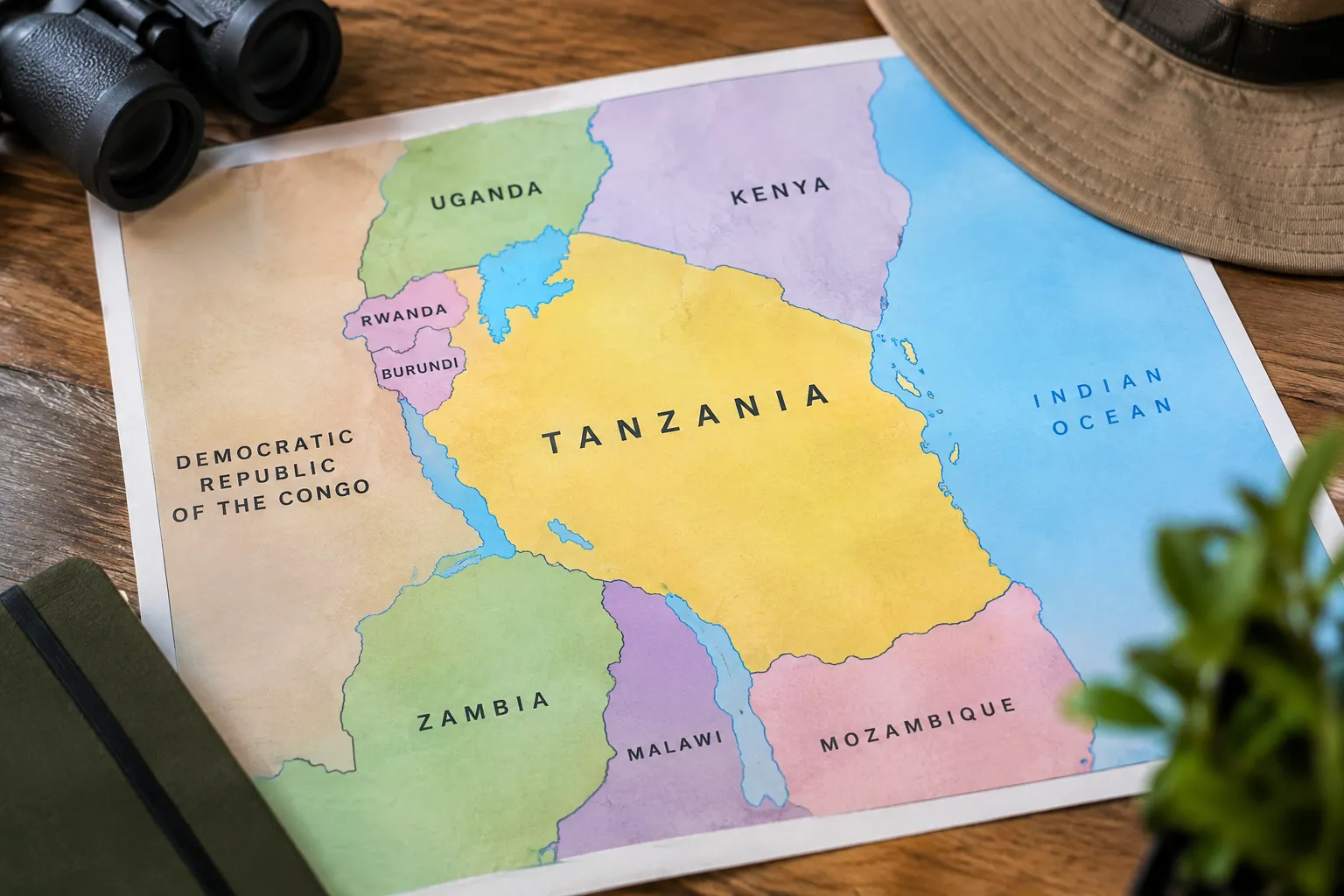
Tanzania shares land borders with eight countries: Kenya, Uganda, Rwanda, Burundi, the Democratic Republic of the Congo, Zambia, Malawi, and Mozambique.
To the north, Tanzania borders Kenya and Uganda. Rwanda, Burundi, and the Democratic Republic of the Congo lie to the west, with Lake Tanganyika forming part of the western boundary. Zambia and Malawi are to the southwest, while Mozambique borders Tanzania to the south. The Indian Ocean forms the country’s eastern coastline.
This arrangement gives Tanzania a central position among several East African neighbors. Its borders also help explain why a map can show very different surroundings depending on where you look: the north is near Kenya, the west faces the Great Lakes region, and the east opens onto the ocean.
For trip planning, borders are more than lines on a map. They help distinguish a Tanzania itinerary from a multi-country journey. A visit to Kilimanjaro or a northern safari takes place within Tanzania; adding a neighboring country means planning another country’s entry requirements and transport separately. If you are comparing routes or flights, check the full itinerary and destination names rather than assuming that “East Africa” describes one single travel area.
Tanzania’s coast also matters for orientation. It faces the Indian Ocean, while the inland borders connect the country to other parts of the continent. Zanzibar is off the coast, not a neighboring country. That distinction is useful when reading maps or planning a mainland trip with an island stay.
Tanzania’s regions and the places travelers visit
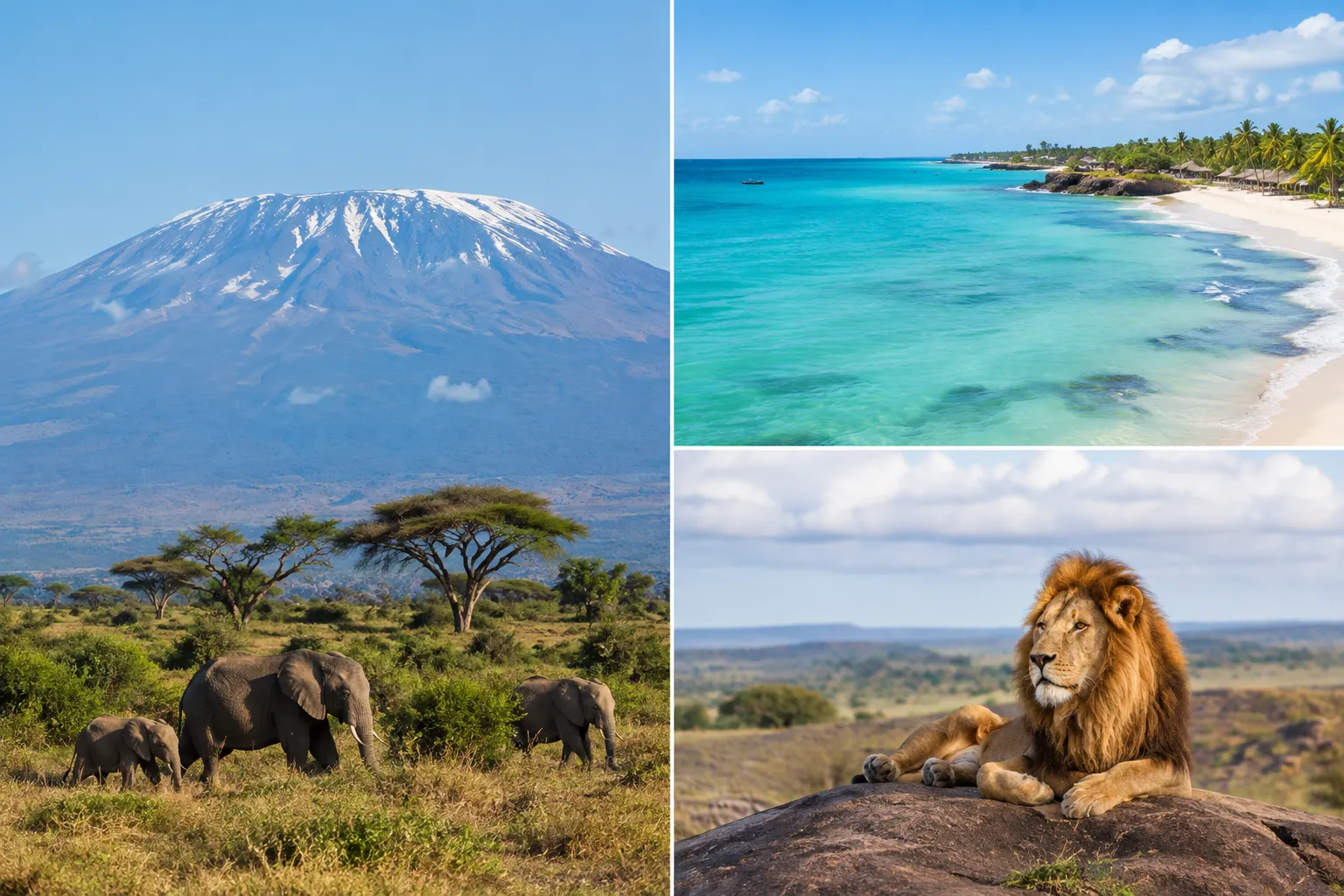
Travelers often think of Tanzania in broad geographic areas: the north, the central and southern mainland, the western lake region, and the eastern coast and islands.
Northern Tanzania is especially relevant to Mount Kilimanjaro climbs and wildlife trips. Kilimanjaro National Park is in the northeast, near the Kenyan border. Other well-known northern destinations include Serengeti National Park, Ngorongoro Crater, and Tarangire National Park. These places are not interchangeable stops: they are distinct destinations, so check their locations and the travel time between them when deciding how to shape a trip.
TANAPA describes Kilimanjaro as a mountain with multiple peaks and established climbing routes; the authority notes that climbs commonly take five to eight days. Its Kilimanjaro visitor guide covers access gates, route and accommodation arrangements, entry-fee categories, and visitor guidance. These details make the park guide a useful starting point when you are learning what a climb involves, though it is not a substitute for checking the arrangements for a specific itinerary.
Central Tanzania is an inland area between the northern destinations and the coast. The west is associated with the Great Lakes, including Lake Tanganyika. On the east, the mainland meets the Indian Ocean, with Zanzibar and other islands offshore. These broad regions are useful for orientation; they do not, on their own, tell you how long a transfer will take or which transport option suits your plans.
For a Kilimanjaro traveler, the practical point is that “northern Tanzania” can include more than the mountain. A trip may focus on the climb, add a northern safari, or include another area afterward. The sequence affects logistics: a safari destination is not automatically close to a climb’s starting point just because both are in the north. Compare the actual route and travel days before fitting extra stops into your schedule.
Use Tanzania’s location to plan a trip
Tanzania’s geography helps you group a trip by area: plan Kilimanjaro and northern safari destinations together where the itinerary allows, and treat the coast or islands as a separate leg.
Start with the main purpose of the trip. If climbing is the priority, place the Kilimanjaro portion first in your planning and work out flights, arrival timing, and a rest period before the trek. Jet lag, baggage connections, and the need to prepare for a high-altitude climb can all affect when you should arrive. Confirm flight routing and baggage rules with your airline, especially if your journey includes a connection or a change of ticket.
Next, decide whether to add a safari. Serengeti National Park, Ngorongoro Crater, and Tarangire National Park are northern destinations, but each adds its own transport and time requirements. A useful comparison is not simply “mountain or safari,” but how many travel days you have, which places matter most, and whether the added transfers fit your schedule. If your available time is limited, a focused itinerary may be more practical than trying to include distant regions.
| Planning choice | What to consider |
|---|---|
| Climb-focused trip | Set aside time for arrival, the trek, and recovery before scheduling onward travel. |
| Climb plus northern safari | Compare the itinerary’s route, transfer days, and time in each park. |
| Mainland and island trip | Plan the coast or Zanzibar as a separate leg, including the connection between destinations. |
| Multi-country trip | Check entry requirements and transport for each country, rather than relying on a regional label. |
Climbing also requires planning beyond geography. TANAPA’s Kilimanjaro National Park information describes the mountain, its peaks and routes, and the typical climb duration. The CDC’s guidance on high-altitude travel and altitude illness explains why gradual ascent and recognizing possible altitude illness matter. These general sources can inform your preparation, but a qualified health professional should advise you about your individual fitness or medical circumstances.
When comparing guided climbs, look beyond a headline price. Check which trip components are included, what you need to arrange separately, and how the operator explains guide support, porter welfare, and tipping. Eco Africa Climbing is a Tanzania-based company offering guided Mount Kilimanjaro climbs and private Tanzania wildlife safaris. Its Kilimanjaro climbing tours can be a starting point for reviewing the climb options; ask for an itemized explanation of inclusions and exclusions before comparing total costs.
Location can also guide your arrival plans. A flight that lands in Tanzania does not by itself mean you are ready to start trekking the next day. Build in time to sleep, manage baggage, and reach the relevant starting area. For a climb, ask how the itinerary handles arrival and acclimatization, and what health-monitoring procedures are used on the route. No itinerary or operator can promise a summit outcome; route choice, acclimatization, and individual responses to altitude all matter.
Frequently asked questions
Is Tanzania in South Africa or East Africa?
Tanzania is in East Africa, not South Africa. It lies on the continent’s eastern side, along the Indian Ocean and south of the Equator.
Recommended next steps
Use these steps to turn a map-based overview into a workable Tanzania itinerary.
- Mark Kilimanjaro, your preferred northern safari destinations, and any coastal or island stops on a map.
- Choose whether the climb, safari, or another region is the main purpose of your trip.
- Compare flight connections and baggage rules, then schedule arrival time and sleep before the climb.
- Review the park authority’s route and visitor information, and check current travel guidance for your own circumstances.
- Request an itemized climb itinerary and compare its inclusions, exclusions, porter-welfare information, and tipping guidance before making a decision.