
 19 Sep 2026
 10 min read
Planning a Tanzania safari means matching parks, travel dates, accommodation, transport, and budget to the experience you actually want. This practical guide explains what to compare, what to expect, and how a safari can fit alongside a Kilimanjaro climb or Zanzibar holiday.
What Tanzania safari means in practice
A Tanzania safari is a guided wildlife journey through national parks and conservation areas, usually in a purpose-built safari vehicle with an experienced driver-guide. Days typically involve game drives, time in camp or lodge, and travel between wildlife areas.
If you are asking “what is a safari?”, the simplest answer is a structured opportunity to observe wild animals in their natural habitat. It is not only about seeing the Big Five. Landscapes, birdlife, local communities, conservation, and the rhythm of travelling through the bush are all part of the experience.
Northern Tanzania is the country’s most established safari region. A classic itinerary may include:
- Serengeti National Park Tanzania, known for its broad plains and major wildlife habitats
- Ngorongoro Conservation Area, including the Ngorongoro Crater
- Tarangire National Park, valued for its varied scenery and elephant sightings
- Lake Manyara National Park, often considered for shorter itineraries
- Arusha National Park, which can suit a day trip or a shorter introduction to northern landscapes
The right combination depends on your available time, travel season, wildlife priorities, and tolerance for long road transfers. A longer itinerary can include more parks, but adding destinations simply to collect names may create an exhausting schedule.
Tanzania can also work well as part of a wider East African holiday. Travellers often ask where is Zanzibar when planning a safari: Zanzibar is an island destination off Tanzania’s mainland, reached by air from safari hubs or mainland airports. It can provide a beach stay before or after a northern Tanzania safari, although it is a separate destination from the national parks.
For a broader starting point, Tanzania safari planning can help you consider how a mainland safari fits with a Kilimanjaro itinerary and other Northern Tanzania travel plans.
How to think about tanzania safari
The most useful way to plan a Tanzania safari is to start with the experience rather than a fixed list of parks. Decide what matters most, then build the route around those priorities.
The core problem to understand
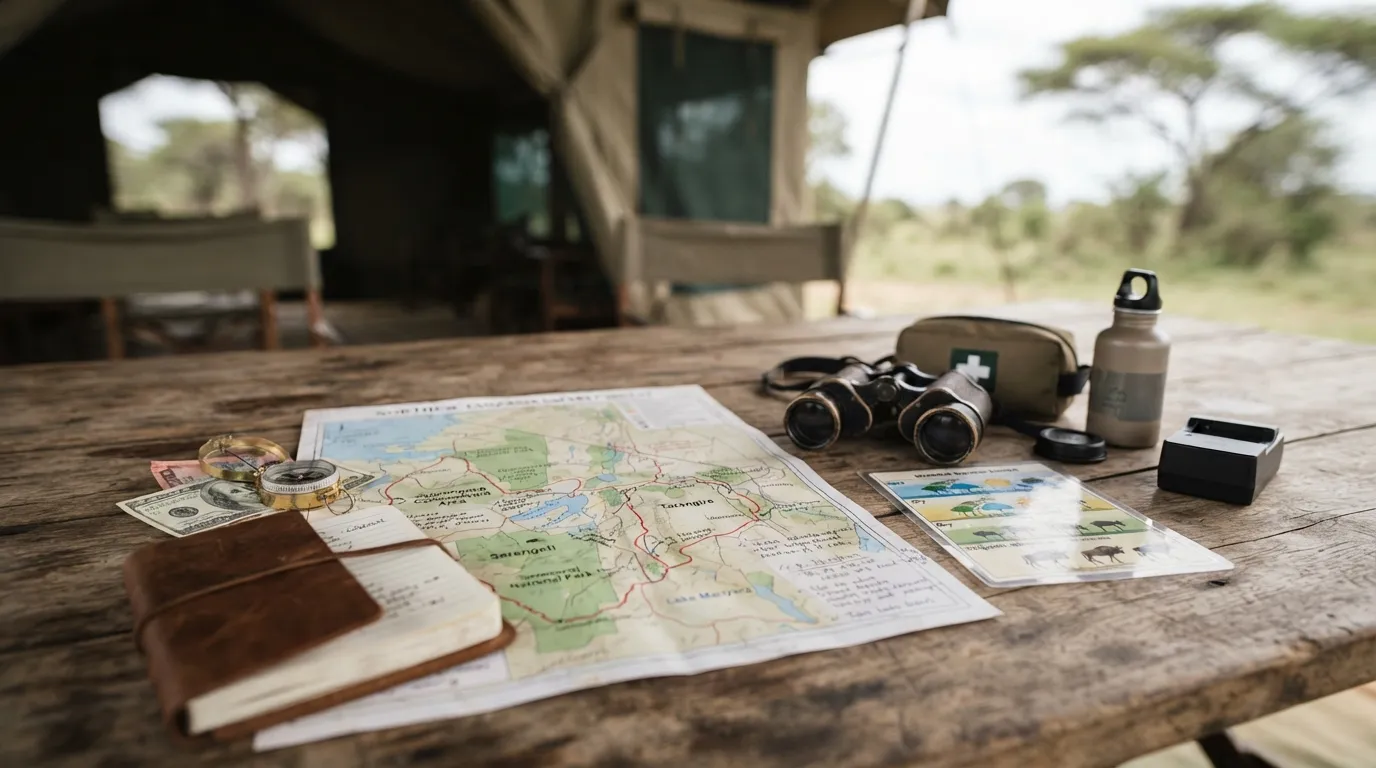
The core planning problem is that no single park or travel month guarantees every possible wildlife experience. Tanzania is large, seasons vary, and animal movements are influenced by weather, water, vegetation, and local conditions.
For example, a traveller focused on the Great Migration may need to discuss timing and location carefully rather than assuming that visiting Serengeti National Park Tanzania automatically means seeing a river crossing. Another traveller may care more about a relaxed itinerary, varied landscapes, photography, or reducing driving time.
Your first decisions should therefore be:
- How many days can you spend in Tanzania?
- Which animals or landscapes matter most?
- Do you prefer private travel or a shared vehicle?
- Is your priority a specific season or a lower-cost travel period?
- Will you combine the safari with Kilimanjaro or Zanzibar?
A private safari generally provides more control over the route, schedule, and pace. A group safari can be a practical choice for travellers who are comfortable sharing the vehicle and following a set itinerary. Neither is automatically better; the suitable option depends on flexibility, privacy, and budget.
Geography also matters. Kilimanjaro, Arusha, Tarangire, Ngorongoro, and Serengeti are connected within Northern Tanzania, but they are not next door to one another. Reviewing a Kilimanjaro location guide can make it easier to understand how a mountain climb may connect with safari areas.
The practical decision criteria
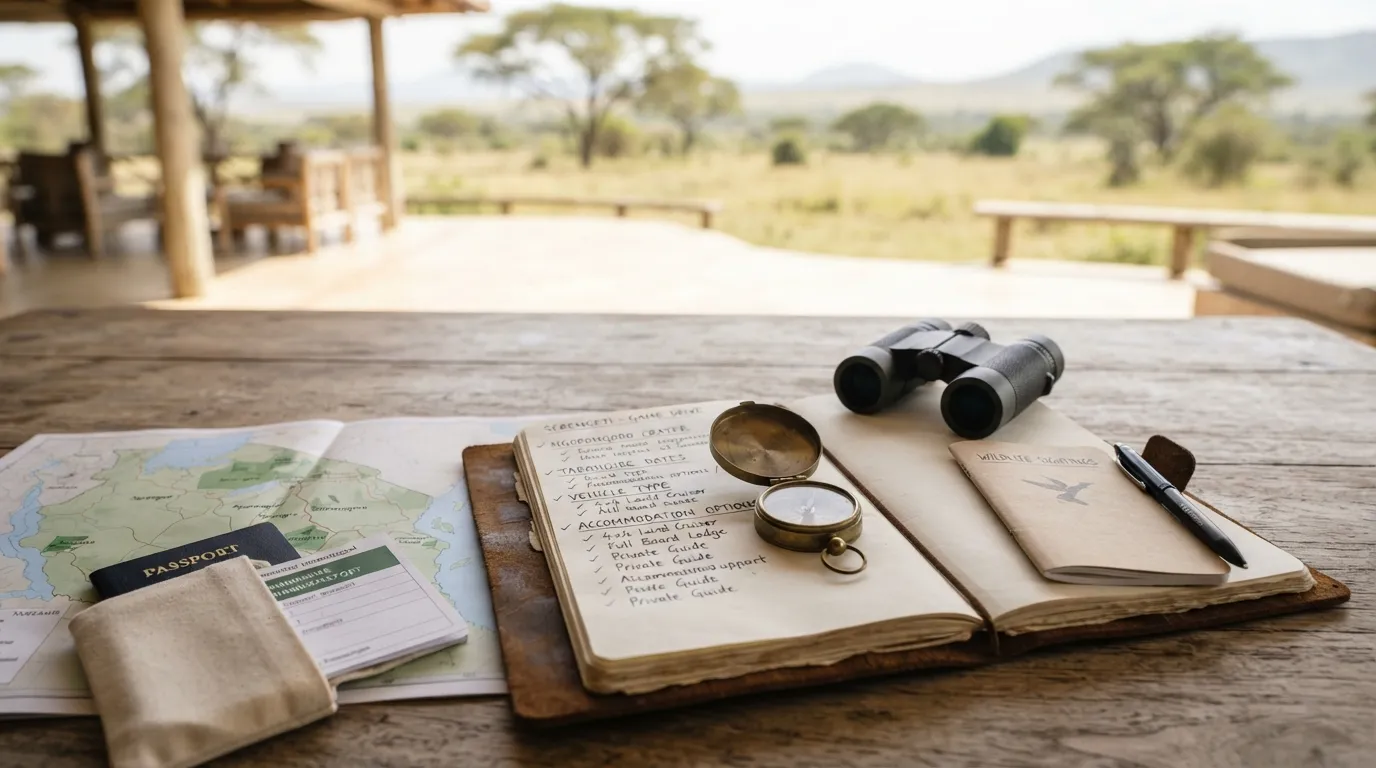
1. Destination choice
Choose parks according to the balance you want between wildlife, scenery, travel time, and accommodation style.
- Serengeti suits travellers who want extensive plains, varied wildlife habitats, and a longer northern circuit experience.
- Ngorongoro suits travellers interested in a concentrated wildlife area and dramatic crater scenery.
- Tarangire can suit shorter itineraries and travellers who want a distinct landscape alongside larger northern parks.
- Lake Manyara may work as part of a compact route, depending on current conditions and itinerary design.
- Arusha National Park can provide a shorter nature experience near the city and mountain gateway.
A good itinerary does not necessarily include every famous park. Two or three well-chosen areas may be more enjoyable than a rushed route with daily long transfers.
2. Seasonality
Tanzania is a year-round safari destination, but each season changes the character of the trip.
During drier periods, wildlife may be easier to locate around remaining water sources in some areas, while roads and access conditions can vary by park. Wetter periods can bring greener scenery, fewer travellers in some locations, and different wildlife-viewing conditions. The best choice depends on whether your priority is a particular migration phase, comfortable road travel, landscapes, birdlife, or overall flexibility.
Avoid treating seasonal descriptions as guarantees. Ask an operator how the proposed route performs during your exact travel dates and what alternatives are available if conditions change.
3. Wildlife expectations
A safari is a wildlife experience, not a zoo visit. Guides use knowledge of the area, tracks, habitats, and recent sightings, but animal encounters remain naturally unpredictable.
Set goals rather than guarantees. You can ask whether an itinerary is designed around large mammals, predators, migration areas, birding, photography, or a broad mix. A responsible planning conversation should explain what is realistic without promising specific sightings.
4. Vehicle style and group size
Ask whether the itinerary uses a private vehicle or shared vehicle, how many travellers may be included, and whether the vehicle is dedicated to your party. These details affect privacy, departure times, space for equipment, and the ability to adjust the day.
Vehicle quality and guide experience are also important questions, but avoid choosing solely from attractive photographs. Request clear information about the operating arrangement, inclusions, route, and support available during the trip.
5. Accommodation
Accommodation ranges from campsites and tented camps to permanent tented properties and lodges. The right choice depends on comfort preferences, location, atmosphere, and cost.
Compare more than the room category. Check how far the accommodation is from the next planned activity, whether meals are included, whether the property is inside or outside a park area, and whether moving camp frequently is worthwhile for your itinerary.
6. Budget structure
Safari costs are shaped by several variables:
- Number of travellers
- Number of safari days
- Private or shared transport
- Park and conservation fees
- Accommodation category
- Season and availability
- Internal flights or road transfers
- Activities included
- Airport transfers and other logistics
A very low quote may exclude important items or use a route that does not match your expectations. Compare quotations line by line, including accommodation names, transport, meals, fees, guide arrangements, and exclusions.
Common mistakes to avoid
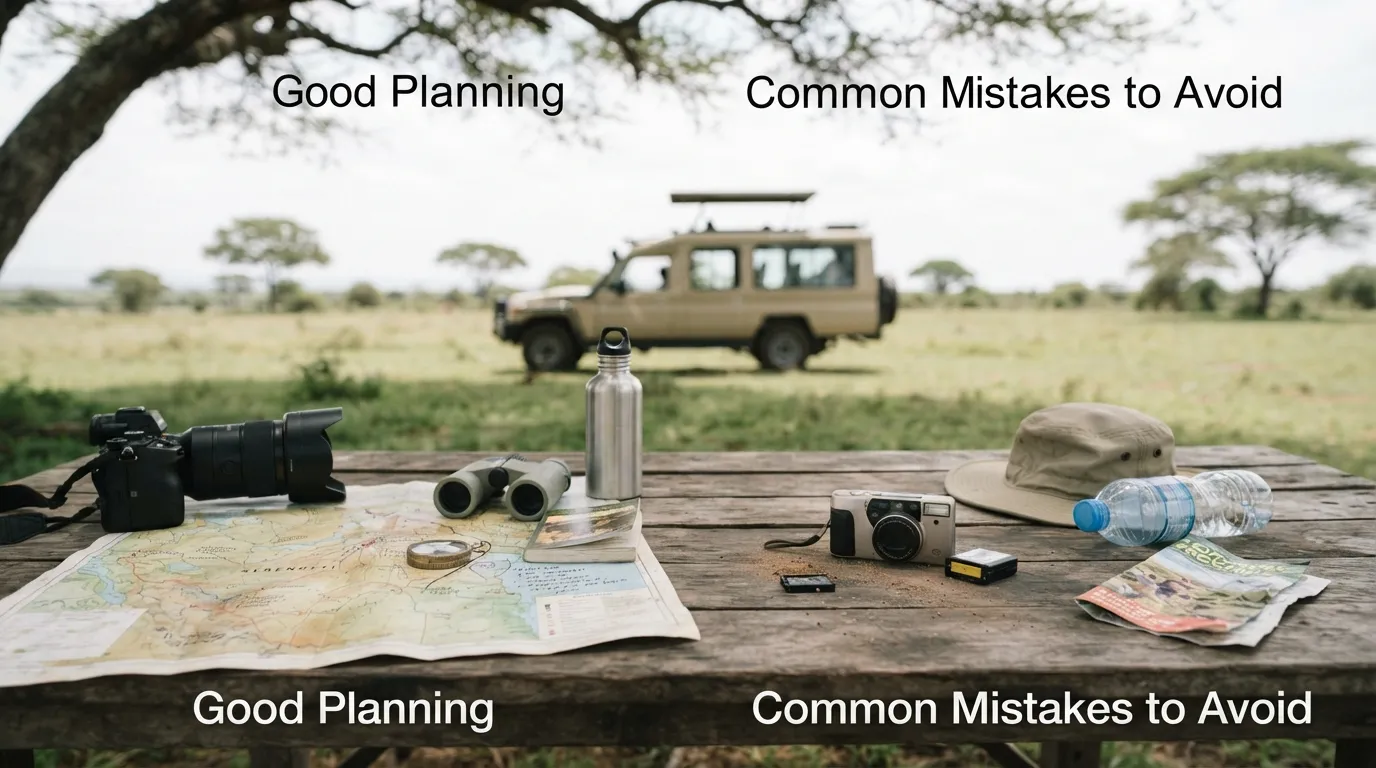
One common mistake is choosing parks before deciding what kind of journey you want. A traveller seeking a relaxed wildlife holiday may not enjoy an itinerary designed around constant movement, even if it includes many well-known destinations.
Another mistake is planning entirely around a headline event. Wildlife movements are not scheduled performances, so build an itinerary that remains rewarding if conditions differ from expectations.
Also avoid:
- Underestimating driving distances between parks
- Booking too many destinations for the available time
- Comparing prices without checking inclusions
- Assuming every safari uses the same vehicle or group arrangement
- Ignoring the effect of accommodation location on daily travel
- Treating the wet and dry seasons as universally good or bad
- Leaving no recovery time after a long-haul flight or before a Kilimanjaro climb
- Assuming Zanzibar is part of the safari route rather than a separate island extension
A further mistake is failing to explain dietary, mobility, medical, or photography needs before booking. The earlier an operator knows about practical requirements, the easier it is to assess whether the proposed itinerary is suitable.
How to apply this to tanzania safari
Use a simple planning sequence rather than beginning with a package name.
Step 1: Define the trip length
Separate your total Tanzania stay from the number of safari days. If you are also climbing Kilimanjaro, allow time for the mountain itinerary, transfers, and recovery. If you are adding Zanzibar, include the flight or transfer time and avoid making the entire trip dependent on a tightly connected schedule.
The mount kilimanjaro map can help you understand route locations and access points when considering how to connect a climb with a safari.
Step 2: Choose your main priority
Write down your top two or three priorities. Examples include:
- Seeing a wide variety of wildlife
- Visiting Serengeti during a particular travel window
- Spending time in Ngorongoro
- Keeping road journeys shorter
- Staying in comfortable lodges
- Travelling privately
- Combining wildlife with Kilimanjaro
- Ending with time on Zanzibar
This list helps an operator recommend a route rather than simply repeating a standard circuit.
Step 3: Match the route to the season
Ask what the proposed parks are likely to offer during your dates and what the itinerary does well if weather or wildlife movements differ. A good plan should explain the reasoning behind the route, not just name a season as “best.”
If the dates are fixed, prioritise a flexible itinerary and realistic expectations. If the dates are flexible, compare the tradeoffs between the periods that interest you rather than waiting for a universal best month.
Step 4: Compare operating arrangements
Before accepting a quote, confirm:
- Whether the safari is private or shared
- Who provides the vehicle and guide
- How transfers are handled
- Which park and conservation fees are included
- Whether accommodation is confirmed or proposed
- What meals and drinks are included
- Whether domestic flights are included
- What happens if travel plans change
For a private safari, ask how much flexibility you have over departure times and daily pacing. For a group safari, ask about the expected group size and whether the itinerary is fixed.
Step 5: Build a realistic budget
Think in categories rather than one headline price. The most useful comparison is the total cost for the same number of days, similar accommodation, equivalent transport, and matching inclusions.
Ask for clarification on items that are often handled separately, such as international flights, visas, travel insurance, tips, drinks, optional activities, and Zanzibar arrangements. Exact costs depend on the route, dates, accommodation, and services selected, so a responsible quote should be based on your actual itinerary.
Step 6: Check the pace
Count how many nights you spend in each area and how often you change accommodation. Frequent moves can increase the amount of time spent packing and travelling. Longer stays can create a calmer experience and give guides more flexibility, although the best balance depends on the route and wildlife objectives.
A Kilimanjaro-and-safari combination should be designed as one journey. A local Tanzania operator can assess transfer timing, recovery needs, and whether Serengeti, Ngorongoro, or Tarangire is the most practical addition after the climb.
Step 7: Review the final itinerary
Before booking, make sure the written itinerary identifies:
- Travel dates
- Number of safari days and nights
- Parks and conservation areas
- Accommodation or accommodation category
- Vehicle arrangement
- Guide arrangement
- Meals and included services
- Park fees and other stated charges
- Transfers
- Exclusions and payment conditions
This final review protects you from comparing a detailed itinerary with a low quote that leaves essential elements unspecified.
FAQ about tanzania safari
How much does a Tanzania safari cost?
A Tanzania safari has no single standard price; cost depends on duration, parks, season, accommodation, vehicle arrangement, group size, fees, and included transfers.
Which is the best safari in Tanzania?
The best safari in Tanzania depends on your priorities: Serengeti for extensive wildlife areas, Ngorongoro for concentrated scenery and wildlife, or Tarangire for a distinct shorter-circuit experience.
What I wish I knew before visiting Tanzania for safari?
Many first-time visitors wish they had allowed more time for road transfers, checked inclusions carefully, and planned realistic wildlife expectations rather than relying on guaranteed-sounding promises.
What should readers know first about tanzania safari?
A Tanzania safari is shaped by geography, season, route, guide, vehicle, accommodation, and budget; choosing the right combination matters more than selecting the longest list of parks.
How do you choose the right tanzania safari approach?
Choose by matching your travel dates, wildlife priorities, preferred pace, privacy needs, accommodation expectations, and budget with a route that keeps transfers realistic.
What mistakes should you avoid with tanzania safari?
Avoid rushed itineraries, unclear quotations, unverified inclusions, unrealistic wildlife guarantees, and assuming that a famous park automatically suits your travel dates or priorities.
Is tanzania safari worth it for daily use?
A Tanzania safari is a travel experience rather than an everyday-use purchase, so its value depends on the wildlife, landscapes, comfort, and itinerary style you want.
What should you compare before deciding on tanzania safari?
Compare equivalent itineraries by park selection, travel dates, private or shared transport, accommodation, guide arrangements, included fees, transfers, exclusions, and the overall pace of travel.
Recommended next steps
Start by writing your travel dates, available days, preferred travel style, top wildlife priorities, and whether you want to include Kilimanjaro or Zanzibar. Then request an itinerary that explains why each park and accommodation area has been selected.
For a well-balanced Tanzania safari, focus on transparent inclusions, realistic driving times, responsible guiding, and a route that suits your priorities rather than simply maximising destinations. This approach gives you a clearer basis for comparing options and planning a rewarding Northern Tanzania journey.
Sedrick Silayo is a Web Developer and Digital Marketing Expert at Eco-Africa Climbing, with over 10 years of experience in Tanzania’s adventure travel industry. He specializes in Kilimanjaro trekking and Northern Tanzania safaris, sharing practical expertise on trip planning, mountain preparation, safety, KPAP standards, and safari experiences.