
 30 Oct 2026
 8 min read
Planning the total Kilimanjaro trip cost including flights means looking beyond the operator’s headline price. Add the climb, airfare, arrival and recovery nights, gear, tips, insurance, and any safari you choose, then compare quotes by what they actually cover.
Estimate your total Kilimanjaro trip cost, including flights
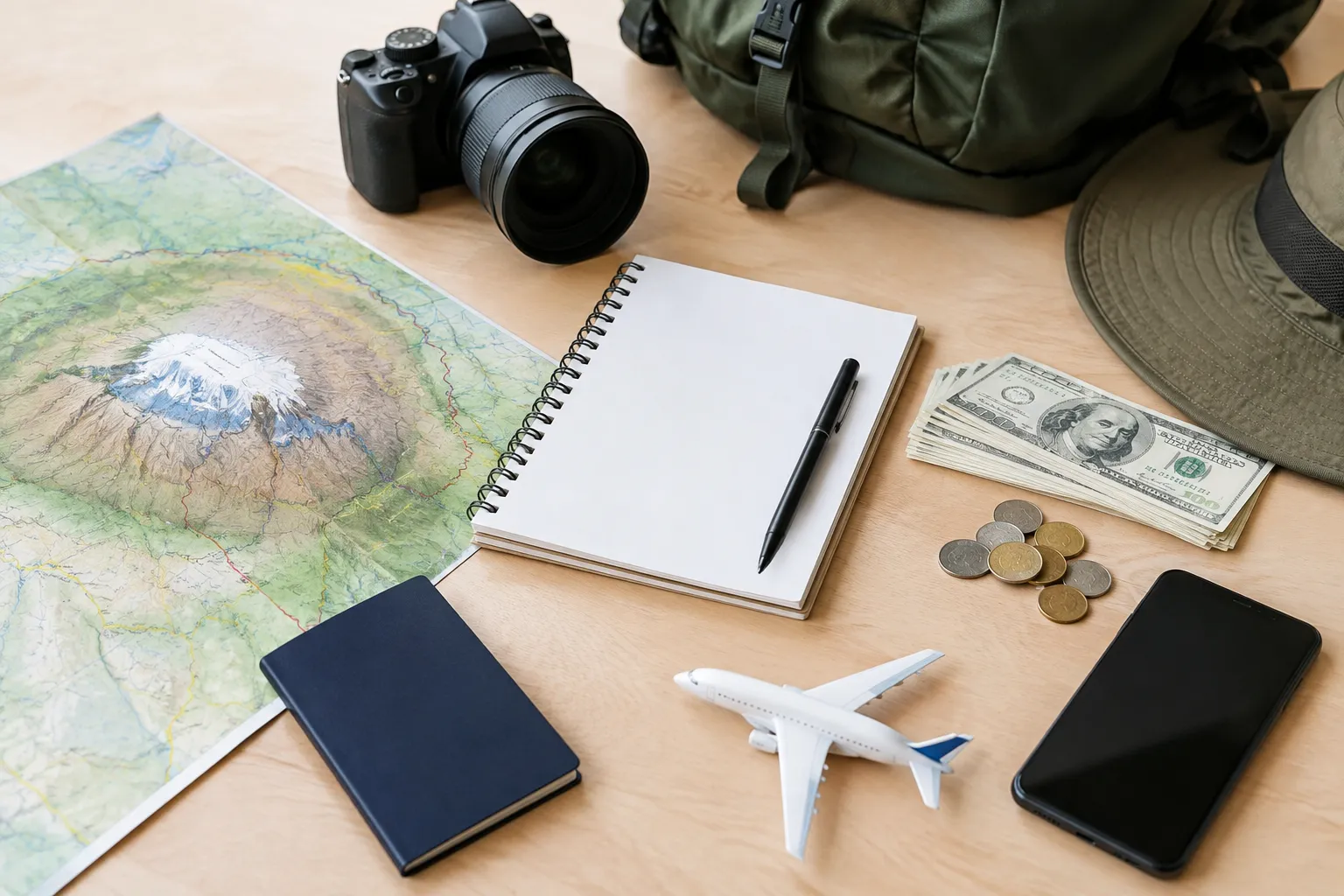
Build your budget in separate parts:
- The guided climb and its stated inclusions.
- International airfare and any connecting flights.
- Arrival, pre-climb, and post-climb accommodation and meals.
- Personal gear, insurance, tips, and visa expenses.
- Optional activities, such as a Tanzania safari.
This approach makes the cost of climbing Mt. Kilimanjaro easier to assess than comparing headline prices alone. A quote that appears lower may exclude transfers or accommodation, while a higher quote may include services you would otherwise arrange separately. Neither is automatically better value: the right fit depends on your itinerary, comfort preferences, and expectations for crew support.
Use this simple worksheet:
| Budget item | What to estimate |
|---|---|
| Climb | Operator quote, route, trip length, and listed inclusions |
| Flights | Round-trip airfare, connections, and baggage costs |
| Arrival and departure | Hotel nights, meals, and transport not included in the climb |
| Personal expenses | Gear, insurance, visa, tips, and incidentals |
| Optional extension | Safari, extra nights, and related transport |
For a broader explanation of climb costs, see Cost of Climbing Mount Kilimanjaro Explained Clearly. This article focuses on building the full travel budget around the climb, rather than estimating the summit experience alone.
What a Kilimanjaro climb quote should cover
Before comparing Kilimanjaro trek prices, ask for an itemized quote and a clear list of exclusions. Confirm the route, number of days on the mountain, accommodation before and after the trek, transport, meals, and what support is provided during the climb.
A useful quote should let you answer three questions: What is included? What will I pay separately? What assumptions could change the final total? If you are comparing adventure travel packages, place each quote into the same categories rather than relying on its headline total.
Park fees, crew, meals, and mountain accommodation
Park and camping or hut charges are major components of a guided climb. The operator should explain which fees are included in the quote and whether any required charges are payable separately. Do not rely on a rough estimate from another itinerary: route and trip length affect the charges.
Ask who is included in the crew and what services they provide. Clarify the roles of guides, cooks, and porters, and how meals are handled on the mountain. Ask how the operator approaches porter welfare, what its KPAP status means in practice, and how you can check its current listing. A responsible-tourism claim is more useful when the company can explain its procedures clearly.
Mountain accommodation also depends on the route. Some itineraries use tents, while the Marangu route uses huts. Check what sleeping equipment the operator supplies and what you must bring or rent. Compare the experience and inclusions, not just the amount attached to each option.
Transfers, hotels, and equipment
Confirm whether the quote covers airport pickup, transport to and from the trailhead, and transfers between your hotel and the climb. Ask which nights of town accommodation are included, what type of room arrangement is assumed, and whether meals are covered.
Equipment can create a significant gap between the quote and your real cost. Find out whether tents, sleeping mats, and group gear are provided, and request a list of personal items you must supply. If rental is available, ask for the current rental list, condition, sizing, and cost before deciding what to pack.
Flight plans need their own check. Allow time to arrive, sleep, and prepare before the climb rather than planning a tight connection straight into the trek. For U.S. travelers, review the full itinerary and baggage rules: a connecting airport may require collecting and rechecking luggage, which can affect both timing and fees.
How route and service choices change the price
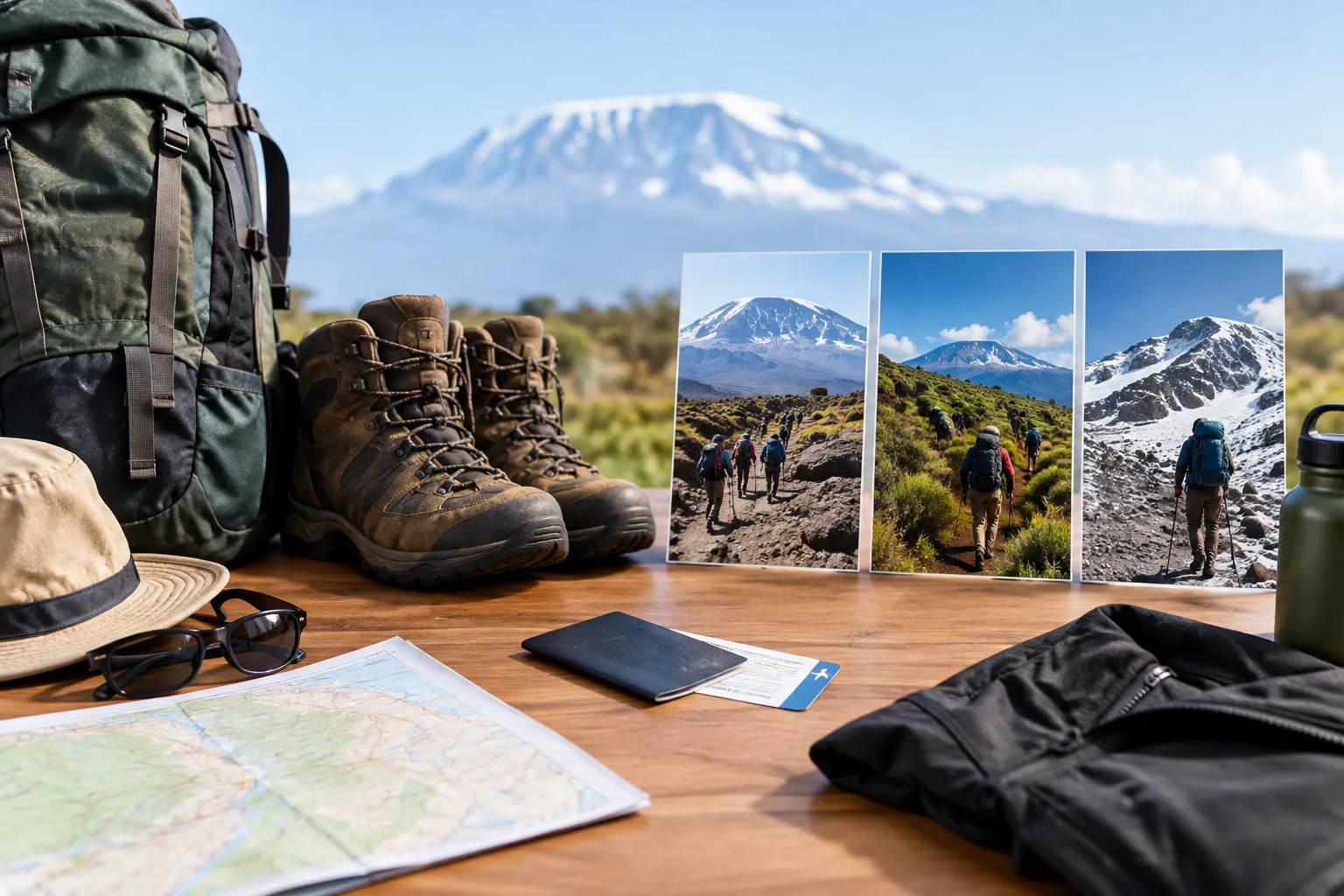
The price to climb Kilimanjaro depends on more than the route name. Trip duration, group size, accommodation, crew arrangements, and the services included all shape a quote. Your choice should balance budget with a sensible itinerary and the support you want.
A shorter trip may cost less on paper, but the total price alone does not show how the itinerary handles acclimatization or what services are included. Ask the operator to explain the daily plan and the tradeoffs between available routes. There is no route that is automatically right for every traveler.
Route length and group size
A longer itinerary generally involves more days of logistics and support, so it can cost more than a shorter one. It may also provide more time for gradual altitude adjustment. Ask for the exact route and day-by-day schedule, not just a route label, and compare trips of similar duration.
Group climbs can spread some operating costs across travelers, while a private climb gives your party more control over its arrangements and pace. Actual pricing depends on the operator and the group details, so request a quote based on your dates and party size. If you are traveling alone or with a small party, ask whether a departure is confirmed, what group size is expected, and what happens if plans change.
For route options, compare the Lemosho, Machame, Northern Circuit, Rongai, and Marangu routes. Focus on duration, sleeping arrangements, itinerary, and the kind of group or private setup that fits your plans.
Support and comfort on the mountain
Support should be evaluated in practical terms, not as a vague promise of comfort. Ask what training guides have, how often the team checks climbers’ health, how concerns are escalated, and what the plan is if someone needs to descend. If an operator describes guides as Wilderness First Responder (WFR)-trained, ask which guides hold that training and how it fits into the team’s response procedures.
Daily health monitoring and a well-planned itinerary are useful safeguards, not guarantees of reaching the summit or avoiding altitude illness. Summit support also deserves a direct question: who accompanies climbers, how the group is managed, and what happens if a climber needs to turn back.
Extra hotel nights, private transport, or additional equipment may raise the quote. Decide which comforts matter to you, but do not treat essential guide support and clear safety procedures as optional upgrades. For personal advice about fitness or health risks at altitude, consult a qualified medical professional who knows your circumstances.
Budget for flights, tips, gear, and safari add-ons
Airfare can vary with departure city, dates, connections, baggage rules, and how early you book. Compare complete itineraries, not just the ticket price: a cheaper fare may involve longer layovers, different baggage allowances, or extra airport transfers. Keep a separate amount in your budget for changes or additional baggage if your itinerary requires them.
Tips are usually separate from the operator’s climb price. Ask the company for its current tipping guidance, how tips are distributed among the crew, and whether tipping is handled collectively or individually. Treat the guidance as a budget item, but confirm the details before travel rather than assuming a tip is included.
For gear, divide your list into items you already own, items you need to buy, and items you may be able to rent. Check fit and condition before relying on rental equipment, especially for items that affect warmth, footwear, or sleep. Add travel insurance that explicitly covers the activities and altitude of your planned trip; policy limits and exclusions vary.
A safari adds another set of costs: transport, accommodation, meals, park charges, and the length of the extension. Decide whether you want a short add-on or a longer itinerary, then ask for the separate safari total so you can compare it with the climb budget. Eco Africa Climbing offers Tanzania Wildlife Safaris as well as climbs, including trips that can be planned around northern Tanzania destinations. Confirm the itinerary and inclusions before adding it to your total.
Compare quotes for value, safety, and porter welfare
A suspiciously low quote is a reason to ask more questions, not proof of poor service by itself. The price may exclude important costs, assume a different itinerary, or reflect choices you would not make. Compare like with like, then investigate any unexplained gap.
Check inclusions and exclusions line by line
Use the same checklist for each operator:
- Route, number of mountain days, and accommodation type
- Park and other required fees
- Guides, porters, cooks, meals, and group equipment
- Airport and trailhead transfers
- Hotel nights before and after the climb
- Personal gear requirements and rental options
- Taxes, payment schedule, deposit, and cancellation terms
- Items you will pay separately, including tips and insurance
Ask for written clarification when an item is unclear. To make the comparison easier, use the Kilimanjaro trek price quote checklist and Kilimanjaro climb quote checklist. A like-for-like comparison can show whether a higher quote reflects included services you value or simply a different itinerary.
Look for responsible crew and summit support
Check whether the operator is listed as a KPAP Partner Company using KPAP’s current information, and ask how it follows porter-welfare practices on the actual climb. Ask about crew pay and treatment, porter loads and equipment, meals, and how concerns can be raised. Clear, specific answers are more useful than a general statement about responsible tourism.
For guide standards, ask what training applies to the guides assigned to your trip. Clarify whether health checks happen daily, what information is monitored, and who makes decisions if a climber becomes unwell. Ask how summit support is organized and what the plan is if someone cannot continue.
A dependable quote should explain the service as well as the cost. If the operator will not clarify fees, crew arrangements, or safety procedures, pause before paying a deposit.
| Compare | Look for |
|---|---|
| Total cost | Climb quote plus airfare, hotels, gear, tips, insurance, visa, and extensions |
| Itinerary | Route, duration, accommodation, and arrival rest |
| Inclusions | Fees, meals, crew, equipment, and transfers |
| Crew welfare | Current KPAP status and clear porter-treatment practices |
| Support | Guide training, health-monitoring process, and summit plan |
| Terms | Deposit, payment timing, cancellation, and exclusions |
Kilimanjaro Trip Cost FAQs
How much does a trip to Kilimanjaro cost?
The total varies with the climb itinerary, flights, lodging, gear, tips, insurance, and optional activities. Add each item separately, then compare operator quotes with the same inclusions.
Is 50 too old to climb Kilimanjaro?
No, age 50 alone does not determine whether someone can climb Kilimanjaro; fitness, health, preparation, and itinerary matter. Discuss personal risks with a qualified medical professional.
Request a quote that matches your full trip plan
To compare a quote fairly, specify your preferred route and dates, party size, and whether you want a private or group climb. Include your planned arrival and departure dates, accommodation needs, gear questions, and any safari extension. Ask for an itemized total, with inclusions, exclusions, payment terms, and tipping guidance stated clearly.
That gives you a more useful comparison than a headline price and helps you estimate the full trip cost before committing to flights.
Sedrick Silayo is a Web Developer and Digital Marketing Expert at Eco-Africa Climbing, with over 10 years of experience in Tanzania’s adventure travel industry. He specializes in Kilimanjaro trekking and Northern Tanzania safaris, sharing practical expertise on trip planning, mountain preparation, safety, KPAP standards, and safari experiences.