 24 Oct 2026
 8 min read
Mount Kilimanjaro National Park protects the mountain and its surrounding slopes in northern Tanzania, close to the Kenyan border. For visitors, access usually means flying into the Kilimanjaro region, staying in Moshi or Arusha, then travelling by road to a park gate. Here is how the park fits into a wider Tanzania trip and what to plan before booking flights.
Where Mount Kilimanjaro National Park Sits in Tanzania
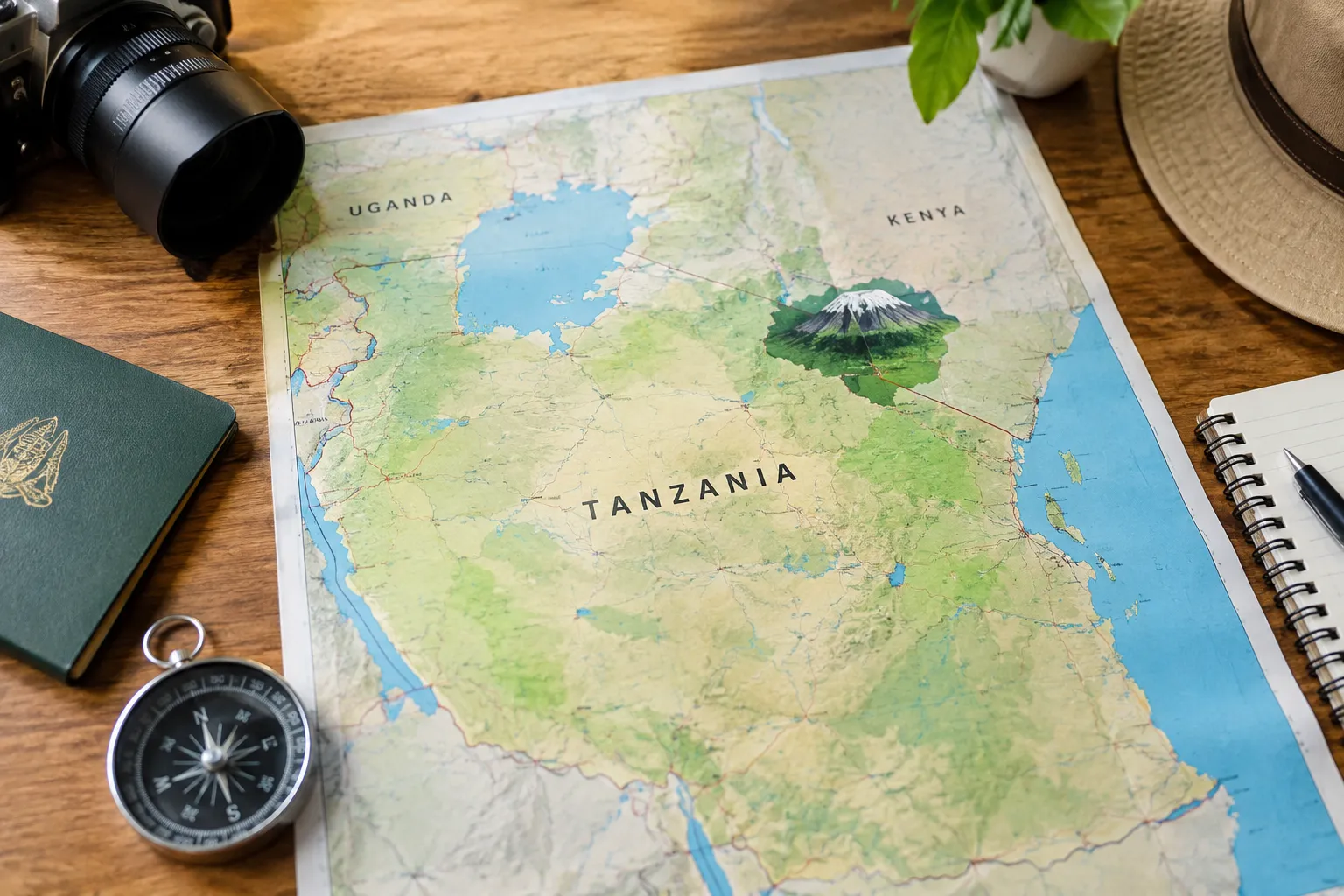
Mount Kilimanjaro National Park is in northeastern Tanzania, near the border with Kenya. The park encompasses Mount Kilimanjaro and the forested lower slopes around it. The mountain’s highest point, Uhuru Peak, rises to 5,895 metres above sea level.
If you are asking where Mount Kilimanjaro is, the practical answer is that it stands inland from Tanzania’s Indian Ocean coast, in the country’s northern tourism circuit. Moshi is the closest major town and a common base for climbing trips. Arusha, farther west, is another important regional centre and a starting point for safaris.
The mountain is often described as one peak, but its summit area includes three volcanic cones: Kibo, Mawenzi and Shira. Kibo holds Uhuru Peak, the highest point. The park is distinct from the neighbouring national parks and reserves; it is not part of Serengeti National Park or the Ngorongoro Conservation Area.
Kilimanjaro’s location can make it a natural addition to a northern Tanzania itinerary. However, the climb takes several days, and arrival, recovery and onward travel all need room in the schedule. For a broader orientation, see our Mount Kilimanjaro location guide for first-time visitors.
Nearby Towns and Park Gateways
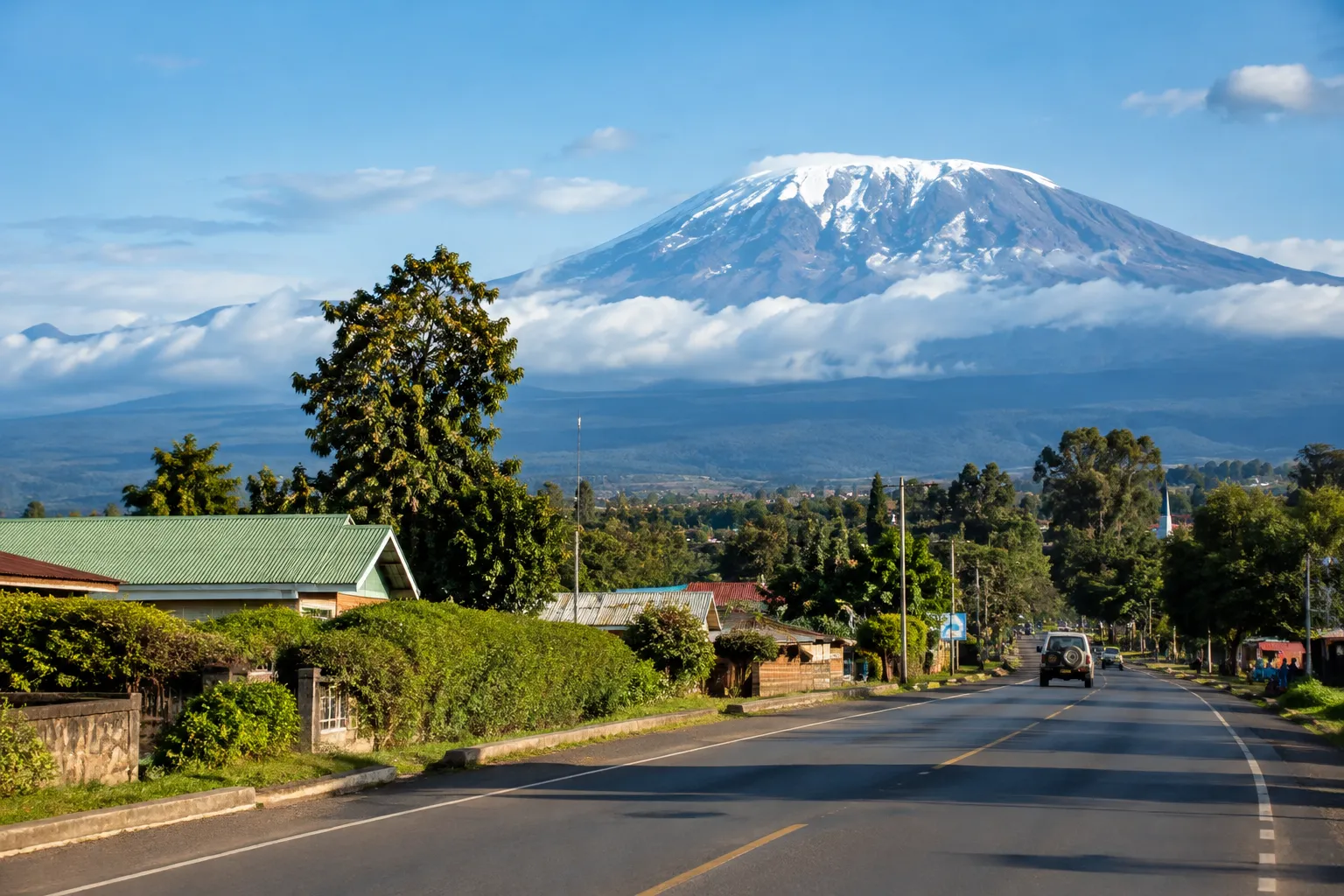
Moshi is the nearest town for most climbers. It is used as a base for pre-climb arrangements and road transfers to several trailheads. Arusha is a larger hub for visitors combining Kilimanjaro with wildlife destinations, though the transfer to a park gate may be longer depending on the route and starting point.
Climbers do not simply walk into the park from town. The route and itinerary determine which entrance or trailhead the group uses. Common access points include:
- Marangu Gate, for the Marangu Route.
- Machame Gate, for the Machame Route.
- Londorossi Gate, which provides access to the Lemosho Route.
- Nalemuru Gate, used to begin the Rongai Route.
- The Northern Circuit’s western approach, which begins through the Londorossi area.
The exact meeting point and road-transfer plan should be confirmed with the operator for the specific itinerary. A route may start and finish at different gates, so ask where you will be dropped off, where the climb ends and how the return transfer is arranged.
The park’s location also puts it within reach of other northern Tanzania destinations, but “nearby” on a map does not always mean a short drive. Road conditions, itinerary timing and the location of your accommodation affect travel time. Our Mount Kilimanjaro map of routes, parks and access gives a route-focused overview.
Which Airport Should You Fly Into?
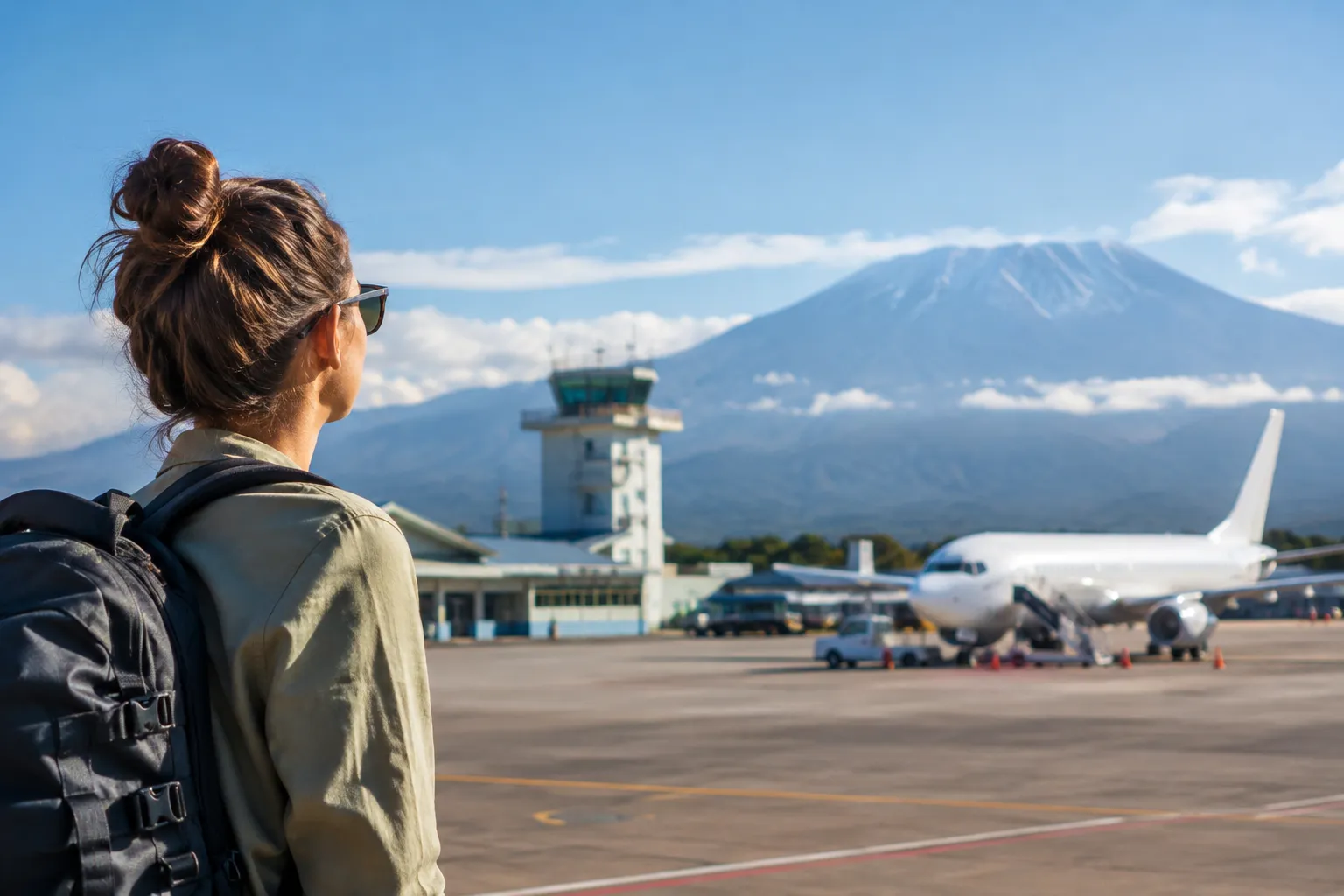
Kilimanjaro International Airport (JRO) is the most convenient arrival airport for many international visitors heading to Moshi or Arusha. It lies between the two towns, making it a practical starting point for a climb or a northern Tanzania safari.
International travellers may find that their journey includes a connection through a regional or international hub before reaching JRO. Flight availability and connection patterns vary by departure city, airline and travel date, so compare the full itinerary rather than looking only at the final flight segment.
Other airports may suit a wider trip, but they can add a domestic flight or a longer ground transfer:
| Arrival option | When it may make sense | What to check |
|---|---|---|
| Kilimanjaro International Airport | You are heading directly to Moshi, Arusha or a nearby park | Arrival time, transfer arrangements and baggage rules |
| A larger international gateway elsewhere in Tanzania | Your itinerary includes other parts of the country before the climb | Whether you need a separate domestic flight and how much connection time it requires |
| Zanzibar airport | You are combining the climb with time on Zanzibar | The flight connection to the Kilimanjaro region and whether your schedule allows a rest day |
A flight itinerary with a tight connection can create stress if baggage must be collected and checked in again. Review each airline’s baggage and transfer rules, especially when separate tickets are involved. Leave enough time for delays and for luggage to arrive before the climb.
Getting from the Airport to Your Climb
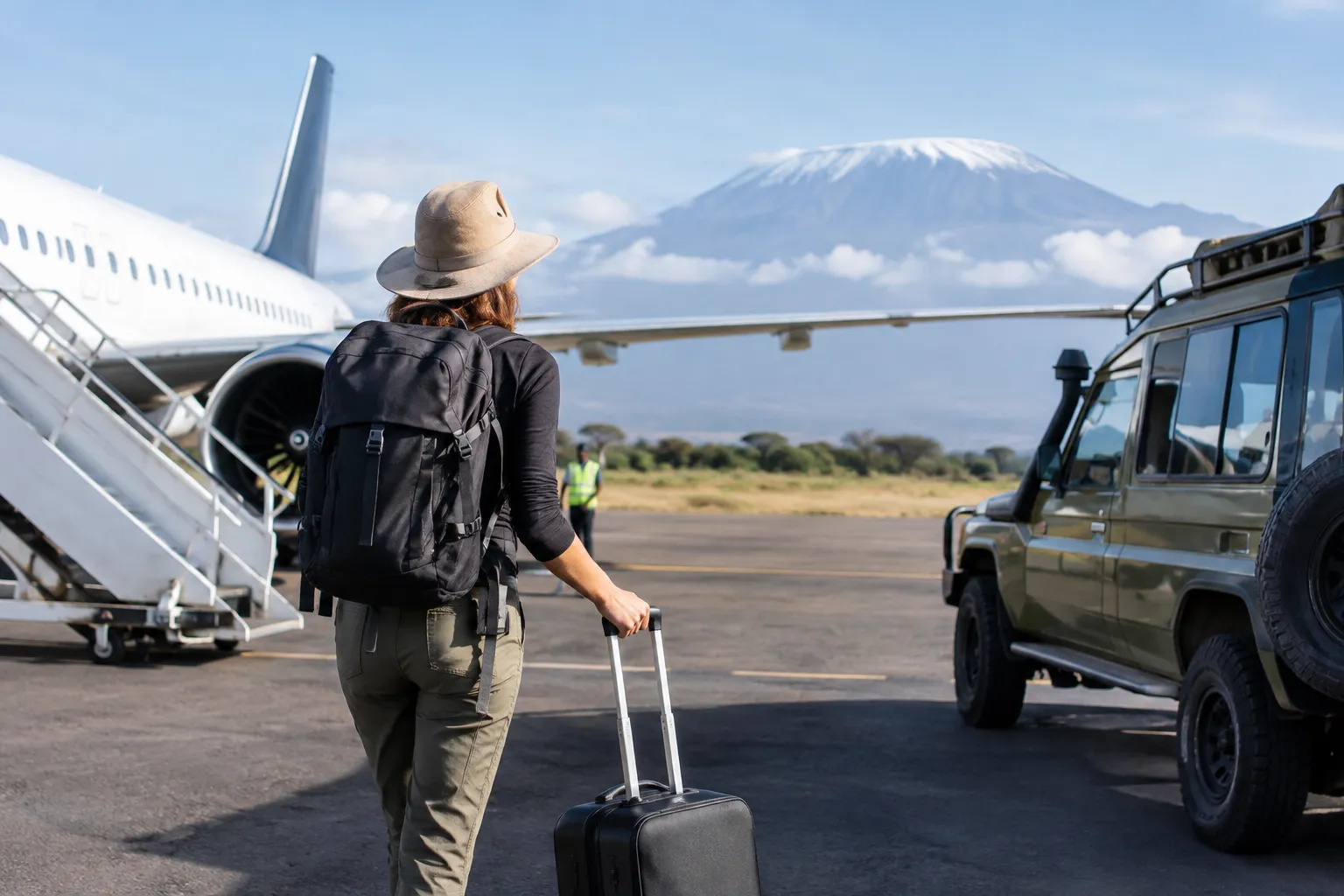
From JRO, travellers generally continue by road to Moshi or Arusha, or proceed to accommodation arranged for the trip. The park gates are reached by road from the towns and airport area. The drive’s duration varies with the gate, traffic, road conditions and where the group is staying.
Airport transfers may be arranged privately, shared with other travellers or handled independently. Before departure, confirm these details with your trek operator:
- Which airport and arrival time the transfer covers.
- Whether the transfer takes you to a hotel, a meeting point or directly to a park gate.
- What happens if your flight is delayed or your baggage does not arrive.
- Whether your arrival night and the night before the climb are included in the itinerary.
- How you will travel back after the climb and where that transfer ends.
Do not assume that a quoted climbing itinerary includes international flights, airport transfers, accommodation before or after the climb, gear rental or tips. Ask for an itemized list of what is covered and what you need to budget separately. A clear breakdown makes it easier to compare the total trip cost rather than only the headline climb price.
If you are travelling from sea level, plan to arrive with time to settle in and sleep before the trek begins. A long flight followed by an immediate drive to a trailhead leaves little margin for delays or fatigue. For route duration and preparation context, read our guide to Kilimanjaro climbing routes and preparation.
Altitude can affect people differently, and a route plan is not a guarantee of reaching the summit. Discuss personal health concerns and travel fitness with a qualified medical professional before making plans.
Pairing a Kilimanjaro Climb with the Rest of Your Trip
Kilimanjaro sits in a region where a climb can be combined with wildlife travel, but the sequence matters. A typical planning question is whether to safari before or after the mountain. Either order can work; consider flight timing, recovery, luggage and how much unstructured time you want in the itinerary.
A simple planning checklist:
- Set aside the full number of days required for your chosen climb, including arrival and departure logistics.
- Add time before the climb to reach the region, rest and complete any required preparations.
- Decide whether you want a safari before or after the climb, and allow for road or flight connections between destinations.
- Keep a buffer before an important onward international flight, rather than relying on a same-day connection after the trek.
- Check whether your baggage plan works for both trekking and safari portions of the trip.
A safari after the climb may provide a less physically demanding way to continue travelling, but you may also prefer to take a recovery day first. A safari beforehand means reaching the mountain rested and organized, though it can make the overall itinerary longer. Your preferred parks, available time and flight schedule should guide the choice.
Moshi and Arusha are useful planning anchors: Moshi is close to many Kilimanjaro arrangements, while Arusha is a common gateway for northern wildlife destinations. If you want both experiences, ask for an itinerary that clearly shows transfer days, nights in each location and what is included. Eco Africa Climbing offers Mount Kilimanjaro climbs and Tanzania wildlife safaris; the trip components and arrangements should be confirmed for the itinerary you are considering.
Kilimanjaro Location and Access FAQs
How long does it take to walk up Mount Kilimanjaro?
Most guided climbs take about five to nine days on the mountain, depending on the route and itinerary. Add travel, arrival rest and departure time when planning the full trip.
How much does it cost to climb Kilimanjaro per person?
The per-person cost varies with route, trip length, group or private arrangements and what the operator includes. Compare park and government fees, transfers, accommodation, gear, flights and tips—not just the quoted climb price.
Where do you sleep when you climb Kilimanjaro?
Most routes use mountain camps with tents; the Marangu Route uses mountain huts. Your accommodation depends on the route and itinerary, so confirm what sleeping equipment is supplied and what you must bring.
Is Kilimanjaro bigger than Everest?
No: Everest is higher, at about 8,849 metres, while Kilimanjaro reaches 5,895 metres. Kilimanjaro is a free-standing mountain, but that does not make its altitude or trek risk-free.
What is the fatality rate on Kilimanjaro?
There is no single figure that reliably describes every climber’s risk, and a general rate cannot predict an individual outcome. Altitude illness and other hazards are serious; ask an operator how guides monitor climbers and respond to health concerns.
Which is harder, Machu Picchu or Kilimanjaro?
They are different kinds of trips, and difficulty depends on the route, altitude exposure, duration and a traveller’s fitness and acclimatization. Kilimanjaro is a high-altitude multi-day climb, so compare the specific itineraries rather than assuming one is easier for everyone.
Do I need a permit to climb Kilimanjaro?
Yes, access to the national park for a climb requires the relevant park permissions and fees. These are normally arranged as part of a guided climb, so ask the operator to show how park charges are accounted for.
Can you climb Kilimanjaro without a guide?
Kilimanjaro is climbed through an organized, guided arrangement rather than as an unsupported independent hike. Confirm that your operator explains the guide team, route support, health monitoring and porter arrangements before booking.
Recommended Next Steps
Start by choosing a realistic travel window, then compare route length and airport connections against the time you have available. Check where the itinerary begins and ends, how many nights are included before and after the climb, and which costs sit outside the quoted trip price.
If you are still deciding between routes, our guide to what to expect on Kilimanjaro climbing tours explains the main trip components. For a practical overview of the mountain’s access points and geography, return to the Mount Kilimanjaro location guide.
Sedrick Silayo is a Web Developer and Digital Marketing Expert at Eco-Africa Climbing, with over 10 years of experience in Tanzania’s adventure travel industry. He specializes in Kilimanjaro trekking and Northern Tanzania safaris, sharing practical expertise on trip planning, mountain preparation, safety, KPAP standards, and safari experiences.