What to Pack for a Safari After Kilimanjaro: Women’s Guide
Knowing what to pack for safari after Kilimanjaro as a woman can save you from carrying far more clothing and equipment than you actually need.
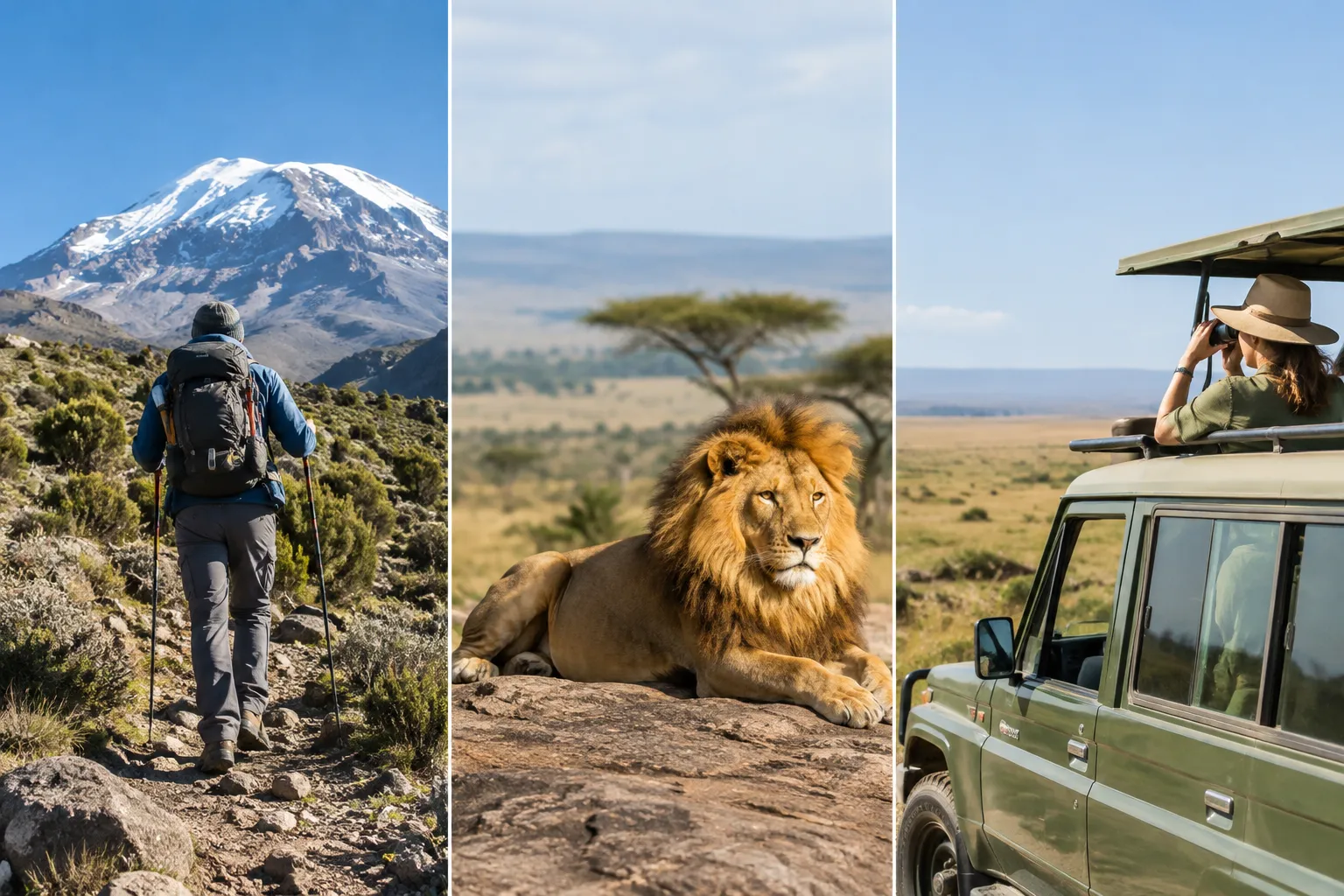
Kilimanjaro and safari are very different experiences.
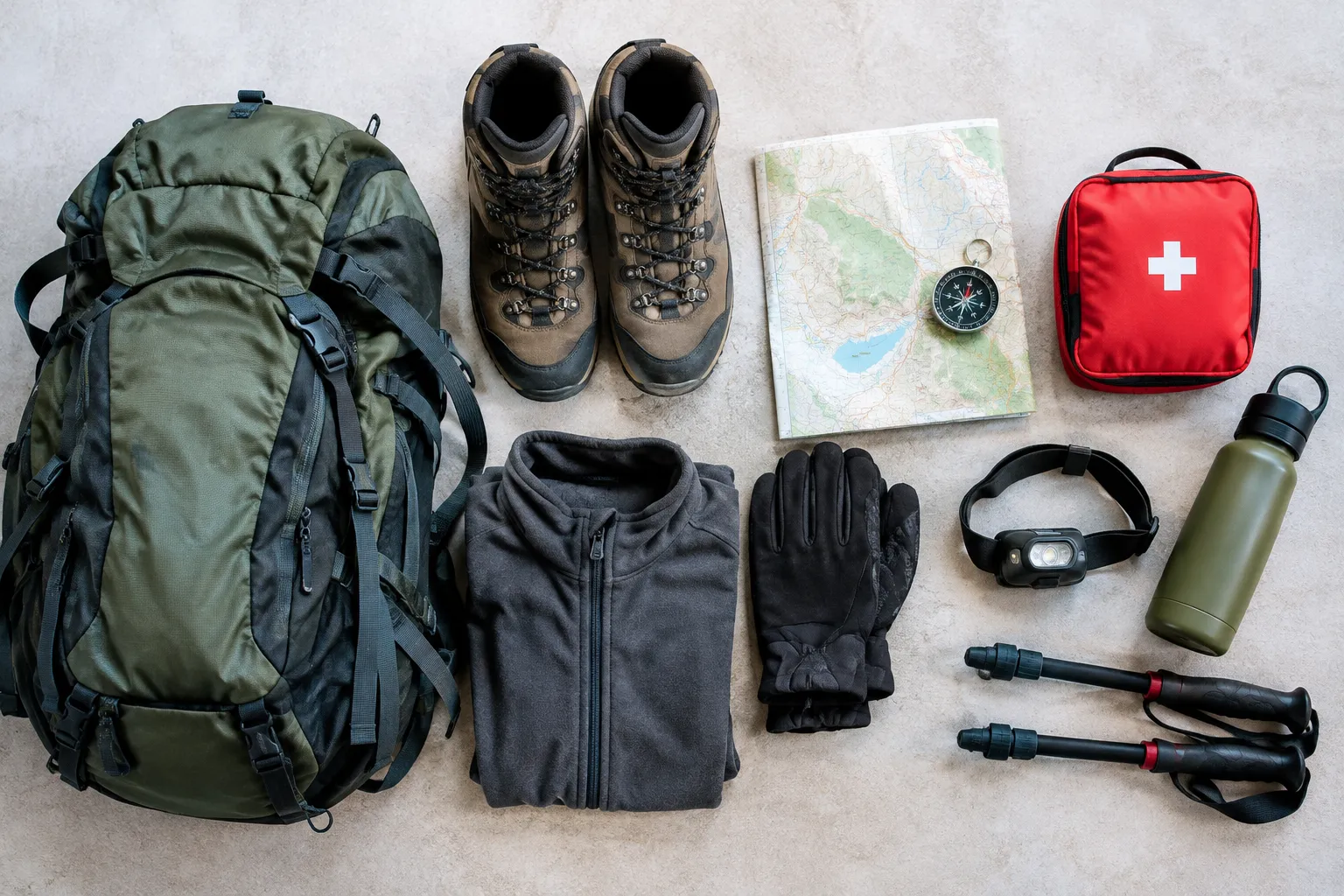
The mountain requires preparation for:
- Cold.
- Wind.
- Rain.
- High altitude.
- Long trekking days.
- Summit night.
Safari requires a much simpler approach.
You mainly need comfortable clothing, practical layers, sun protection, personal items and whatever photography equipment you want to use.
The good news is that you can reuse several items from your Kilimanjaro packing list instead of bringing an entirely separate safari wardrobe.
Do You Need Two Completely Different Packing Lists?
No.
You need one well-planned Tanzania packing system with some items designed specifically for the mountain and others suitable for both Kilimanjaro and safari.
Think in Three Categories
A simple way to organize your luggage is:
- Mountain-only gear – equipment mainly needed for Kilimanjaro.
- Multi-use clothing – items that work on both mountain and safari.
- Safari and post-climb items – comfortable clothing and personal items for after the trek.
What Becomes Mountain-Only Gear?
After Kilimanjaro, you are unlikely to need your full summit setup during ordinary safari days.
Items that may remain packed include:
- Heavy insulated summit clothing.
- Very warm summit gloves.
- Thermal summit layers.
- Heavy cold-weather accessories.
Do Not Throw Everything Into One Bag After the Climb
Take a little time to reorganize.
Separate:
- Dirty trekking clothing.
- Clean safari clothing.
- Electronics.
- Personal hygiene items.
- Medication.
Why Reorganizing Matters
After several days on Kilimanjaro, your luggage may not look as organized as it did when you arrived in Tanzania.
Safari becomes more comfortable when you know exactly where your clean clothes and everyday essentials are.
Safari Clothing for Women
Your safari clothes should be practical, comfortable and easy to layer.
Comfortable Trousers
Light trekking or travel trousers can work very well.
You may already have these from the Kilimanjaro part of your trip.
Why Trousers Work Well
They can provide:
- Comfort during long vehicle rides.
- Sun coverage.
- Protection from dust.
- Useful pockets.
Do You Need Traditional Safari-Colored Clothes?
No.
You do not need to purchase a completely new beige-and-khaki wardrobe just to go on safari.
Choose Practical Colors and Fabrics
Comfort and ease of use matter more than creating a safari costume.
T-Shirts
Comfortable lightweight T-shirts are useful for warmer periods.
Long-Sleeved Shirts
A lightweight long-sleeved shirt can provide useful coverage from sun and dust.
Can You Reuse Hiking Shirts?
Yes.
Clean lightweight hiking shirts can work perfectly well on safari.
Light Fleece
A fleece or similar warm mid-layer can be useful during cooler mornings or evenings.
You Already Have This From Kilimanjaro
There is usually no reason to buy another safari-specific fleece.
Light Jacket
A light outer layer can be useful when conditions feel cooler.
Do You Need Your Summit Down Jacket?
Usually not for normal daytime safari conditions.
Keep it packed unless conditions make additional warmth necessary.
Sun Hat
A sun hat is useful on safari and is another item that can often be reused from your Kilimanjaro gear.
Sunglasses
Keep sunglasses somewhere easy to reach.
Bright daylight and open landscapes can make them useful throughout the day.
Safari Footwear After Kilimanjaro
Your feet may be one of the parts of your body most ready for a change after the climb.
Do You Need Hiking Boots on Safari?
Not necessarily for ordinary vehicle-based wildlife viewing.
Comfortable Lighter Shoes
Bring a pair of comfortable shoes you can wear after the trek.
Why This Matters
After Kilimanjaro you may have:
- Tired feet.
- Sensitive toes.
- Blisters.
- General soreness.
Giving your feet a break from heavy hiking boots can feel excellent.
Do Not Bring Brand-New Shoes Only for Safari
Comfortable footwear should already be tested.
Sandals
Comfortable sandals can be useful during relaxed periods, depending on the setting and your personal preference.
Keep One Closed Shoe Option
It is still useful to have practical closed footwear available.
Sun Protection
Sun protection remains important after the mountain.
Pack Sunscreen
Keep it accessible rather than at the bottom of your main luggage.
Lip Protection
Your lips may already feel dry after several days on Kilimanjaro.
Continue using suitable protection.
Hat and Sunglasses
These remain useful throughout the safari.
Do Not Assume the Vehicle Protects You From All Sun
Safari can still involve long hours in bright conditions.
Your Safari Day Bag
You do not need your entire travel bag beside you during every wildlife drive.
A small, organized day bag is easier.
What to Put in Your Safari Day Bag
- Phone.
- Camera if using one.
- Sunglasses.
- Sunscreen.
- Personal medication.
- Hygiene supplies.
- Light warm layer.
- Power bank if needed.
- Small personal essentials.
Do Not Overfill the Day Bag
You do not need to carry everything you packed for Kilimanjaro.
Camera Gear
A Tanzania safari can create completely different photography opportunities from Kilimanjaro.
Can You Use a Phone?
Yes.
A phone can be excellent for:
- Landscape photos.
- Group photos.
- Video.
- Closer wildlife sightings.
Should You Bring a Dedicated Camera?
That depends on how important wildlife photography is to you.
If photography is a major interest, a dedicated camera may provide more flexibility for distant animals.
Do Not Buy Complex Equipment You Cannot Use
A simpler camera you understand is often more useful than expensive equipment you are trying to learn during the safari.
Extra Batteries
If your camera uses replaceable batteries, prepare enough power for your photography plans.
Power Bank
A power bank can be useful for phones and other compatible electronics.
Recharge Everything After Kilimanjaro
Before the safari begins, recharge:
- Phone.
- Camera.
- Spare batteries where applicable.
- Power bank.
Memory Cards and Storage
If you take many photos, make sure you have enough available storage.
Delete Unnecessary Files Before Safari
Your phone may already contain many Kilimanjaro photos and videos.
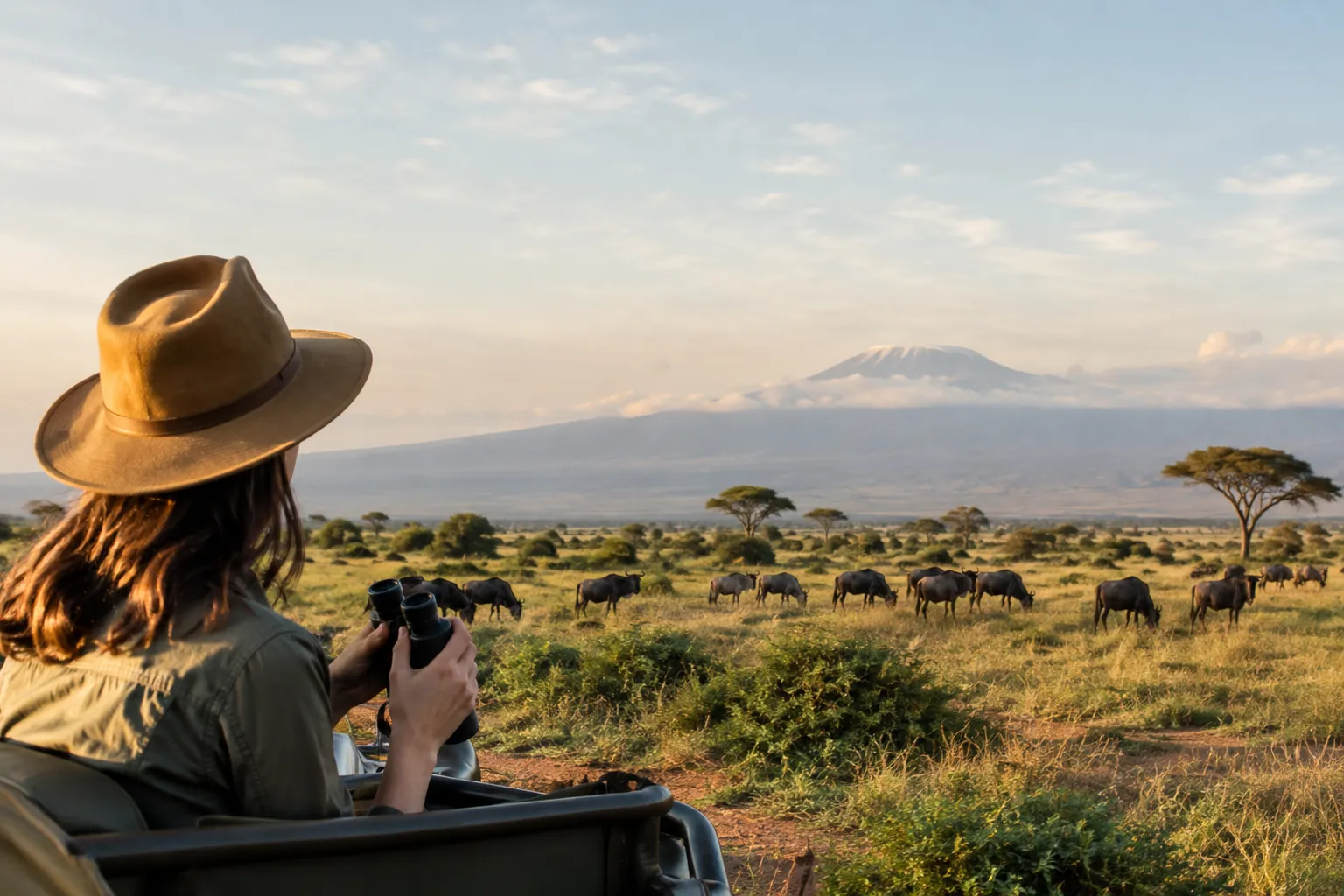
Binoculars
Binoculars can improve wildlife viewing when animals are farther away.
Why Binoculars Are Different From a Camera
A camera is often about recording the moment.
Binoculars are about seeing the moment more clearly.
Personal Hygiene Items
Your safari hygiene routine can be much simpler than mountain hygiene.
Useful Personal Items
- Toothbrush and toothpaste.
- Face and skin-care essentials.
- Deodorant.
- Personal hygiene products.
- Menstrual products if needed.
- Personal medication.
You Do Not Need Your Entire Bathroom Cabinet
Keep the routine simple.
Menstrual Products
If your period may occur during the trip, bring enough of your preferred products.
Keep Some in Your Day Bag
Do not pack all menstrual products somewhere inaccessible during a long travel day.
Do Not Depend on Finding Your Preferred Brand
Bring what you know works for you.
Personal Medication
Keep essential medication accessible.
Do not bury medication you may need during the day inside your main luggage.
Bring Enough for the Entire Tanzania Trip
Your medication planning should cover both the mountain and safari portions of the journey.
Basic Comfort Items
After Kilimanjaro, small comfort items can feel especially useful.
Depending on your preferences, consider:
- Comfortable clean clothes.
- Fresh socks.
- Hair ties.
- Simple skin-care products.
- Travel pillow if you personally like using one.
Long Hair
Wind and vehicle movement can make long hair inconvenient.
Bring:
- Hair ties.
- Clips.
- Other simple ways to keep hair secure.
Braids Can Be Practical
Some women prefer braids or other low-maintenance styles during safari.
Makeup on Safari
Makeup is entirely personal.
There is no reason you cannot bring it, but many women prefer a simpler routine after Kilimanjaro.
Practicality Usually Wins
Comfort, sun protection and enjoying the safari matter more than maintaining your normal home routine.
Skin Care After Kilimanjaro
Cold, sun and dry mountain air may leave your skin feeling different after the trek.
Keep Skin Care Simple
Useful basics may include:
- Gentle cleanser.
- Moisturizer.
- Sunscreen.
- Lip protection.
Clean Clothes for After the Climb
This may sound obvious, but it is worth planning intentionally.
Keep a Few Safari Outfits Separate
Do not allow every clean shirt and pair of trousers to become part of your mountain rotation.
Why This Feels So Good
After several days of trekking clothes, putting on a completely clean outfit can feel surprisingly luxurious.
Separate Clean Safari Clothing Before the Trek
If possible, identify which items you want to save for after the mountain before you begin the climb.
Laundry Planning
Do not assume you need to pack fifteen completely different outfits just because the combined trip lasts several days.
Choose Clothing That Mixes Easily
For example:
- Two or three tops.
- A few comfortable bottoms.
- A fleece.
- A light jacket.
- Comfortable footwear.
can create multiple practical combinations.
Do Not Overpack “Just in Case” Fashion
Every additional item increases luggage bulk.
Underwear
Pack enough comfortable underwear for your travel style and expected laundry opportunities.
Comfort Comes First
Long vehicle days are not the time for uncomfortable clothing simply because it looks better in a photograph.
Sports Bras
Some women may prefer comfortable sports bras or other supportive options for safari travel.
You Do Not Need High-Impact Support All Day
Choose what feels comfortable for vehicle travel rather than automatically wearing the same high-support system used during strenuous training.
Sleepwear
Bring comfortable clean clothing for sleeping after the mountain.
Why Fresh Sleepwear Feels Great
After several mountain nights, clean comfortable sleep clothing can feel like a major upgrade.
Travel Documents
Keep important travel documents securely organized throughout both parts of the journey.
Do Not Move Them Constantly
Choose one secure location so you always know where important documents are.
Cash and Cards
Keep payment methods organized securely rather than loose inside multiple bags.
Do Not Carry Every Valuable in One Easily Lost Pouch
Use a sensible personal security system for your travel style.
Dust Protection
Safari conditions can sometimes be dusty.
Protect Camera Equipment
Keep lenses and electronics covered when not in use.
Protect Your Phone
A simple case or pouch can help keep dust away from ports and lenses.
Do You Need a Scarf or Buff?
A lightweight scarf or neck gaiter can be useful for comfort in dusty or breezy conditions.
You may already have one from Kilimanjaro.
Rain Protection
Keeping a light waterproof layer available can still be useful depending on conditions.
Your Kilimanjaro Rain Jacket Can Be Reused
There is no need to buy a separate safari rain jacket if you already have an appropriate one.
What Women Can Leave Packed
You do not need every piece of Kilimanjaro equipment beside you during the safari day.
Examples
- Heavy summit insulation.
- Multiple thermal base layers.
- Summit mittens.
- Technical cold-weather accessories.
Keep Them, But Do Not Carry Them Everywhere
They can remain packed until you need them for travel or departure.
What Should Always Stay Accessible?
- Medication.
- Travel documents.
- Phone.
- Camera if using one.
- Sun protection.
- Hygiene supplies.
- One light layer.
Packing for Tarangire
For Tarangire, prioritize:
- Comfortable clothing.
- Sun protection.
- Camera or phone.
- Light layers.
Packing for Serengeti
The same practical system works well:
- Comfortable trousers.
- Light shirts.
- Warm layer.
- Sunglasses.
- Photography equipment.
- Personal essentials.
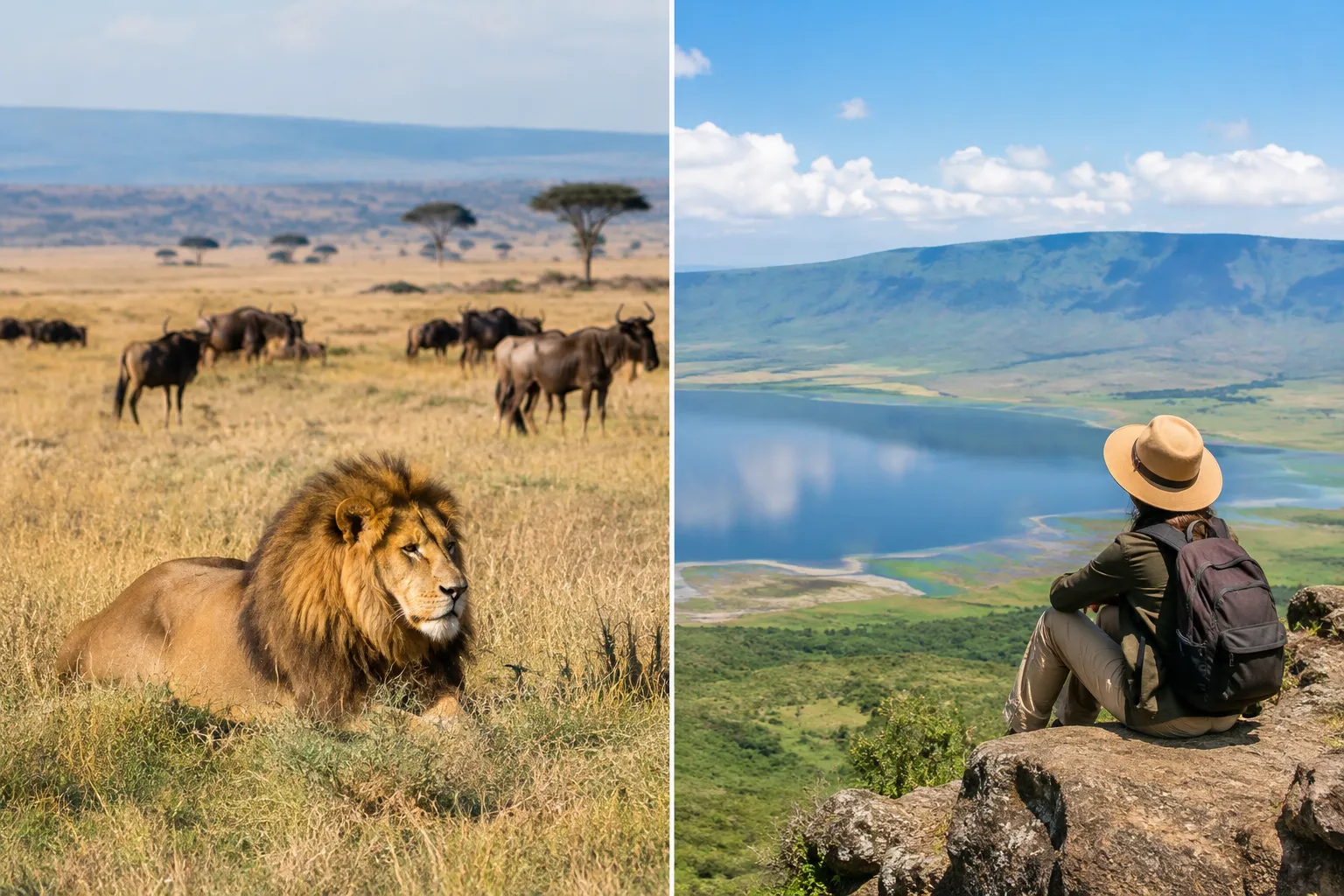
Packing for Ngorongoro
Keep a warm layer accessible because cooler conditions can occur around the crater rim.
One Safari Packing System Can Cover All Three
You do not need three separate wardrobes for Tarangire, Serengeti and Ngorongoro.
Packing for Women Over 40
Prioritize comfort rather than adding more equipment simply because of age.
Women Over 50
Useful priorities remain:
- Comfortable footwear.
- Easy layers.
- Medication access.
- Sun protection.
- Recovery comfort.
Women Over 60
The same basic packing strategy works, adapted to individual health, comfort and medication needs.
Perimenopause
Women experiencing changing temperature comfort may appreciate light layers that can be removed or added easily.
Solo Female Travelers
If you are traveling alone, organization becomes especially useful because you are responsible for keeping track of your own gear and personal items.
Use Packing Cubes or Separate Bags If You Like Them
Simple categories can make it easier to find:
- Clean clothes.
- Dirty clothes.
- Electronics.
- Personal care.
Do Not Create Twenty Tiny Bags
Organization should simplify the trip, not make you search through endless pouches.
Common Packing Mistake: Too Much Clothing
Safari does not require a completely new outfit every few hours.
Common Mistake: No Clean Clothes Saved for After Kilimanjaro
Reserve at least some clothing specifically for the post-climb portion.
Common Mistake: Only Packing Hiking Boots
Bring comfortable post-climb footwear.
Common Mistake: Carrying Summit Gear in the Safari Day Bag
Only carry what you expect to use during the day.
Common Mistake: Forgetting Sunglasses
Keep them accessible during game drives.
Common Mistake: Forgetting to Recharge Your Phone
Wildlife will not wait for a dead battery.
Common Mistake: Not Checking Phone Storage
Your Kilimanjaro photos may already have filled much of your available space.
Common Mistake: Packing All Medication Deep in Main Luggage
Keep essential medication accessible.
Common Mistake: Packing for Social Media Instead of Comfort
You can still look good in photos without bringing uncomfortable clothing.
Common Mistake: Forgetting Post-Climb Recovery
Your feet and legs may still be sore.
Pack for comfort.
Simple Women’s Safari Packing Checklist
| Category | Suggested Items |
|---|---|
| Clothing | Comfortable trousers, T-shirts, long-sleeved shirts, light fleece |
| Footwear | Comfortable lighter shoes and optional sandals |
| Sun protection | Sunglasses, sunscreen, hat, lip protection |
| Photography | Phone or camera, batteries, storage and power bank |
| Personal care | Toiletries, hygiene products and menstrual supplies if required |
| Health | Personal medication and any individually required items |
| Day bag | Small practical bag for daily essentials |
What You Can Reuse From Kilimanjaro
| Kilimanjaro Item | Safari Use |
|---|---|
| Light hiking trousers | Excellent for safari travel |
| Long-sleeved hiking shirt | Useful for sun and general comfort |
| Fleece | Useful during cooler periods |
| Rain jacket | Can remain available for changing weather |
| Sun hat | Useful during safari |
| Sunglasses | Useful throughout safari days |
| Neck gaiter | Can be useful in dusty or breezy conditions |
The WomenClimbKili Safari Extension
Women who want to continue their Tanzania trip after Kilimanjaro can choose the optional 4-day safari extension.
The safari visits:
- Tarangire National Park.
- Serengeti National Park.
- Ngorongoro Crater.
Safari Extension Price
The 4-day safari extension is US $2,400 per lady.
Combined Climb and Safari Price
The combined WomenClimbKili climb-and-safari package is US $5,350 per lady.
Combined Package Deposit
The deposit for the combined climb-and-safari option is US $1,605 per lady.
Can You Choose the Climb Without Safari?
Yes.
The climb-only package is available for US $2,950 per lady.
Can Solo Women Join?
Yes.
Solo female travelers are welcome on scheduled WomenClimbKili departures.
Maximum Scheduled Group Size
Scheduled WomenClimbKili groups have a maximum of 12 women.
Can Private Dates Be Arranged?
Yes.
If scheduled departures do not fit your plans, private climb dates can be arranged throughout the year with no minimum group size.
Frequently Asked Questions
What should women pack for safari after Kilimanjaro?
Focus on comfortable clothes, lighter footwear, sun protection, personal hygiene items, medication, camera equipment and a practical day bag.
Do I need a separate safari wardrobe?
No. Many lighter Kilimanjaro clothes can be reused for safari.
Can I wear hiking trousers on safari?
Yes. Clean, comfortable hiking trousers can work very well during safari days.
Do I need my hiking boots?
Not necessarily for ordinary vehicle-based game drives. Comfortable lighter footwear can be more pleasant after the trek.
Should I bring a camera?
A dedicated camera is optional. A phone may be enough for many travelers, while serious wildlife photographers may prefer a camera with more reach.
Should I bring binoculars?
Binoculars can improve wildlife viewing when animals are farther away.
What should go in my safari day bag?
Keep your phone or camera, sunglasses, sunscreen, personal medication, hygiene essentials, a light layer and other small daily necessities accessible.
Should I save clean clothes for after Kilimanjaro?
Yes. Keeping a few clean outfits separate for the safari portion can make the transition much more comfortable.
How long is the WomenClimbKili safari extension?
The optional safari extension is four days and visits Tarangire, Serengeti and Ngorongoro Crater.
How much is the safari extension?
The 4-day safari extension is US $2,400 per lady.
Pack Once, but Pack for Two Different Adventures
The smartest Kilimanjaro-and-safari packing strategy is not to bring two completely separate wardrobes.
It is to choose versatile items.
Your hiking trousers can become safari trousers.
Your fleece can become your cool-morning safari layer.
Your sun hat and sunglasses can continue working long after the mountain is behind you.
Then add the things that make the post-climb experience comfortable: clean clothing, lighter shoes, personal-care items and easy access to your camera or phone.
You have already carried enough gear for the summit.
Safari is the time to simplify.
Explore our WomenClimbKili women-only departures or view the complete Women-Only Kilimanjaro Machame Route Package .
Share:

Social Media
Most Popular
What to Pack for Safari After Kilimanjaro | Women’s Guide
Tarangire Safari After Kilimanjaro for Women | Tanzania Guide
Ngorongoro Crater After Kilimanjaro for Women | Safari Guide
Serengeti Safari After Kilimanjaro for Women | Tanzania Guide
Book Your Sustainable Tour
Related Posts
What to Pack for Safari After Kilimanjaro | Women’s Guide
What to Pack for a Safari After Kilimanjaro: Women’s Guide Knowing what to pack for safari after Kilimanjaro as a woman can save you from
Tarangire Safari After Kilimanjaro for Women | Tanzania Guide
Tarangire Safari After Kilimanjaro for Women: What to Expect A Tarangire safari after Kilimanjaro for women can be a perfect change of pace after several
Ngorongoro Crater After Kilimanjaro for Women | Safari Guide
Ngorongoro Crater After Kilimanjaro for Women: What to Expect Visiting Ngorongoro Crater after Kilimanjaro for women is a very different experience from the mountain you
Serengeti Safari After Kilimanjaro for Women | Tanzania Guide
Serengeti Safari After Kilimanjaro for Women: What to Expect A Serengeti safari after Kilimanjaro for women creates one of the most dramatic contrasts you can