Common Fears Women Have Before Climbing Kilimanjaro
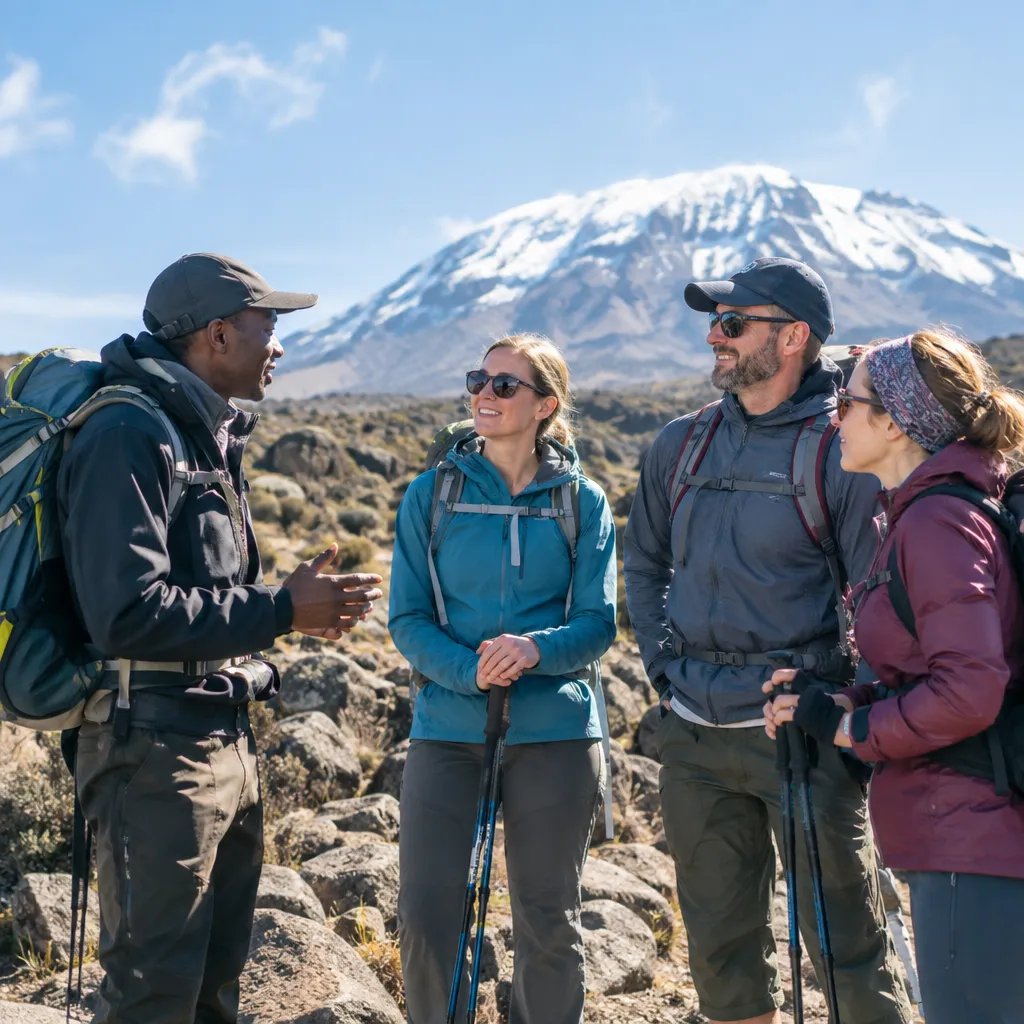
It is completely normal to feel nervous before a major adventure, and many women experience the same concerns before traveling to Tanzania. The common fears women have before climbing Kilimanjaro often include altitude, fitness, summit night, toilets, sleeping in tents, traveling alone, and wondering whether they will fit into the group.
Feeling nervous does not mean you are not ready. In many cases, fear simply means you are taking the challenge seriously.
The best way to reduce uncertainty is to understand what to expect, prepare properly, and ask practical questions before the trip begins.
Fear 1: “What If I Am Not Fit Enough?”
This is one of the most common concerns among first-time Kilimanjaro climbers.
You do not need to be an elite athlete, but you should prepare for several days of hiking at increasing altitude.
Useful training includes:
- Regular hiking.
- Long walks.
- Hill or stair training.
- Cardiovascular exercise.
- Leg strength exercises.
- Core training.
- Back-to-back hiking days.
The goal is not to become the fastest person in the group. The goal is to build endurance and arrive physically prepared.
Fear 2: “What If Everyone Else Is Fitter Than Me?”
A Kilimanjaro group can include women with different fitness levels, ages, and hiking backgrounds.
You should not treat the climb as a competition.
At altitude, moving too quickly can actually work against you.
Guides encourage a slow and steady pace, often described with the Swahili phrase “pole pole”, meaning “slowly, slowly.”
Fear 3: “What If I Get Altitude Sickness?”
Altitude is a genuine concern on Kilimanjaro because Uhuru Peak reaches 5,895 metres above sea level.
No one can guarantee that a climber will avoid altitude-related symptoms.
Fitness alone does not protect you from altitude sickness.
What helps is choosing a sensible itinerary, moving slowly, resting, staying hydrated, eating properly, and communicating honestly with your guides.
Why the 7-Day Machame Route Helps With Acclimatization
WomenClimbKili scheduled groups use the 7-day Machame Route.
The seven-day itinerary provides more acclimatization time than shorter Machame programs.
The route also includes an important acclimatization day around Lava Tower before descending to Barranco Camp.
You can see the complete itinerary on our Women-Only Machame Route Kilimanjaro Package .
Fear 4: “What If I Cannot Reach the Summit?”
This fear is common because the summit is often presented as the main goal of Kilimanjaro.
Reaching Uhuru Peak is a major achievement, but your health must always come first.
If your guide determines that continuing upward is unsafe, descent may be necessary.
Not reaching the summit does not mean the entire journey was a failure.
Training, traveling to Tanzania, completing several days of trekking, and pushing yourself outside your normal comfort zone are all significant achievements.
Fear 5: “What Is Summit Night Really Like?”
Summit night is usually the most demanding part of the climb.
The group begins during the night and climbs slowly toward Stella Point and then Uhuru Peak.
Challenges include:
- Cold temperatures.
- Darkness.
- High altitude.
- Fatigue.
- Reduced sleep.
- Several previous trekking days.
The climb is managed step by step rather than by thinking about the entire distance at once.
Fear 6: “What If I Am Too Slow?”
Being slow on Kilimanjaro is not automatically a problem.
A controlled pace is part of good high-altitude trekking.
Your focus should be on consistency rather than speed.
Do not compare yourself with another woman who may have a completely different fitness background.
Fear 7: “What If I Am Traveling Alone?”
Many women worry that they will feel isolated if they arrive in Tanzania without a friend or partner.
A scheduled group can solve much of this problem.
You can travel independently to Tanzania, meet the other participants in Moshi, and complete the main mountain experience as a group.
Solo female travelers do not need to create their own climbing group before booking.
Fear 8: “What If I Do Not Fit In With the Group?”
Group travel can feel intimidating if you are shy or do not know anyone.
However, Kilimanjaro naturally gives participants common topics to talk about.
You already share:
- The same mountain.
- The same route.
- The same camps.
- The same weather.
- The same summit goal.
Friendship cannot be guaranteed, but shared experiences often make conversation easier.
Fear 9: “What If Everyone Else Already Knows Each Other?”
Scheduled groups are not necessarily made up of one existing group of friends.
Some participants may travel with a friend, while others join completely alone.
WomenClimbKili welcomes individual female travelers, so arriving alone is normal.
Fear 10: “What About Sharing a Room With a Stranger?”
This is a common concern for solo travelers.
Rooming arrangements should be explained before travel.
If shared accommodation is used, a solo female traveler may be paired with another woman.
If you prefer a single room, ask about the available option and any applicable supplement before booking.
Fear 11: “What Is It Like Sharing a Tent?”
WomenClimbKili uses two-person sleeping tents on the mountain.
Sharing a tent is simpler than sharing a hotel room because the tent is mainly used for sleeping and organizing personal gear.
Good communication and keeping your belongings organized make the experience much easier.
Fear 12: “What About Toilets?”
Toilets are one of the most common practical concerns before a first Kilimanjaro climb.
WomenClimbKili includes a private toilet tent as part of the mountain setup.
You should also bring:
- Toilet paper.
- Hand sanitizer.
- Wet wipes.
- Sealable waste bags.
- Personal hygiene supplies.
Fear 13: “What If I Get My Period on the Mountain?”
Menstruation does not automatically prevent someone from trekking Kilimanjaro.
Bring enough menstrual products for the entire mountain period even if you do not expect to need them.
Travel, exercise, stress, and changes in routine can affect timing.
You should also have a practical way to carry used products until they can be disposed of responsibly.
Fear 14: “What If I Cannot Shower?”
Mountain camping is different from staying in a hotel.
You should not expect a normal hot shower routine while trekking.
Personal hygiene becomes simpler and more practical.
Wet wipes, basic washing, clean clothing layers, and good personal organization help you stay comfortable.
Fear 15: “What If I Am Cold?”
Cold is a genuine part of the Kilimanjaro experience, especially at higher elevations and during summit night.
Good preparation is the answer.
Your clothing system should include:
- Base layers.
- Warm mid-layers.
- An insulated jacket.
- Waterproof outer layers.
- Warm gloves.
- A warm hat.
- Suitable hiking socks.
Fear 16: “What If My Boots Hurt?”
This is why you should never arrive in Tanzania with hiking boots you have barely worn.
Use your boots during training walks and hikes before traveling.
You need to know how they feel on:
- Long distances.
- Uphill terrain.
- Downhill terrain.
- Different socks.
Fixing boot problems before travel is far easier than dealing with them on the mountain.
Fear 17: “What If I Cannot Handle the Barranco Wall?”
The Barranco Wall looks dramatic in photographs and videos.
This can make first-time climbers nervous before they even arrive in Tanzania.
The wall involves scrambling and careful movement rather than technical rock climbing.
Guides assist climbers and manage the pace through this section.
Fear 18: “What If I Have Never Camped Before?”
Previous camping experience can help, but it is not required.
Mountain life becomes easier once you understand the routine.
WomenClimbKili provides:
- Two-person sleeping tents.
- Foam sleeping mattresses.
- A dining tent.
- A private toilet tent.
After the first few nights, most people become much more familiar with camp life.
Fear 19: “What If I Cannot Sleep?”
Sleep can sometimes be different on a mountain trek because of the new environment, cold, altitude, and unfamiliar sleeping arrangements.
A warm sleeping bag, comfortable clothing, earplugs, and an organized nighttime routine can help.
Do not panic if one night of sleep is not perfect.
Fear 20: “What If Something Happens Medically?”
Kilimanjaro is a high-altitude trek, so safety procedures matter.
Our mountain team carries:
- Emergency oxygen.
- A first-aid kit.
- A pulse oximeter for daily health monitoring.
Guides monitor climbers and pay attention to how each person is responding to altitude.
If continuing upward becomes unsafe, descent may be required.
Fear 21: “What If I Need Emergency Evacuation?”
Emergency evacuation options are available on Kilimanjaro depending on the situation and location.
This is one reason suitable travel insurance is so important.
Your policy should cover high-altitude trekking to Kilimanjaro’s elevation and emergency evacuation.
Fear 22: “What If I Am Too Old?”
Age alone does not determine whether you can climb Kilimanjaro.
Women in their forties, fifties, sixties, and beyond may be capable of taking on the mountain depending on their individual health and fitness.
If you have medical concerns, discuss high-altitude trekking with an appropriate healthcare professional before travel.
Fear 23: “What If I Am a Beginner?”
Technical mountaineering experience is not normally required for the standard Machame Route.
Many travelers choose Kilimanjaro as their first major mountain.
What matters is that you train properly, understand the demands of altitude, and arrive with suitable equipment.
Fear 24: “What If I Am Shy?”
You do not need to be highly social to join a group.
There is plenty of time for relationships to develop naturally.
Walking together for several hours creates conversation without requiring anyone to force social interaction.
Fear 25: “What If I Want Time to Myself?”
Joining a group does not mean you must socialize every minute.
There are naturally quieter periods at camp and during the trek.
It is perfectly acceptable to rest, read, organize your equipment, or spend some time quietly when you need it.
Why a Women-Only Group Can Reduce Some Concerns
A women-only group does not remove the physical challenges of Kilimanjaro.
However, some women find the group environment more comfortable for:
- Personal hygiene discussions.
- Menstrual concerns.
- Room and tent sharing.
- Talking openly about fears.
- Meeting other solo female travelers.
How Large Is the Group?
WomenClimbKili scheduled departures are limited to a maximum of 12 women.
A smaller group can make it easier for participants to become familiar with one another during the trip.
What Happens Before the Mountain?
Before beginning the climb, participants attend a pre-climb briefing and gear inspection in Moshi.
This is an important time to ask questions about:
- The route.
- Altitude.
- Daily routines.
- Gear.
- Health and safety.
- Summit night.
Knowing what will happen can reduce a lot of unnecessary anxiety.
How Much Does the Women-Only Climb Cost?
The WomenClimbKili climb-only package costs US $2,950 per lady.
A US $300 deposit per lady reserves the climb-only trip.
The 11-day climb-only itinerary includes 2 hotel nights before the mountain, 7 trekking days, and 2 hotel nights after the climb.
Can You Add Safari?
Yes.
A 4-day safari can be added after Kilimanjaro, visiting:
- Serengeti National Park.
- Ngorongoro Crater.
- Tarangire National Park.
The complete climb and safari package costs US $5,350 per lady.
When Can You Join?
WomenClimbKili operates scheduled women-only departures during selected periods including:
- March.
- July.
- August.
- September.
- December for the New Year period.
View current dates on our WomenClimbKili departure page .
What If the Group Dates Do Not Work?
A private Kilimanjaro climb can also be arranged if the scheduled dates do not match your travel plans.
There is no minimum group size for the private option, so one woman can request her own departure.
Frequently Asked Questions
Is it normal to be scared before climbing Kilimanjaro?
Yes. Many first-time climbers feel nervous about altitude, summit night, fitness, camping, and other unknowns before their trip.
What is the biggest challenge on Kilimanjaro?
For many climbers, altitude and summit night are the biggest challenges.
What if I am not the strongest woman in the group?
You do not need to be. Kilimanjaro is not a race, and a slow, controlled pace is important at altitude.
Can I join if I am nervous about traveling alone?
Yes. Solo female travelers can travel independently to Tanzania and then join the women-only group in Moshi.
What if I have never climbed before?
Technical climbing experience is not normally required for the standard Machame Route, although good preparation is important.
What if I am afraid I will not summit?
No summit can be guaranteed. Your safety comes first, and the Kilimanjaro journey remains meaningful even if circumstances require you to descend before reaching Uhuru Peak.
Fear Becomes Easier When the Unknown Becomes Familiar
Many Kilimanjaro fears come from not knowing what to expect.
Training helps you understand your body. Testing your equipment helps you trust your gear. Learning about altitude helps you understand why pacing matters. Knowing the camp setup removes uncertainty about everyday life on the mountain.
You do not have to eliminate every nervous feeling before booking Kilimanjaro.
You simply need to prepare seriously, ask questions, and approach the mountain one day at a time.
Explore our WomenClimbKili scheduled departures or view the full 7-Day Women-Only Machame Route Package .
Share:
Social Media
Most Popular
Kilimanjaro Cold Weather Preparation for Women | Stay Warm
Kilimanjaro Medical Preparation for Women | Health Checklist
Kilimanjaro Hydration & Nutrition for Women | Practical Guide
Kilimanjaro Travel Insurance for Women | What Coverage You Need
Book Your Sustainable Tour
Related Posts
Kilimanjaro Cold Weather Preparation for Women | Stay Warm
Kilimanjaro Cold Weather Preparation for Women: How to Stay Warm Good Kilimanjaro cold weather preparation for women is essential because temperatures change dramatically as you
Kilimanjaro Medical Preparation for Women | Health Checklist
Kilimanjaro Medical Preparation for Women: A Pre-Climb Health Checklist Good Kilimanjaro medical preparation for women starts long before you arrive in Tanzania. Kilimanjaro is a
Kilimanjaro Hydration & Nutrition for Women | Practical Guide
Kilimanjaro Hydration and Nutrition for Women: A Practical Guide Good Kilimanjaro hydration and nutrition for women can make a major difference to how you feel
Kilimanjaro Travel Insurance for Women | What Coverage You Need
Kilimanjaro Travel Insurance for Women: What Coverage Do You Need? Choosing suitable Kilimanjaro travel insurance for women is an important part of preparing for a