 18 Oct 2026
 7 min read
Choosing between the Marangu and Machame routes is less about finding the “easy” way to climb Kilimanjaro and more about choosing the trail, accommodation and pace that suit you. In the Marangu vs. Machame Kilimanjaro route comparison, the key difference is straightforward: Marangu uses mountain huts, while Machame is a camping route with a more varied trail. Both require preparation and careful attention to altitude.
If you are still getting oriented, see our Mount Kilimanjaro location guide and Kilimanjaro route map before comparing itineraries.
Marangu vs. Machame at a glance
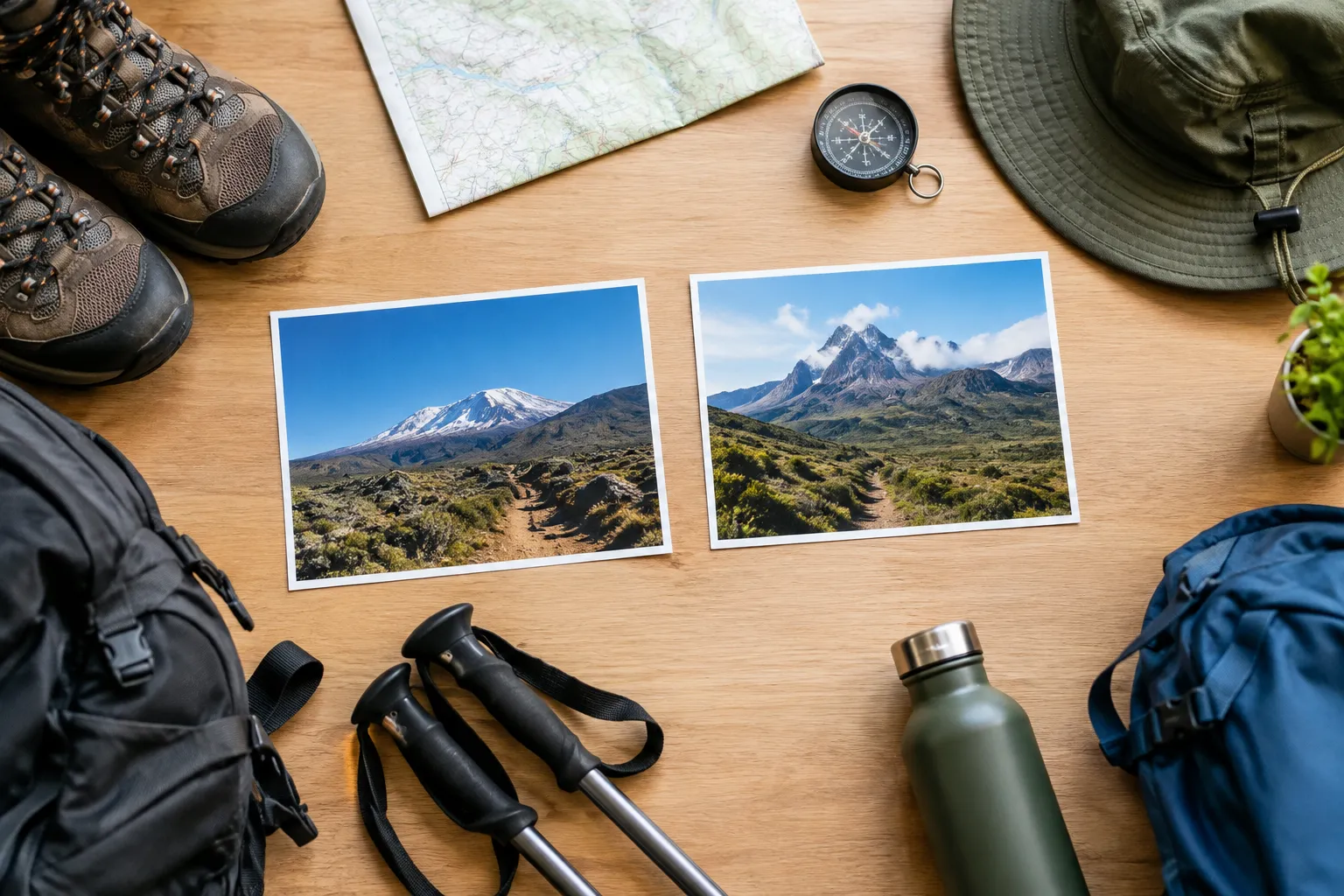
| Criteria | Marangu | Machame |
|---|---|---|
| Scenery | A forested approach followed by open high-altitude terrain | Varied landscapes and changing trail scenery |
| Trail character | A relatively steady ascent and descent on the same route | A more varied route, with different paths for ascent and descent |
| Acclimatization | Shorter itineraries may leave less time to adjust to altitude | Itineraries can allow more time on the mountain, depending on the schedule |
| Traffic | Uses a well-known approach, so busy periods can feel shared | Also popular, with busier sections possible at peak times |
| Cost | Accommodation is in huts; compare the full itinerary and inclusions | Camping requires camp arrangements; compare the full itinerary and inclusions |
| Comfort | Shared hut accommodation rather than sleeping in a tent | Camping brings nights in tents and more time outdoors |
| Overall fit | Suits climbers who prefer hut accommodation and a direct route | Suits climbers who value varied scenery and are comfortable camping |
This table is a starting point, not a route ranking. The number of days, daily pace, included services and how your body responds to altitude all matter. For a broader overview of how a Kilimanjaro climb works, read our guide to Mount Kilimanjaro climbing tours.
How the scenery and trail feel different
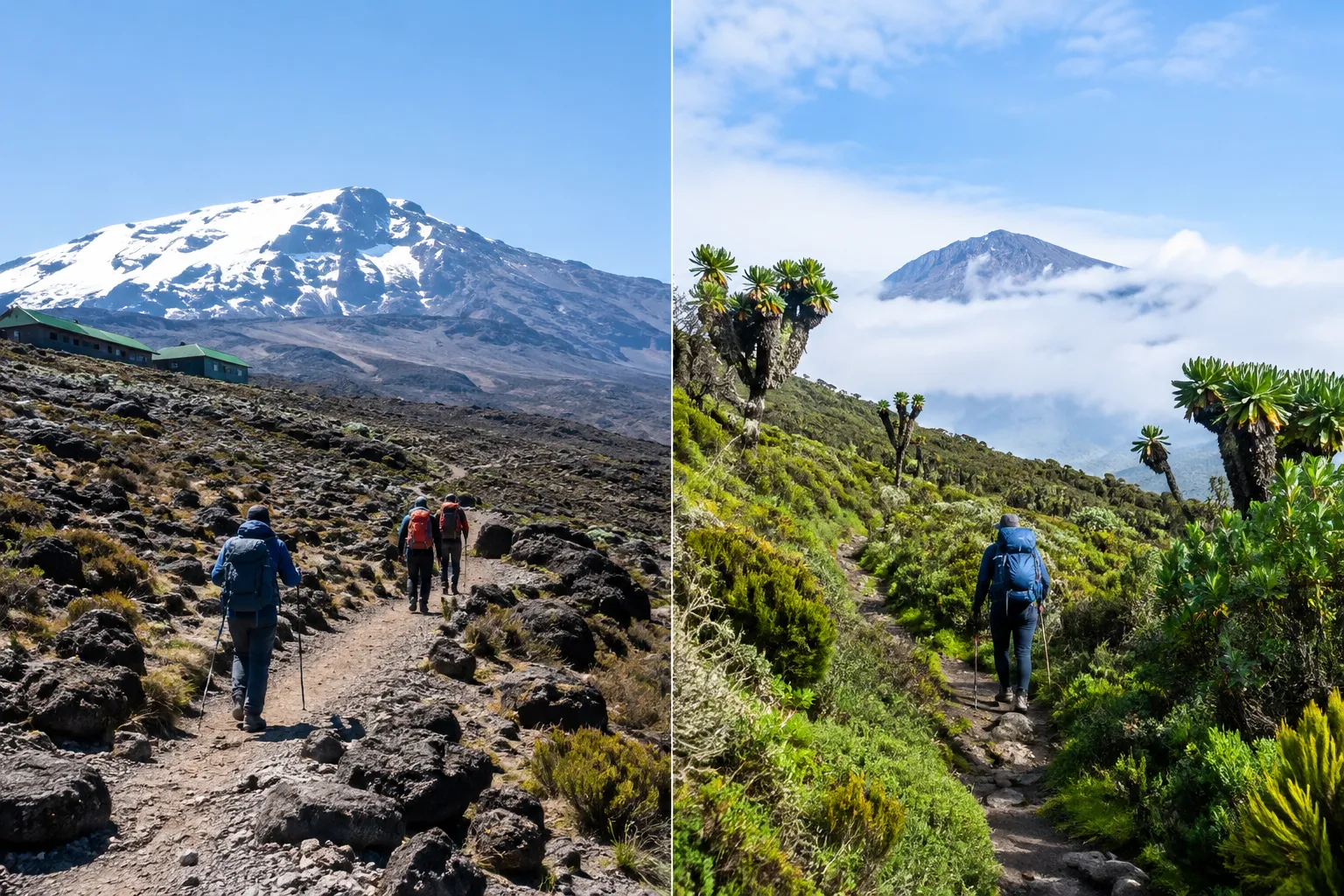
Marangu approaches the mountain through forest before opening onto higher, more exposed terrain. The trail is often described as steady, but steady does not mean easy: the altitude rises, the days continue, and summit night demands effort on either route. Because the ascent and descent use the same route, you retrace part of the way down.
Machame is known for a more varied day-to-day trail experience. The landscape changes as you climb, and the descent follows a different route from the ascent. That variation can appeal to people who want to see more than one side of the mountain, though it also means adapting to changing terrain and daily conditions.
For a first Kilimanjaro climb, consider what you mean by “scenery.” Do you want a straightforward route with hut nights, or would you enjoy a more varied trek with camping? Neither preference predicts how you will handle altitude. A good plan should give you time to walk slowly, drink regularly and tell your guides promptly if you feel unwell.
Itinerary length and time to acclimatize
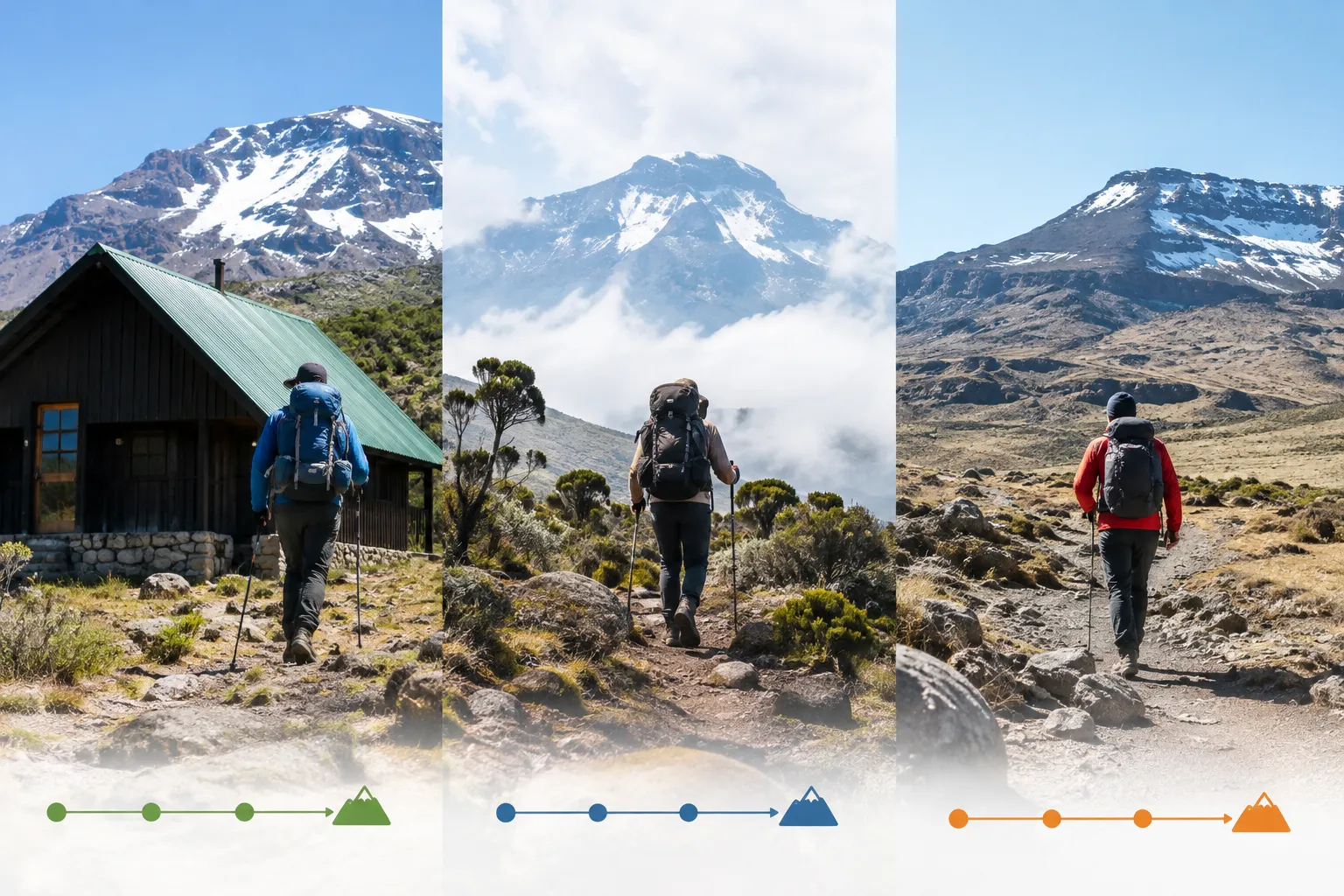
Marangu is commonly offered on shorter and longer schedules, while Machame is usually planned over multiple days as well. The exact number of days depends on the itinerary you choose. Rather than judging a Kilimanjaro climb trip by the route name alone, compare the actual schedule: how many days you spend ascending, where you sleep and whether the plan includes additional time for acclimatization.
More time on the mountain can provide more opportunity to adjust, but no itinerary guarantees that you will reach the summit. Altitude affects people differently, including fit and experienced hikers. A slower pace, appropriate acclimatization and daily health monitoring are important parts of a responsible climb; they reduce avoidable risks but cannot remove them.
Plan the whole trip, not just the days on the mountain. Allow time to arrive in Tanzania, sort your baggage and sleep before the climb begins. If you are connecting through an airport, check whether your flight itinerary requires you to collect and recheck your bags. Build training around sustained walking, hills and carrying the daypack you expect to use, alongside general fitness work.
Huts, camping, costs, and route traffic
Marangu’s hut accommodation is its clearest practical difference. You sleep indoors in shared mountain accommodation rather than in a tent. That may suit climbers who prefer not to camp, but huts should not be mistaken for private hotel rooms or a guarantee of comfort at altitude.
Machame is a camping itinerary. You should be prepared for nights in a tent and for the routines that come with sleeping outdoors. If you choose this route, ask the operator what camping equipment and support are included, and what you need to bring or arrange yourself.
Do not assume either route is automatically cheaper. The full cost depends on the itinerary and what the operator includes. Ask for a written breakdown covering park and government fees, accommodation, meals, transport, crew support and any other included services. Then budget separately for international flights, travel insurance, personal gear and crew tips. Tipping is part of the total trip budget, so ask how the operator explains its tipping guidance and whether the process is clear.
Both routes can have busy sections, particularly when many climbers are travelling at the same time. A popular route is not necessarily a poor choice, but if solitude matters to you, ask when the climb departs and what to expect on the trail. Group size, the operator’s departure arrangements and the actual itinerary are more useful questions than a route’s reputation alone.
When checking an operator, look beyond the headline price and polished website. Eco Africa Climbing is a KPAP Partner Company, a point readers can check against their own criteria for porter welfare. Ask any operator how it treats and equips its crew, what support is provided on the mountain, how guides monitor climbers’ health, and what happens if someone needs to descend. Clear answers matter more than broad claims about responsible travel.
Choose the route that fits your priorities
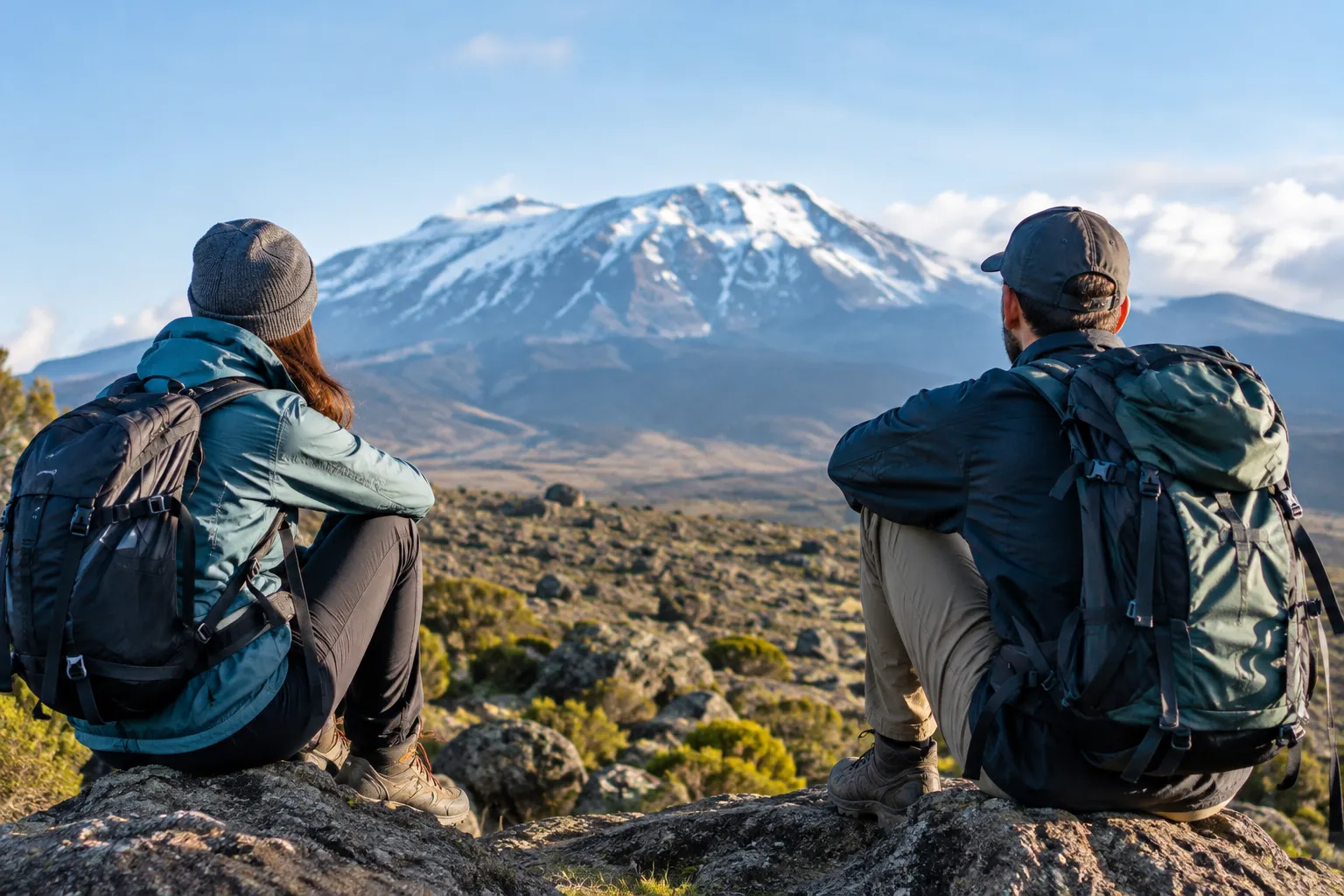
Use these questions to make the choice more concrete:
- Prefer hut accommodation and a direct route? Marangu may fit better, provided you are comfortable with shared huts and understand the acclimatization schedule.
- Want varied scenery and a different descent route? Machame may suit you if you are happy to camp and manage the practicalities of nights outdoors.
- Worried about altitude? Compare the number of days and the pacing of each specific itinerary. Do not choose only by the route’s “easy” or “hard” label.
- Comparing prices? Request the full list of inclusions and exclusions, then add flights, tips, gear and any nights before or after the climb.
- Travelling alone or with a small party? Ask whether the departure is confirmed, what group size to expect and whether a private climb is an option. If you are a woman travelling alone, you can also ask about group composition and the operator’s arrangements for communication and support.
The Marangu vs. Machame Kilimanjaro route decision should reflect your accommodation preference, pace and comfort with camping—not a promise that one path is easy or certain to reach the summit. For more route context, compare our guide to Kilimanjaro route options and preparation.
| If this matters most… | Route to investigate first |
|---|---|
| Sleeping in mountain huts | Marangu |
| A varied trail and a different route down | Machame |
| Choosing based on altitude adjustment | Compare the day-by-day itineraries |
| Keeping the total budget clear | Compare written inclusions, exclusions and tipping guidance for both |
Marangu and Machame FAQs
What is the most beautiful route on Kilimanjaro?
There is no objective “most beautiful” route; scenery is a matter of preference. Machame offers varied landscapes, while Marangu has a forested approach and a more direct trail experience.
Which Kilimanjaro route has the highest success rate?
There is no single route-based success rate that applies to every climber or itinerary. More days for acclimatization can help, but fitness, health, pacing and individual altitude response also matter.
What is the hardest route on Kilimanjaro?
Difficulty depends on the itinerary, altitude response, terrain and your experience. Comparing day-by-day pacing and acclimatization is more useful than treating one route name as a reliable measure of difficulty.
How hard is the Marangu route?
Marangu is still a demanding high-altitude trek, even though its trail is often described as steady and its accommodation is in huts. The shorter itinerary options can mean less time to acclimatize.
Which is the easiest Kilimanjaro route?
No Kilimanjaro route is easy in the ordinary sense: all involve altitude and sustained walking. The best fit depends on the itinerary, accommodation preference and how your body responds as you ascend.
Is 50 too old to climb Kilimanjaro?
No, age 50 alone does not rule out a Kilimanjaro climb. Preparation, health and altitude response matter; discuss individual medical concerns with a qualified clinician before booking.
How many days should I allow for a Marangu or Machame climb?
Allow for the full itinerary shown by the operator, and compare how many days are spent on the mountain rather than relying on the route name. Add arrival time before the climb and recovery time afterward.
Can I choose a private or group climb on either route?
Private and group climbs are options to ask about when comparing operators and itineraries. Confirm departure status, expected group size, costs and what support is included before choosing.
Recommended next steps
Start by deciding whether huts or camping suit you, then compare the day-by-day schedules for acclimatization and pacing. Request a full cost breakdown that separates operator inclusions from flights, personal gear and tips. Finally, ask direct questions about KPAP partnership, porter welfare, guide standards, health monitoring and the plan for a climber who needs to turn back. This makes it easier to judge which route and operator fit your priorities for a climb of Kilimanjaro.
Sedrick Silayo is a Web Developer and Digital Marketing Expert at Eco-Africa Climbing, with over 10 years of experience in Tanzania’s adventure travel industry. He specializes in Kilimanjaro trekking and Northern Tanzania safaris, sharing practical expertise on trip planning, mountain preparation, safety, KPAP standards, and safari experiences.