Kilimanjaro Porters: The People Behind Every Successful Kilimanjaro Climb
Climbing Mount Kilimanjaro is often described as a personal challenge: a journey through rainforest, moorland, alpine desert and finally to the summit of Africa at 5,895 metres. But behind almost every successful Kilimanjaro expedition is a large team of Tanzanian mountain professionals working incredibly hard to make that journey possible.
Among the most important members of that team are the Kilimanjaro porters.
Porters carry expedition equipment, food, tents and other supplies from camp to camp. They help establish and break down camps, support cooks and guides, transport essential equipment and perform many of the tasks that allow climbers to concentrate on walking, acclimatizing and staying healthy.
A climber may arrive at the next campsite tired after several hours of hiking only to discover that the tents have already been erected and much of the camp is operating. That is possible because porters often leave after the climbers, move efficiently along the trail carrying expedition loads and work again when they reach camp.
They are not simply people who carry bags.
They are the workforce that keeps a Kilimanjaro expedition moving.
Understanding how porters work, how they are recruited, what they carry, how they are paid and tipped, and how responsible climbing companies protect their welfare is therefore an important part of choosing an ethical Kilimanjaro operator.
Who Are the Porters on Mount Kilimanjaro?
Kilimanjaro porters are predominantly Tanzanians from communities surrounding Mount Kilimanjaro and other parts of northern Tanzania.
For many families, mountain tourism provides an important source of employment and income.
Portering can also be an entry point into a long-term mountain career. An individual may begin working as a porter, gain years of mountain experience, improve their English, develop leadership and safety skills, and eventually progress to positions such as waiter, summit porter, cook, assistant guide and mountain guide.
This means that the porter you meet on your expedition may be at the beginning of a much longer professional career on Kilimanjaro.
The work, however, is physically demanding.
A porter may spend consecutive days walking through rain, mud, dust, cold temperatures, strong wind and high altitude while transporting equipment between camps.
Conditions can change dramatically during a single expedition. The warm and humid forest near the lower slopes is very different from the freezing temperatures experienced higher on the mountain.
Proper equipment, sufficient food, adequate rest, reasonable loads and fair working conditions are therefore not luxuries. They are fundamental aspects of Kilimanjaro porter welfare.
What Do Kilimanjaro Porters Actually Do?
The most visible responsibility of a porter is carrying equipment, but that is only one part of the job.
A typical Kilimanjaro expedition requires transportation of climbers’ duffel bags as well as company equipment and supplies.
Depending on the expedition, porters may transport:
- Client duffel bags
- Mountain tents
- Crew tents
- Dining tents
- Tables and chairs
- Cooking equipment
- Food supplies
- Water containers
- Toilet equipment
- Safety and expedition equipment
- Gas and cooking fuel
- Camp supplies
- Waste-management equipment
- Other communal mountain equipment
Some porters also perform specialist roles.
For example, an expedition may include a waiter, toilet porter, camp crew, summit porter or other crew members with additional responsibilities.
This is why a Kilimanjaro climbing team can appear surprisingly large compared with the number of climbers.
The number of crew is not simply a matter of luxury. Having an appropriate number of porters helps distribute the expedition equipment so that individual workers are not forced to carry excessive loads.
How Much Weight Does a Kilimanjaro Porter Carry?
Porter load management is one of the most important welfare issues on Kilimanjaro.
Under the porter-treatment standards promoted by the Kilimanjaro Porters Assistance Project (KPAP), a porter should carry no more than 20 kg of company equipment, excluding the porter’s own personal kit.
Responsible operators organize and weigh equipment so that loads can be distributed appropriately among the crew.
This is also why climbers receive a personal duffel weight allowance.
At Eco-Africa Climbing, for example, we advise our climbers to keep their duffel bag within our 15 kg client allowance. The remaining porter carrying capacity is required for equipment and supplies necessary for the expedition.
A duffel limit should therefore never be treated as an inconvenience.
Every unnecessary kilogram eventually has to be carried by another human being up the mountain.
Responsible packing is part of responsible trekking.
Why Does a Kilimanjaro Climb Need So Many Porters?
Climbers sometimes ask why a group of only a few tourists requires a much larger mountain crew.
The answer becomes clear when you consider everything required to operate a self-supported expedition for several days.
Unlike an ordinary day hike, a camping route on Kilimanjaro requires sleeping tents, crew accommodation, cooking facilities, food, dining equipment, safety equipment and many other supplies.
KPAP’s Partner for Responsible Travel standards call for an appropriate number of porters so that individual loads remain within the permitted company-equipment weight.
The objective should never be to use the smallest possible crew simply to reduce operating costs.
If an operator reduces the crew too aggressively while carrying the same amount of equipment, somebody ultimately has to absorb that extra weight.
An ethical expedition therefore balances efficiency with worker welfare.
How Do Porters Get Work on Kilimanjaro?
Porter employment on Kilimanjaro can be highly competitive.
Climbing tourism is seasonal and the amount of work available can fluctuate according to visitor numbers, climbing seasons and the number of expeditions operated by individual companies.
Different operators organize their mountain crews in different ways. Some maintain established pools of porters whom they regularly employ, while work across the wider industry can also be casual or expedition-based.
For a porter, being known as reliable, physically capable, properly equipped and experienced can influence future opportunities.
A good operator should have an organized system for crew selection and should offer fair opportunities rather than allowing access to work to depend on improper payments or favoritism.
KPAP Partner standards include offering equal work opportunities to porters registered with participating companies.
Porters should earn money from working on the mountain. They should not have to surrender part of their earnings simply to obtain the opportunity to work.
The Historical Problem of Porter Exploitation on Kilimanjaro
Kilimanjaro tourism creates valuable employment, but the porter economy has historically faced serious welfare challenges.
The fundamental problem is easy to understand.
There can be many people looking for mountain work while climbing companies compete strongly on price.
When a trek is sold at an unrealistically low price, the savings have to come from somewhere.
Sometimes climbers see only the final package price and do not realize how much of the expedition budget is required to pay park fees, transport, food, accommodation, guides, cooks, porters, equipment and other operating expenses.
When competition becomes a race to offer the cheapest climb possible, mountain crew can become vulnerable.
Historically documented welfare concerns on Kilimanjaro have included inadequate wages, excessive loads, insufficient food, poor sleeping arrangements, inadequate mountain clothing and problems surrounding the distribution of tips.
These issues matter because Kilimanjaro is not an ordinary workplace.
A worker who does not have adequate clothing at high altitude is exposed to genuine mountain hazards.
A porter who is underfed while performing demanding physical labour cannot simply stop working.
A porter carrying an excessive load day after day faces an increased physical burden.
And a worker who depends heavily on irregular mountain employment may have limited bargaining power.
This is why porter welfare cannot depend only on promises made in a tour company’s marketing material.
Independent monitoring and transparency are extremely valuable.
How KPAP Began
The Kilimanjaro Porters Assistance Project (KPAP) emerged from concerns surrounding porter working conditions on Mount Kilimanjaro.
The initiative dates to 2003 and is associated with the International Mountain Explorers Connection (IMEC) and the locally based Kilimanjaro Responsible Trekking Organization (KRTO).
Its purpose is not to operate Kilimanjaro tours.
Its role is to promote and monitor fair and ethical treatment of the mountain crew who make those tours possible.
Over the years, the project has helped bring much greater international attention to porter welfare.
KPAP/KRTO activities have included monitoring climbing-company practices, advocating proper porter-treatment standards, providing access to mountain gear, offering educational programs and helping climbers understand how their choice of operator affects local workers.
The project has also contributed to changing the conversation around Kilimanjaro.
Today, responsible climbers increasingly ask not only:
“How much does it cost to climb Kilimanjaro?”
but also:
“How does this company treat its porters?”
That is an important change.
What Is the KPAP Partner for Responsible Travel Programme?
Climbing companies can voluntarily participate in the Partner for Responsible Travel Programme.
Participation is not simply a company putting a KPAP logo on its website and declaring itself ethical.
The programme is based around monitoring porter-treatment practices.
Areas examined can include:
- Porter wages
- Timely payment
- Tipping procedures
- Porter load weights
- Number of porters
- Food provision
- Crew accommodation
- Mountain equipment
- Medical assistance
- Work opportunities
- Compliance with relevant regulations
KPAP monitoring can include porter interviews and questionnaires, examination of salary-distribution practices, review of tipping procedures and monitoring of climbs.
The important principle is independent accountability.
A tour company can tell a prospective climber that it treats its staff well.
Independent monitoring provides another layer of verification.
KPAP Partner vs Non-KPAP Company: What Is the Difference?
This distinction needs to be understood carefully.
Being outside the KPAP Partner programme does not automatically prove that a company mistreats its porters.
Participation is voluntary, and it would be inaccurate to claim that every non-participating company operates unethically.
The significant difference is independent monitoring.
A KPAP Partner voluntarily allows its porter-treatment practices to be examined against established standards.
That gives climbers an additional source of accountability concerning issues such as wages, loads, food, accommodation and tipping.
With a non-participating company, a climber should therefore ask more questions.
- How much are porters paid?
- When are they paid?
- How are bags weighed?
- How much company equipment can each porter carry?
- How many meals do crew receive?
- Where do porters sleep?
- How does the company deal with a sick porter?
- How are tips distributed?
- How does the company ensure that the money intended for a porter actually reaches that porter?
An ethical non-partner operator should be able to answer these questions clearly.
A suspicious response is not simply, “we are not KPAP.”
A greater concern is an operator that cannot or will not explain how its crew is treated.
Kilimanjaro Porter Wages and Why Tips Are Not the Same Thing
One of the most important concepts for climbers to understand is the difference between salary and tip.
A tip should not replace an employer’s responsibility to pay its mountain crew.
Porters should receive their wages for the work performed. Tips are additional gratuities given by climbers in recognition of the service provided by the mountain team.
KPAP promotes fair wage practices and timely payment following an expedition.
Wage compliance has historically been one of the important porter-welfare issues in the wider Kilimanjaro trekking industry.
This is one reason why selecting an ethical operator matters.
A cheap expedition can look attractive to a customer thousands of kilometres away, but if the price is achieved by squeezing the people doing the hardest physical work, the real cost has simply been transferred from the tourist to the worker.
The Problem of Kilimanjaro Tip Distribution
Tipping is customary on Kilimanjaro and can represent a meaningful part of the mountain crew’s overall income.
But simply giving a large amount of money at the end of an expedition does not automatically guarantee fair distribution.
Imagine a climbing group collects the entire crew tip and hands all of the cash privately to one senior member of staff.
The climbers leave Tanzania believing they have rewarded everybody.
But unless there is a transparent process, how can they know exactly what each porter received?
This is where tipping procedures become extremely important.
KPAP encourages transparent tipping and encourages climbers to know the number of guides, cooks and porters supporting their expedition.
Transparency protects both the climber and the legitimate mountain crew.
Can a Guide Take a Porter’s Tip?
A climber should not assume that handing all tip money privately to the lead guide guarantees that every porter will receive the amount intended for them.
This does not mean that guides generally steal porter tips.
Many professional Kilimanjaro guides work extremely hard and treat their teams responsibly.
The problem is that an opaque system creates an opportunity for disputes, misunderstanding or unfair distribution.
A transparent procedure is therefore extremely important.
If climbers choose to give a combined tip to a guide for distribution, the total and intended individual amounts should be announced openly in front of the crew so everyone understands what has been given.
Another option is to distribute tips directly to individual crew members.
The key principle is simple:
The porter should know what was intended for them, and the climber should know that the porter received it.
How Eco-Africa Climbing Handles Tipping
At Eco-Africa Climbing, transparency is central to our tipping procedure.
Our climbers are informed about the mountain crew and tipping guidelines.
At the end of the expedition, the names of the crew can be recorded together with the intended tip amounts and communicated openly so the distribution is understood by everyone.
Alternatively, individual envelopes can be prepared according to the number and roles of the mountain crew, allowing each crew member to receive their tip directly.
The objective is to remove unnecessary uncertainty between the climber and the person the climber wants to thank.
No porter should finish an expedition wondering whether part of the gratuity intended for them disappeared somewhere between the client and the crew.
Food Is a Kilimanjaro Porter-Welfare Issue
Climbers require substantial nutrition on Kilimanjaro.
So do porters.
In fact, porters are performing demanding physical work while carrying expedition equipment.
Responsible porter-treatment standards include providing adequate meals for mountain crew during the expedition.
This is more important than it may initially sound.
Food is one of the operating costs that can be squeezed when a company tries to run an expedition too cheaply.
A responsible operator budgets for the crew as human beings who require sufficient nutrition—not merely as labour needed to move equipment.
Where Do Kilimanjaro Porters Sleep?
On camping routes, crew members require proper shelter just as climbers do.
Responsible porter treatment includes suitable tents, appropriate sleeping space and protection from mountain weather.
Kilimanjaro passes through several ecological zones and conditions at higher camps can be extremely cold.
Poor shelter combined with inadequate clothing can become a safety issue, not simply a comfort issue.
Porter-welfare standards therefore include proper crew tents, sleeping arrangements and appropriate mountain equipment.
Regular porters should not have to rely on the dining or mess tent as their normal sleeping accommodation.
Porter Clothing and Mountain Equipment
A porter may encounter rain in the forest, intense sunshine higher on the mountain, freezing temperatures, wind and potentially wet or snowy conditions.
Appropriate mountain equipment can include:
- Waterproof outer layers
- Warm clothing
- Suitable footwear
- Gloves
- Warm headwear
- Sleeping equipment
- Other weather-appropriate mountain gear
One of the porter-welfare initiatives associated with KPAP/KRTO has been helping mountain workers gain access to appropriate climbing equipment.
This is significant because quality mountain equipment can be expensive relative to local incomes.
Ethical porter welfare therefore goes beyond simply asking whether somebody was paid.
A porter can receive a wage and still be placed in unsafe conditions if they lack proper food, shelter or clothing.
What Happens if a Kilimanjaro Porter Becomes Sick?
Altitude does not distinguish between tourists and workers.
Porters, cooks and guides can also become sick or injured on Kilimanjaro.
The fact that someone has climbed the mountain many times does not make them immune to altitude-related illness or other medical problems.
Responsible porter-treatment standards require an ill or injured crew member to receive appropriate assistance, including descent and medical treatment when necessary.
No porter should be pressured to continue working simply because losing one crew member would inconvenience the expedition.
Worker safety must come before logistics.
KPAP’s Impact on Kilimanjaro Porter Welfare
The impact of organized porter-welfare advocacy extends beyond a single climb.
Thousands of porters working with participating Partner companies benefit from responsible porter-treatment initiatives and greater attention to fair working conditions.
KPAP/KRTO has also supported access to mountain gear and educational opportunities for mountain workers.
Training and educational initiatives can help porters develop skills that support their professional and personal development.
This matters because sustainable tourism should create benefits that extend beyond the days a visitor spends on the mountain.
A healthy Kilimanjaro tourism industry should support livelihoods, professional development and stronger local communities.
Why Extremely Cheap Kilimanjaro Climbs Should Raise Questions
Climbers naturally compare prices.
There is nothing wrong with looking for value.
But Kilimanjaro has unavoidable operating costs.
Every legitimate expedition must account for park-related costs, staff, transport, food, equipment, accommodation and operational support.
Therefore, an unusually cheap quotation deserves further investigation.
Ask what has been removed to achieve that price.
- Is the crew being paid properly?
- Is enough food being supplied?
- Are there enough porters to distribute the equipment responsibly?
- Does the crew have suitable accommodation?
- Is the company maintaining appropriate equipment?
- Does the company have qualified guides?
- Are proper safety systems in place?
The cheapest Kilimanjaro climb is not necessarily the best-value climb.
A responsible price should allow the company to operate safely while treating the people who make the expedition possible with dignity.
Questions Every Climber Should Ask Before Booking
Are You a KPAP Partner for Responsible Travel?
If yes, the company’s participation should be verifiable.
How Much Weight Does Each Porter Carry?
The company should have a clear load-management procedure.
How Many Porters Will Support Our Group?
You should be told the approximate crew composition.
How Are Porters Paid?
The answer should distinguish porter wages from client gratuities.
How Are Tips Distributed?
Look for a transparent system rather than a vague promise that the guide handles everything.
What Food Is Provided to the Crew?
Porters require adequate meals throughout the expedition.
Where Does the Crew Sleep?
There should be appropriate accommodation.
What Happens if a Porter Becomes Sick?
The company should have a procedure for assisting sick or injured crew members.
How Is Porter Equipment Checked?
Workers should be properly equipped for mountain conditions.
These questions send an important message to the tourism industry:
Climbers care about how the people behind their adventure are treated.
Climbers Also Have a Responsibility
Ethical climbing is not solely the responsibility of tour operators.
Climbers influence the industry through the companies they choose and the expectations they set.
You can support Kilimanjaro porter welfare by:
- Booking with a responsible operator
- Checking whether ethical claims can be independently verified
- Respecting your duffel weight allowance
- Following transparent tipping procedures
- Learning the names and roles of your mountain crew
- Treating porters with respect
- Reporting serious welfare concerns
- Donating useful mountain equipment responsibly when appropriate
- Understanding that an unrealistically cheap climb may have hidden human costs
Most importantly, see the mountain crew as professionals rather than background labour.
Eco-Africa Climbing and Responsible Porter Treatment
Eco-Africa Climbing believes that a successful Kilimanjaro expedition should be successful for everyone involved—not only the person standing on Uhuru Peak.
We are proud to participate as a KPAP Partner Company and support responsible porter-treatment principles.
Our mountain operations are built around fair treatment, appropriate load management, proper meals, suitable crew arrangements, transparent tipping and respect for the people whose work makes our expeditions possible.
For our guests, responsible climbing also means knowing who is behind the experience.
The guide encouraging you when the altitude becomes difficult.
The cook preparing a warm meal after a long hiking day.
The porter who carried equipment ahead so your camp could be ready.
The crew member bringing water.
The people dismantling camp after you leave and rebuilding it again at the next destination.
A Kilimanjaro summit photograph may show one climber standing beside the famous Uhuru Peak sign.
But no successful expedition is truly the achievement of one person.
Behind that photograph is a team.
Frequently Asked Questions About Kilimanjaro Porters
How Much Can a Kilimanjaro Porter Carry?
KPAP porter-treatment guidelines state that company equipment carried by a porter should not exceed 20 kg, excluding the porter’s personal kit. Climbers may receive a lower personal duffel allowance because the porter may also need to transport other expedition equipment.
How Much Luggage Can Eco-Africa Climbing Clients Give to a Porter?
Our standard client duffel allowance is 15 kg. Climbers carry their own daypacks containing the items they need while hiking.
Are Tips the Same as Porter Wages?
No. Wages are payment for the porter’s work. Tips are additional gratuities from climbers and should not be treated as a replacement for the company’s responsibility to pay its crew.
Should I Give My Porter a Tip Directly?
Direct distribution is one of the clearest ways to ensure that the intended person receives the gratuity. Where tips are pooled, the procedure should be transparent and understood by the whole crew.
Are All Non-KPAP Companies Bad?
No. KPAP participation is voluntary, so non-participation alone does not prove poor porter treatment. The advantage of choosing a KPAP Partner is that the company voluntarily participates in an independent porter-welfare monitoring programme.
Why Are There So Many Porters on a Kilimanjaro Climb?
A multi-day expedition requires transportation of tents, food, cooking equipment, client luggage and communal supplies. Having enough porters also helps ensure that individual workers are not overloaded.
Can Porters Suffer From Altitude Sickness?
Yes. Mountain crew are experienced, but they are still human and can become sick or injured. Responsible operators have procedures to assist and, when necessary, arrange descent for affected crew members.
What Is KPAP?
KPAP stands for the Kilimanjaro Porters Assistance Project. It works within the broader responsible-trekking framework associated with KRTO and IMEC to promote and monitor fair and ethical treatment of Kilimanjaro mountain crews.
The People Who Carry the Kilimanjaro Dream
When people talk about climbing Kilimanjaro, they often talk about altitude, routes, summit night and the moment the sun rises over Africa.
Those are unforgettable parts of the journey.
But there is another story taking place throughout every expedition.
It is the story of the people waking early, carrying equipment, preparing camps, cooking food, transporting supplies and working behind the scenes day after day.
Kilimanjaro porters are not simply part of the logistics.
They are part of the mountain’s story.
Choosing an ethical climbing company means recognizing their contribution and ensuring that your adventure does not come at the expense of the people who make it possible.
At Eco-Africa Climbing, we believe reaching Africa’s highest point should leave you proud not only of where you climbed, but also of how you climbed.
Share:
Social Media
Most Popular
Is Mount Kilimanjaro volcanic? Its peaks and landscape
How can you verify a Kilimanjaro climbing company is legitimate?
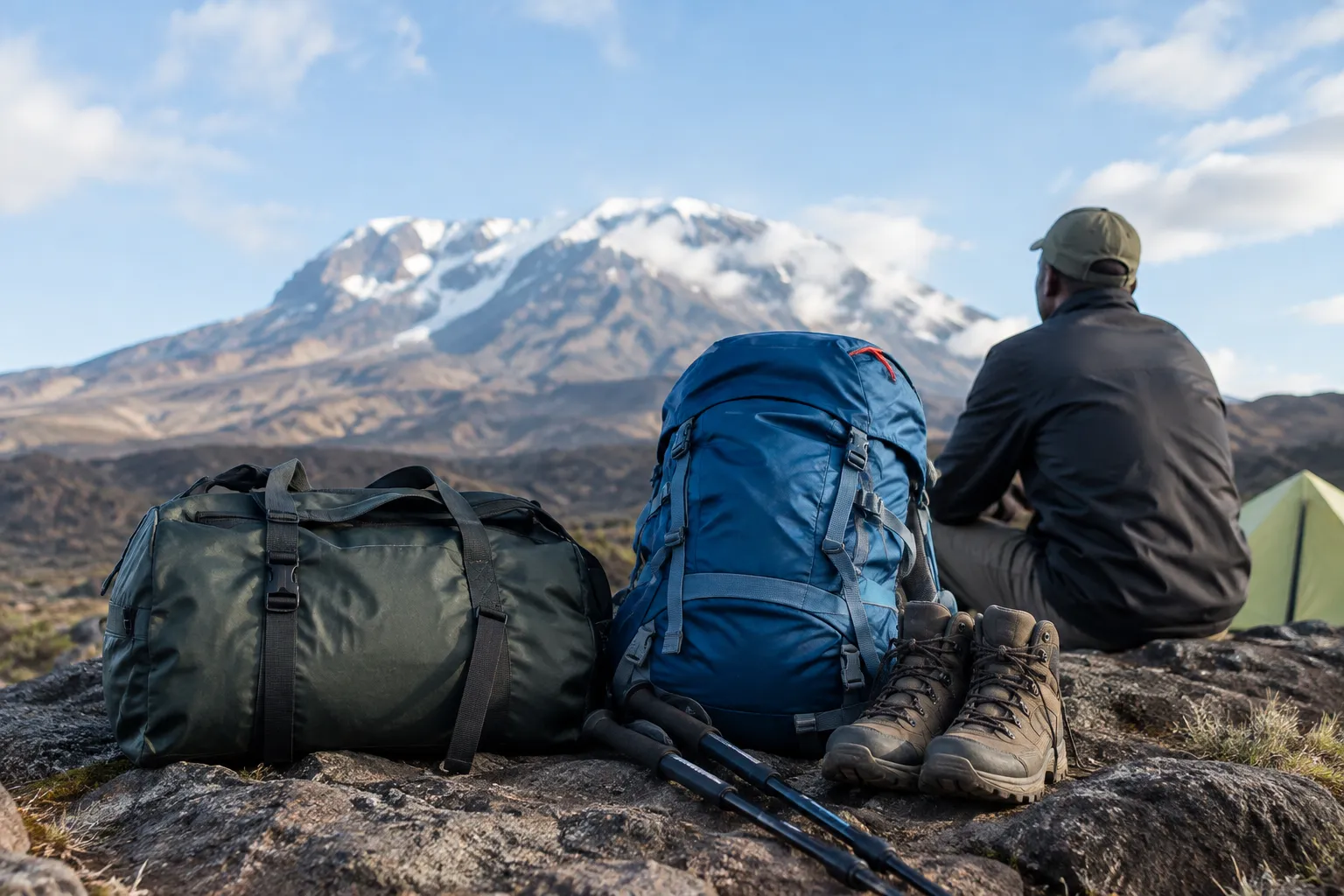
How to manage baggage and gear transfers on a Kilimanjaro climb
How small groups can shape your Kilimanjaro climb
Book Your Sustainable Tour
Related Posts
Is Mount Kilimanjaro volcanic? Its peaks and landscape
Mount Kilimanjaro is a volcano, but its broad slopes, three distinct cones, and high summit make it much more than a single volcanic peak. If you are asking, “Is Mount Kilimanjaro volcanic?”
How can you verify a Kilimanjaro climbing company is legitimate?
Check the operator’s Tanzanian registration and local presence To assess whether a company is legitimate, ask for its registered business name and registration details, then check them through the relevant Tanzanian
How to manage baggage and gear transfers on a Kilimanjaro climb
Confirm Your Operator’s Baggage Rules and Weight Limits Before packing for a Kilimanjaro climb, ask your operator for the current duffel size, weight allowance and restricted-item rules.
How small groups can shape your Kilimanjaro climb
A small group can make a Kilimanjaro climb feel more personal, but its value depends on how the operator manages pace, communication and support—not simply on the number of people in the party.